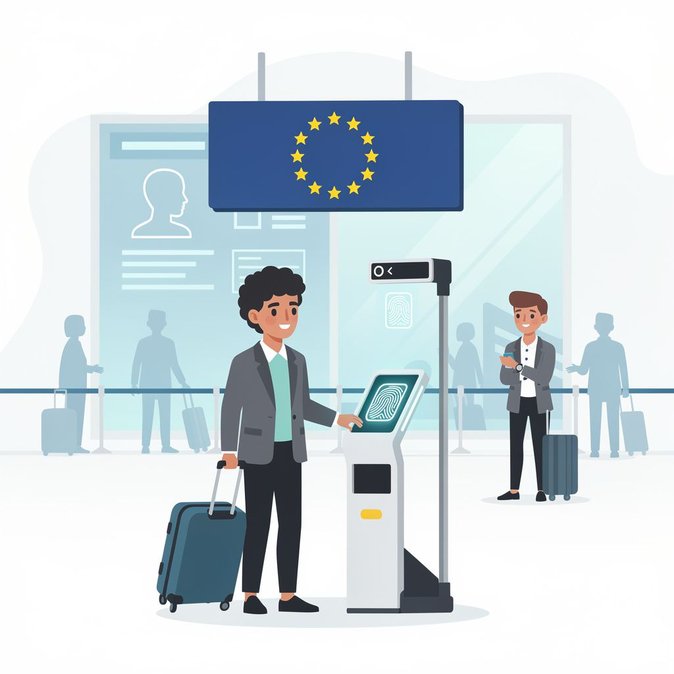
From this week every Brazilian arriving in the Schengen Area will be processed through the Entry/Exit System (EES), the EU’s new biometric border regime that replaced passport stamps in April and is now fully operational. A detailed explainer published by Nomad Global on 12 June 2026 answers the question many business travellers are asking: does anything change for visa-exempt Brazilians? The short answer is no – but the first trip will take a few minutes longer. Under EES, travellers present their passport at a kiosk to have fingerprints and a facial image captured. The data are stored for three years and automatically track compliance with the 90/180-day rule. On subsequent visits the process is quicker because only a biometric match is required. Crucially, no pre-departure action is needed; Brazilians remain visa-free until ETIAS – a separate €7 electronic travel authorisation – comes online later in 2026. EU border agencies say the system will shorten queues once the initial enrolment wave is complete, but airports in Lisbon, Madrid and Paris have warned of learning-curve delays through July. Travel-management companies recommend that first-time EES users allow an extra 30 minutes on arrival and ensure fingerprints are clean and unobstructed (e.g. no fresh henna tattoos or adhesive plasters). For multinationals rotating staff between Brazil and European hubs, the main operational impact is better predictability: overstays will automatically trigger alerts, making visa-run tactics impossible. Employers should brief travellers that passport stamps are gone – proof of entry will now be digital – and remind them that the three-month passport-validity rule still applies. Firms that store images of stamped pages for compliance should adjust their record-keeping processes accordingly.
Source: Nomad Global