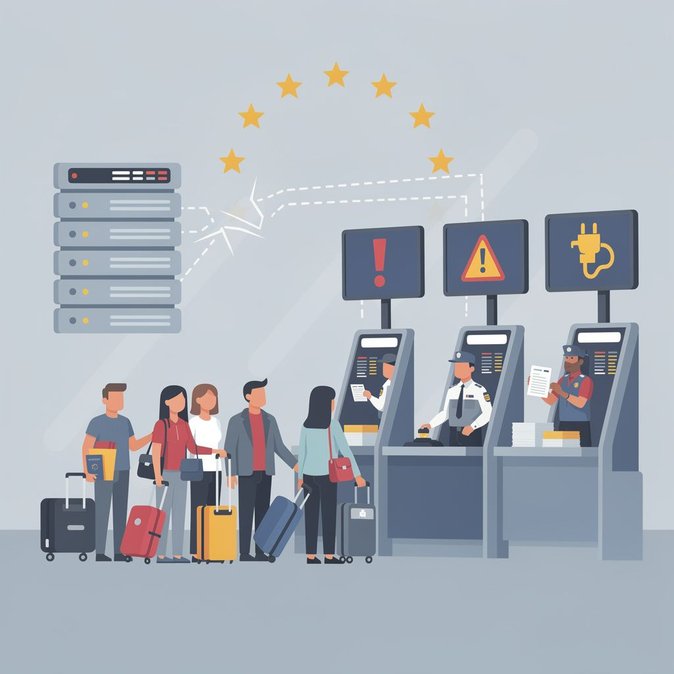
Just hours after EU leaders gathered in Nicosia to celebrate the Migration & Asylum Pact, a technical meltdown hit Eurodac—the central biometric database that underpins the bloc’s new screening regime. Dutch immigration officials confirmed at midday on 12 June that a software update corrupted data links, leaving several member states unable to upload fingerprints and facial images. The outage is awkward for Cyprus, which is chairing the Council and has made ‘credible borders’ a flagship theme of its Presidency. EU spokesperson Marcus Lammert attempted to downplay the disruption, saying that “first-day glitches are normal,” yet frontline officers at Larnaca airport told local media that manual procedures were already adding up to 30 minutes per secondary-inspection case. The Cypriot Asylum Service re-activated legacy national systems as a stop-gap and instructed carriers not to board travellers missing biometric enrolment confirmation until further notice. For companies relocating non-EU staff to Cyprus this summer, the incident is a reminder to allow extra lead time and ensure travellers carry full supporting documents (employment contracts, health insurance, proof of accommodation) in hard copy, as electronic verification may be delayed. Mobility suppliers should also prepare for possible ripple effects if member states later need to re-capture data entered during the outage. Commission engineers expect partial restoration within 24 hours, but experts warn the real stress test will come in July and August when tourism peaks. If reliability issues persist, Cyprus may lobby Brussels for a phased transition period to protect its vital hospitality sector, which accounts for roughly 15 % of GDP.
Source: Reuters