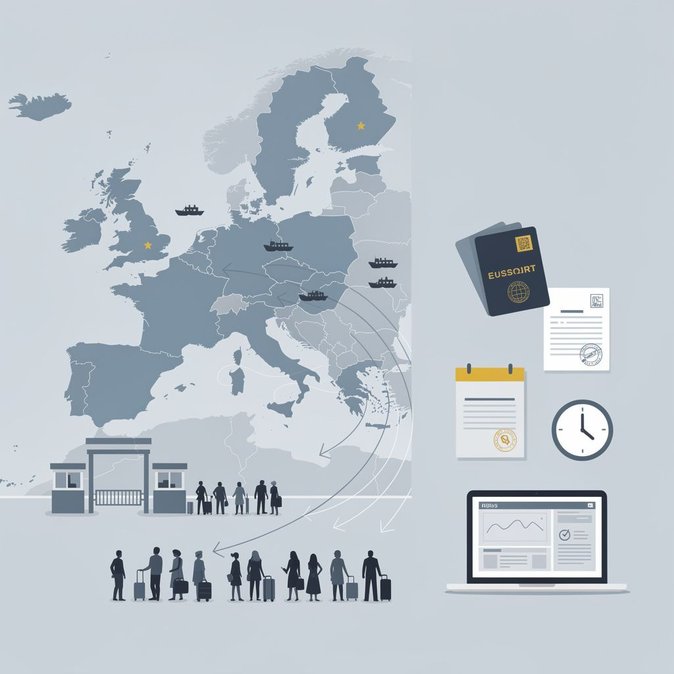
The European Union’s long-debated Pact on Migration and Asylum entered into force today, introducing tougher external-border screening, time-limited asylum procedures and a ‘solidarity mechanism’ that lets member states pay money instead of accepting relocated migrants. Although the United Kingdom is no longer an EU member, officials in London are watching closely: past tightening on the Continent has historically pushed more irregular migrants towards Channel crossings. Under the new rules, non-EU nationals arriving without authorisation can be held in border facilities for up to 12 weeks while fast-track decisions are made.
For companies and individual travellers alike, specialist visa advisory services can lighten the administrative load. VisaHQ’s UK office (https://www.visahq.com/united-kingdom/) offers end-to-end assistance with Schengen visa applications, posted-worker notifications and proof-of-status documentation, helping mobility teams stay compliant as both the EU and the UK upgrade their border regimes.
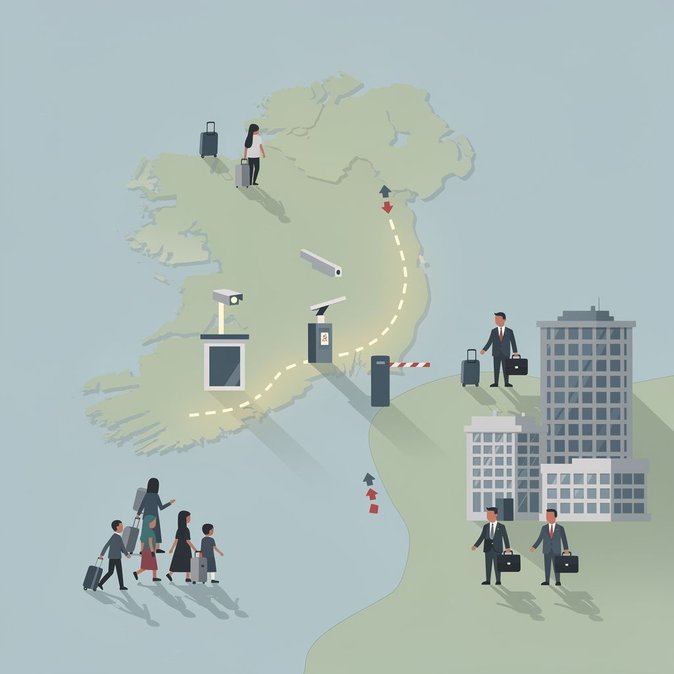
EU countries that receive fewer arrivals must provide funding or operational support to frontline states such as France and Greece. Critics argue the system lacks enforcement teeth and may encourage states to opt for chequebook solidarity rather than relocations, leaving northern French camps essentially unchanged. For the UK, the immediate question is operational. Border Force will have to process any increase in ‘last-mile’ attempts to reach Dover, while companies moving personnel around Europe will need to follow diverging asylum entitlements and detention timelines that could affect duty-of-care obligations for mobile staff. Legal advisers say British businesses that post non-EU nationals into the EU under the Trade and Cooperation Agreement must ensure posted workers carry proof of status and medical insurance that covers any period of border-procedure detention. HR teams should also flag potential delays in Schengen visa issuance as consulates divert resources to the new screening regime. Longer term, the pact accelerates Europe’s shift toward digital pre-clearance systems—mirroring the UK’s own ETA and eVisa roll-out. Mobility leaders should therefore anticipate converging data-sharing demands on security vetting, with ramifications for privacy compliance and vendor selection across both jurisdictions.
For companies and individual travellers alike, specialist visa advisory services can lighten the administrative load. VisaHQ’s UK office (https://www.visahq.com/united-kingdom/) offers end-to-end assistance with Schengen visa applications, posted-worker notifications and proof-of-status documentation, helping mobility teams stay compliant as both the EU and the UK upgrade their border regimes.
EU countries that receive fewer arrivals must provide funding or operational support to frontline states such as France and Greece. Critics argue the system lacks enforcement teeth and may encourage states to opt for chequebook solidarity rather than relocations, leaving northern French camps essentially unchanged. For the UK, the immediate question is operational. Border Force will have to process any increase in ‘last-mile’ attempts to reach Dover, while companies moving personnel around Europe will need to follow diverging asylum entitlements and detention timelines that could affect duty-of-care obligations for mobile staff. Legal advisers say British businesses that post non-EU nationals into the EU under the Trade and Cooperation Agreement must ensure posted workers carry proof of status and medical insurance that covers any period of border-procedure detention. HR teams should also flag potential delays in Schengen visa issuance as consulates divert resources to the new screening regime. Longer term, the pact accelerates Europe’s shift toward digital pre-clearance systems—mirroring the UK’s own ETA and eVisa roll-out. Mobility leaders should therefore anticipate converging data-sharing demands on security vetting, with ramifications for privacy compliance and vendor selection across both jurisdictions.