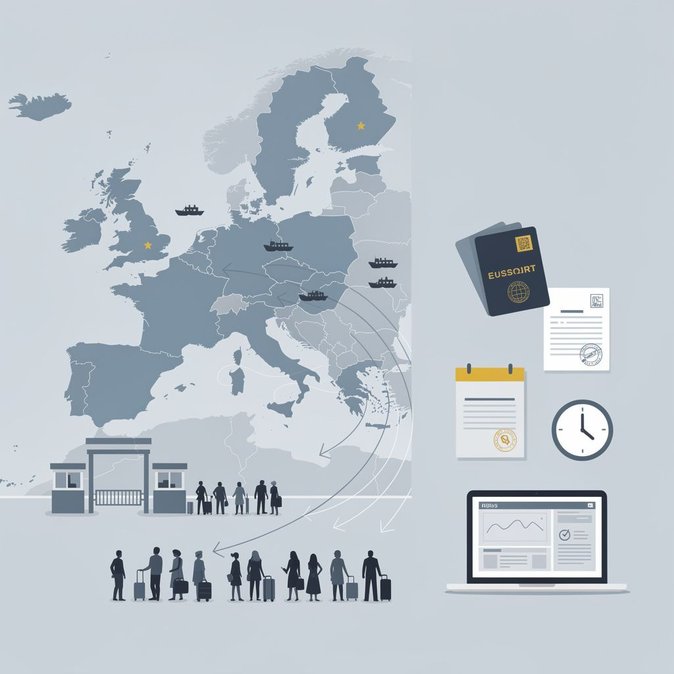
Although the United Kingdom is no longer an EU member, the bloc’s sweeping Pact on Migration and Asylum, which becomes fully operational on 12 June 2026, will still reshape the travel environment for British citizens and firms operating in Europe. The legislation mandates biometric registration of all third-country nationals crossing the external Schengen border, accelerates asylum processing, and introduces stricter penalties for carriers that transport undocumented passengers. UK airlines, coach companies and ferry operators serving Schengen ports must now capture more passenger data in advance and may be fined or forced to return travellers who are refused entry under the new fast-track border procedure. Global mobility managers should therefore double-check that employees scheduled to enter the EU after 12 June carry passports with at least six months’ validity and, where required, an ETIAS travel authorisation (still due to launch in 2026 Q4). The pact also tightens timelines for returning failed asylum seekers to the country deemed responsible for processing their claim. While the UK is outside Dublin-style transfers, Brussels officials have signalled they will use the new rules to press London for faster readmission of irregular migrants who reach Ireland or France and later cross to Britain—raising the prospect of new bilateral deals affecting removals and border policing around the Channel Tunnel and Irish Sea. Businesses moving staff into EU member states on local contracts will welcome harmonised reception-conditions standards, including the right to access the labour market within six months of an asylum claim. However, the streamlined security checks may lengthen queues this summer, as guards adapt to new IT systems and biometric recording—echoing the delays UK travellers experienced during EES trials in Dover in May. Employers should brief travelling staff on potential hold-ups at EU airports and advise visa-exempt assignees to allow extra time when entering or transiting Schengen territory. Relocation providers are updating cost estimates to reflect the possibility of carrier surcharges linked to the compliance burden.