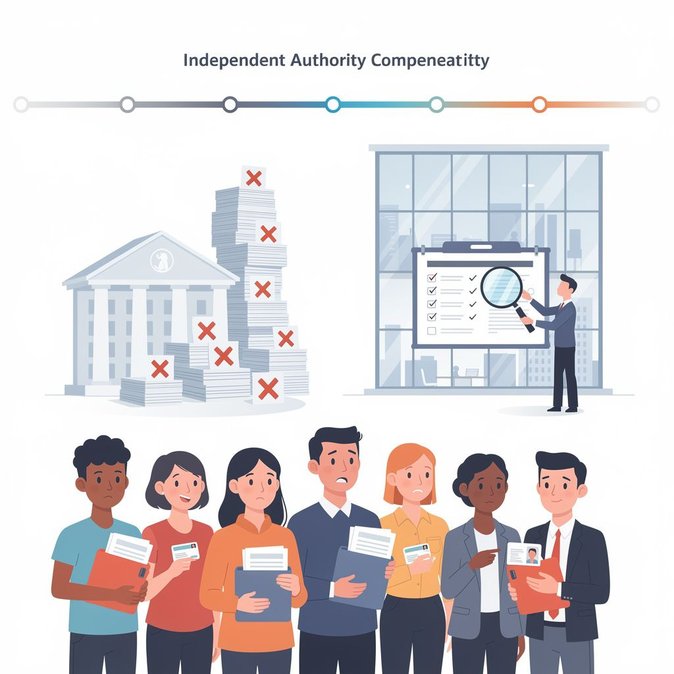
Seventy prominent public figures and civil-society organisations have written to the Prime Minister and Home Secretary urging them to strip the Windrush Compensation Scheme from Home Office control and hand it to an independent body led by a judge or commissioner. Signatories—including MPs Clive Lewis and Nadia Whittome, artist Anish Kapoor and the Runnymede Trust—say the current arrangement has failed victims of the scandal, with more than half of claims still rejected eight years after the scheme was launched. The call follows revelations in April that the average successful payout is just £32,100 and that over 60 claimants have died awaiting redress.
For anyone now scrambling to replace lost paperwork, confirm their right to remain or arrange a late-life passport, VisaHQ can offer rapid, practical help. Through its UK portal (https://www.visahq.com/united-kingdom/), the company provides step-by-step guidance, document checks and application tracking services that simplify visa, passport and citizenship filings—reassurance for individuals and employers alike while the official Windrush processes remain in flux.
Campaigners argue that putting the department which caused the injustice in charge of compensation creates an irreconcilable conflict of interest and sows mistrust among applicants—many of whom remain reluctant to engage with officials who once labelled them illegal migrants. For global employers, the controversy is a stark reminder that citizenship status errors can haunt individuals for decades, undermining workforce diversity and exposing firms to reputational risk if staff are caught in hostile-environment checks. Mobility professionals are advised to review historic right-to-work files, especially for long-serving employees recruited before systematic document retention became standard, to ensure no one is inadvertently working without proof of status. If ministers agree to independent oversight, legal practitioners expect faster case-handling and more generous settlements, but also a temporary spike in new claims as trust improves. Businesses with affected employees (or retirees) could face questions about retrospective pension and tax treatment once final awards are paid, while relocation teams may need to support late-life citizenship or passport applications for staff who only now feel confident enough to regularise their status. Politically, the intervention heaps more pressure on a government that has promised to cut net migration below 200,000 while also “righting the wrongs of Windrush”. Labour has indicated sympathy for an independent body, suggesting the issue will remain live whichever party wins the next general election.
For anyone now scrambling to replace lost paperwork, confirm their right to remain or arrange a late-life passport, VisaHQ can offer rapid, practical help. Through its UK portal (https://www.visahq.com/united-kingdom/), the company provides step-by-step guidance, document checks and application tracking services that simplify visa, passport and citizenship filings—reassurance for individuals and employers alike while the official Windrush processes remain in flux.
Campaigners argue that putting the department which caused the injustice in charge of compensation creates an irreconcilable conflict of interest and sows mistrust among applicants—many of whom remain reluctant to engage with officials who once labelled them illegal migrants. For global employers, the controversy is a stark reminder that citizenship status errors can haunt individuals for decades, undermining workforce diversity and exposing firms to reputational risk if staff are caught in hostile-environment checks. Mobility professionals are advised to review historic right-to-work files, especially for long-serving employees recruited before systematic document retention became standard, to ensure no one is inadvertently working without proof of status. If ministers agree to independent oversight, legal practitioners expect faster case-handling and more generous settlements, but also a temporary spike in new claims as trust improves. Businesses with affected employees (or retirees) could face questions about retrospective pension and tax treatment once final awards are paid, while relocation teams may need to support late-life citizenship or passport applications for staff who only now feel confident enough to regularise their status. Politically, the intervention heaps more pressure on a government that has promised to cut net migration below 200,000 while also “righting the wrongs of Windrush”. Labour has indicated sympathy for an independent body, suggesting the issue will remain live whichever party wins the next general election.