Russian travellers hoping to visit France face a drastically tighter visa landscape. According to Moscow-based analytics firm Vistatrak, cited by AK&M on 13 June, issuance of multiple-entry Schengen visas to Russian citizens has collapsed by 90 % since 2021. French consulates now grant mainly single-entry visas valid strictly for the stated travel dates.
Amid these hurdles, VisaHQ’s dedicated France page (https://www.visahq.com/france/) can help applicants and corporate travel planners monitor slot releases, prepare compliant documentation and explore alternative Schengen filing options, potentially shaving days off the current lead-times.
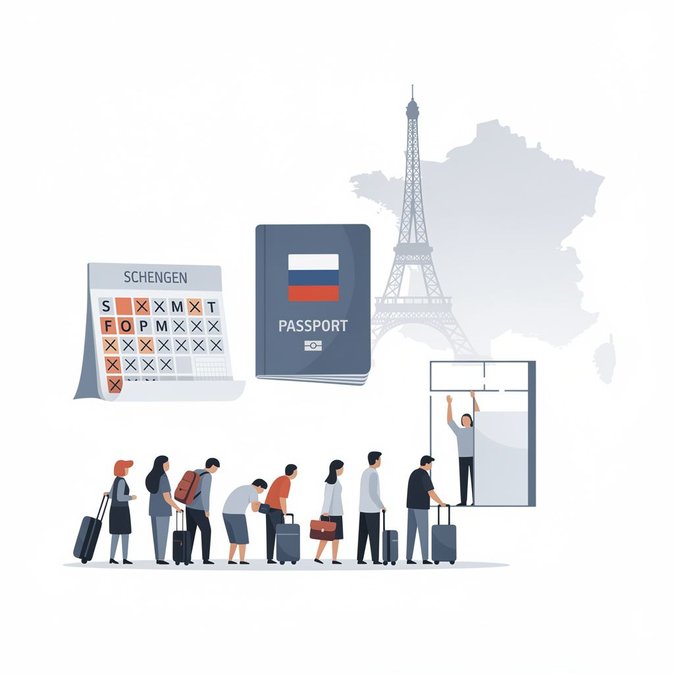
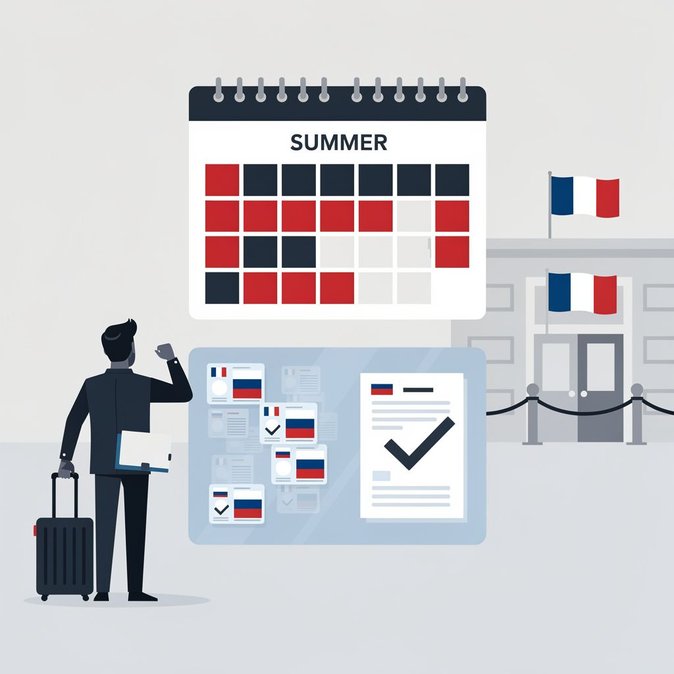
A key bottleneck is appointment availability. Interview slots at France’s outsourced centre in Moscow disappear “within seconds,” often booked 90 days out. Secondary markets in Yerevan or Nur-Sultan have seen a spill-over, but applicants then endure higher airfares to collect visas. Travel agencies report that securing a French slot may take until September—a headache for firms scheduling July factory visits or training sessions in Lyon. The trend stems from a 2022 Council decision suspending the EU-Russia visa facilitation deal and from France’s own tightened scrutiny following intelligence warnings about ‘state-linked’ travellers. Applicants with impeccable travel histories and previous French visas can still obtain double-entry permits, but long-term multi-entry authorisations are effectively frozen. For mobility managers relocating Russian staff to France, the advice is to build in at least twelve weeks lead-time, consider routing through visas issued by other Schengen states with more capacity, or shift assignments to digital cross-border models until capacity improves.
Amid these hurdles, VisaHQ’s dedicated France page (https://www.visahq.com/france/) can help applicants and corporate travel planners monitor slot releases, prepare compliant documentation and explore alternative Schengen filing options, potentially shaving days off the current lead-times.
A key bottleneck is appointment availability. Interview slots at France’s outsourced centre in Moscow disappear “within seconds,” often booked 90 days out. Secondary markets in Yerevan or Nur-Sultan have seen a spill-over, but applicants then endure higher airfares to collect visas. Travel agencies report that securing a French slot may take until September—a headache for firms scheduling July factory visits or training sessions in Lyon. The trend stems from a 2022 Council decision suspending the EU-Russia visa facilitation deal and from France’s own tightened scrutiny following intelligence warnings about ‘state-linked’ travellers. Applicants with impeccable travel histories and previous French visas can still obtain double-entry permits, but long-term multi-entry authorisations are effectively frozen. For mobility managers relocating Russian staff to France, the advice is to build in at least twelve weeks lead-time, consider routing through visas issued by other Schengen states with more capacity, or shift assignments to digital cross-border models until capacity improves.