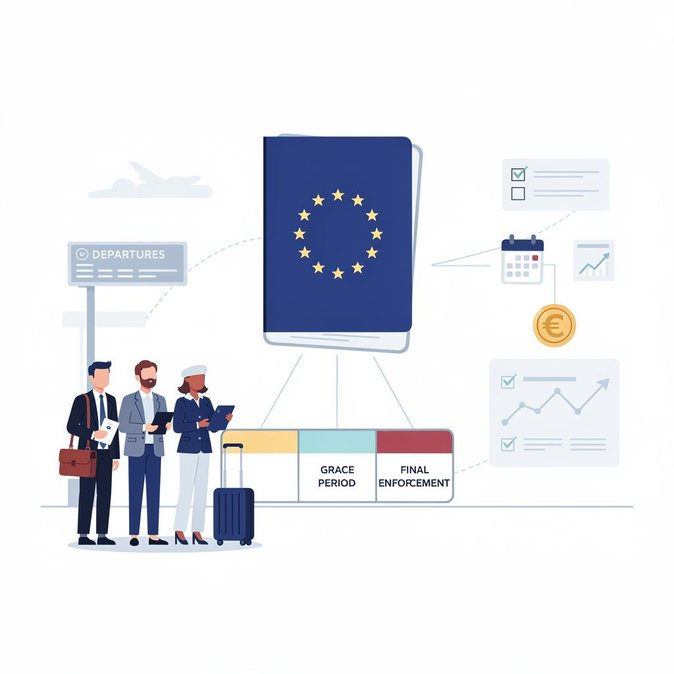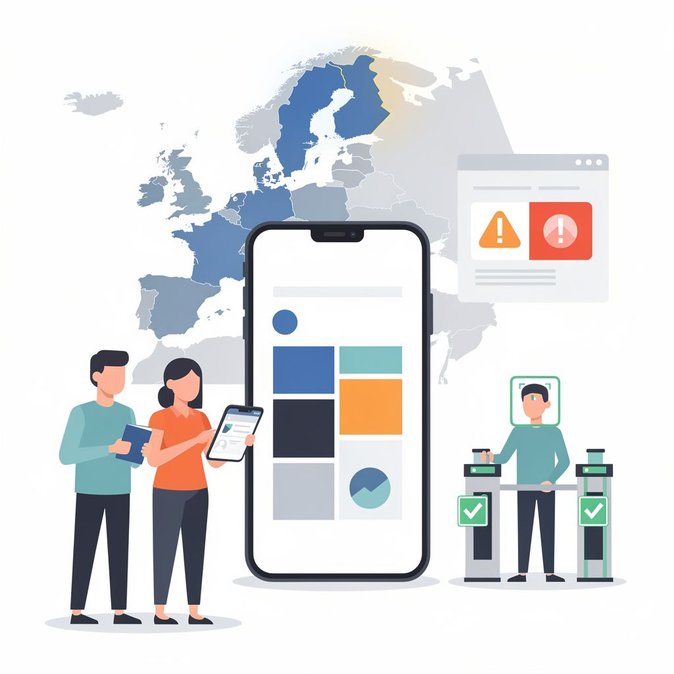
Frontex has quietly released a free mobile application that lets non-EU visitors pre-register passport and facial data for the EU’s new Entry/Exit System (EES). ETIAS Pro’s 13 June review of the tool – called simply ‘Travel to Europe’ – finds that the app can reduce, but not eliminate, first-time border formalities. It is live only for arrivals into Sweden today, with limited pilots planned in Portugal, the Netherlands, France and Italy later this summer. EES became fully operational on 10 April 2026, replacing manual passport stamps with a biometric database. While the change closes a long-standing security gap, it has extended first-time processing to two-to-four hours at several holiday-hotspots – a major concern for British holidaymakers and for U.K. firms sending staff on short client visits. By moving the passport-chip scan and facial image capture onto the traveller’s phone, the new app front-loads one part of the process, leaving only fingerprint capture and a brief officer interview on arrival. For mobility managers the limited roll-out is both an opportunity and a warning. The app is entirely voluntary, offers no right of entry and cannot collect fingerprints, but where it works it can save critical minutes for time-pressed executives. Companies should therefore start issuing destination-specific guidance: advise travellers to download and use the app for Swedish trips, but caution that it provides no benefit elsewhere – yet. Security teams must also remind staff that the app is not a back-door to avoid biometric checks. Imposters and scam sites have already sprung up charging fees for ‘EES registration’. Only the official ‘Travel to Europe’ app on Apple’s App Store and Google Play is legitimate and always free. Looking ahead, wider adoption could ease summer congestion across the continent. But until heavyweight hubs such as Paris-CDG, Amsterdam-Schiphol and Madrid Barajas join the pilot, corporates should continue to build buffer time into itineraries and monitor roll-out announcements through the European Commission’s border-management portal.
Source: ETIAS Pro