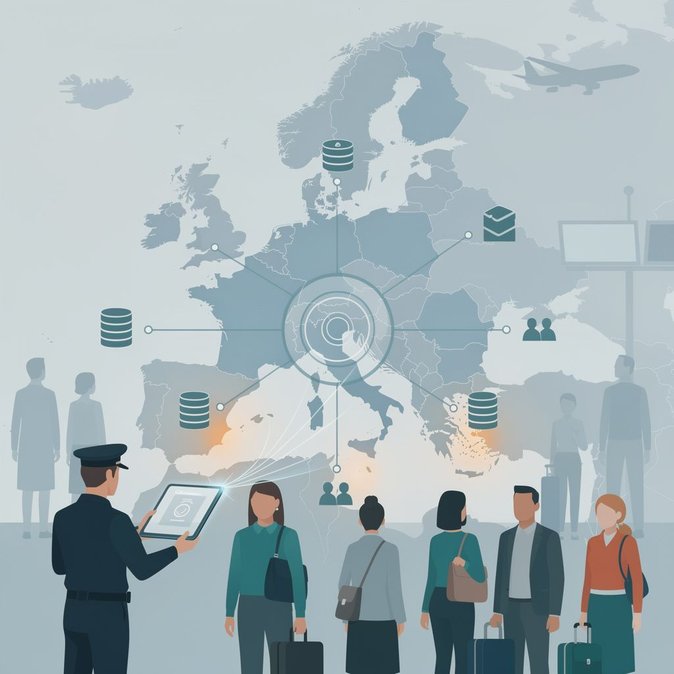
Two cornerstone components of the EU’s long-planned ‘interoperability package’ quietly entered service on 12 June: the European Search Portal and the Common Identity Repository. Together they allow authorised border, visa and asylum officials to query multiple databases—VIS, Eurodac, SIS, EES, ETIAS and ECRIS-TCN—via a single interface.
For travellers looking to stay ahead of these evolving EU border controls, VisaHQ’s UK portal (https://www.visahq.com/united-kingdom/) offers real-time guidance and assistance with Schengen visas, ETIAS pre-authorisations and other travel documents, helping users avoid compliance pitfalls and ensuring paperwork is in order before departure.
For the average passenger nothing changes today; no extra forms are required and airlines will not ask additional questions. But the upgrade matters to UK citizens because, post-Brexit, they are treated as third-country nationals in the Schengen Area. When the Entry/Exit System goes fully live later this year, UK passport data will feed into the very platforms that are now linked. That means refusals of entry, overstay records or lost-passport alerts will surface instantly at every border crossing, ferry port and even in some police roadside checks inside the EU. Travel-risk specialists say the development underscores the importance of leaving the Schengen zone before the 90/180-day limit resets and ensuring that any outstanding fines or visa infractions are cleared. Employers who rotate staff through multiple EU member states will benefit from more consistent real-time data, but employees who accidentally overstay could find the problem escalates more quickly across jurisdictions. The European Commission confirmed that extensive technical testing by eu-LISA preceded the switch-on; member-state authorities now have until November to integrate their national systems fully. Carriers are watching closely because future phases may allow automated pre-departure checks that could trigger boarding denials similar to the UK’s ETA scheme. In the short term, mobility managers should audit Schengen-day-count tools, brief travellers on passport-stamp accuracy and prepare for more rigorous identity resolution at manual booths if biometric gates flag discrepancies.
For travellers looking to stay ahead of these evolving EU border controls, VisaHQ’s UK portal (https://www.visahq.com/united-kingdom/) offers real-time guidance and assistance with Schengen visas, ETIAS pre-authorisations and other travel documents, helping users avoid compliance pitfalls and ensuring paperwork is in order before departure.
For the average passenger nothing changes today; no extra forms are required and airlines will not ask additional questions. But the upgrade matters to UK citizens because, post-Brexit, they are treated as third-country nationals in the Schengen Area. When the Entry/Exit System goes fully live later this year, UK passport data will feed into the very platforms that are now linked. That means refusals of entry, overstay records or lost-passport alerts will surface instantly at every border crossing, ferry port and even in some police roadside checks inside the EU. Travel-risk specialists say the development underscores the importance of leaving the Schengen zone before the 90/180-day limit resets and ensuring that any outstanding fines or visa infractions are cleared. Employers who rotate staff through multiple EU member states will benefit from more consistent real-time data, but employees who accidentally overstay could find the problem escalates more quickly across jurisdictions. The European Commission confirmed that extensive technical testing by eu-LISA preceded the switch-on; member-state authorities now have until November to integrate their national systems fully. Carriers are watching closely because future phases may allow automated pre-departure checks that could trigger boarding denials similar to the UK’s ETA scheme. In the short term, mobility managers should audit Schengen-day-count tools, brief travellers on passport-stamp accuracy and prepare for more rigorous identity resolution at manual booths if biometric gates flag discrepancies.