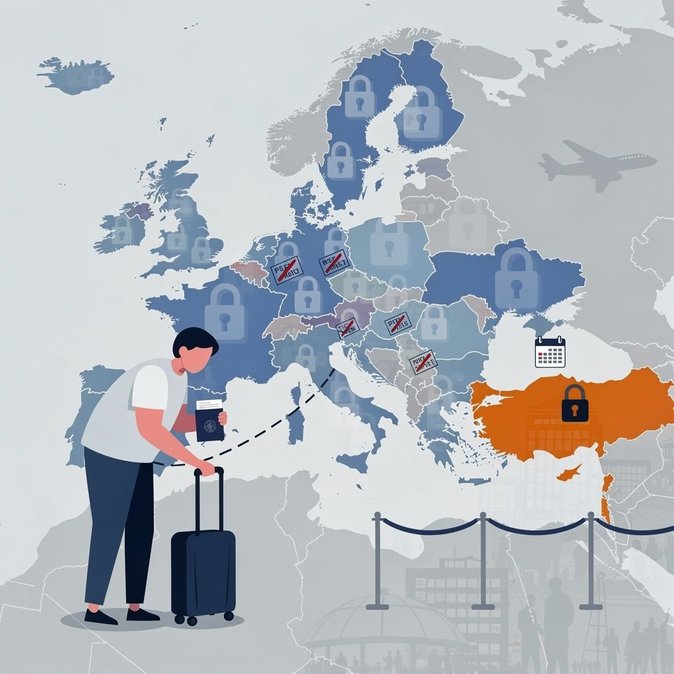
MOSCOW—Data released on 13 June by Russia’s Association of Tour Operators (ATOR) show a 90 percent year-on-year collapse in multiple-entry Schengen visas issued to Russian citizens in the first quarter of 2026. The EU’s November 2025 decision to suspend ‘multi’ visas for most applicants has led consulates—including Italy’s—to grant single-entry permits tied to fixed travel dates. Italian consulates in Moscow and St Petersburg remain comparatively accessible, with appointment wait-times of three to five weeks versus 10-plus in Paris or Berlin.
Travelers facing these shifting requirements can streamline their paperwork through VisaHQ’s online platform, which monitors appointment calendars for Italian consulates and pre-validates supporting documents before submission. The company’s Italy portal (https://www.visahq.com/italy/) lets applicants compare processing times, order courier pick-ups and receive real-time status alerts—features that reduce the risk of last-minute rejections and are especially useful now that single-entry Schengen visas hinge on flawless itineraries.
Applicants with strong previous-visa histories can still obtain double-entry visas—primarily for Mediterranean cruises docking at Civitavecchia, Genoa or Bari—but validity rarely exceeds 90 days. For Italian hotels, fashion retailers and cruise agencies—traditionally reliant on high-spending Russian visitors—the shift means shorter stays and more paperwork. Business-event organisers should factor in potential re-application cycles when inviting Russian partners to Milan Design Week or Autopromotec Bologna. Corporate mobility teams relocating Russian talent to Italy under intra-company or investor visas remain unaffected; these are national category-D permits processed outside Schengen rules. Nevertheless, the data confirm a broader tightening that may extend to other high-risk nationalities if the EU enlarges its security-based visa measures.
Travelers facing these shifting requirements can streamline their paperwork through VisaHQ’s online platform, which monitors appointment calendars for Italian consulates and pre-validates supporting documents before submission. The company’s Italy portal (https://www.visahq.com/italy/) lets applicants compare processing times, order courier pick-ups and receive real-time status alerts—features that reduce the risk of last-minute rejections and are especially useful now that single-entry Schengen visas hinge on flawless itineraries.
Applicants with strong previous-visa histories can still obtain double-entry visas—primarily for Mediterranean cruises docking at Civitavecchia, Genoa or Bari—but validity rarely exceeds 90 days. For Italian hotels, fashion retailers and cruise agencies—traditionally reliant on high-spending Russian visitors—the shift means shorter stays and more paperwork. Business-event organisers should factor in potential re-application cycles when inviting Russian partners to Milan Design Week or Autopromotec Bologna. Corporate mobility teams relocating Russian talent to Italy under intra-company or investor visas remain unaffected; these are national category-D permits processed outside Schengen rules. Nevertheless, the data confirm a broader tightening that may extend to other high-risk nationalities if the EU enlarges its security-based visa measures.