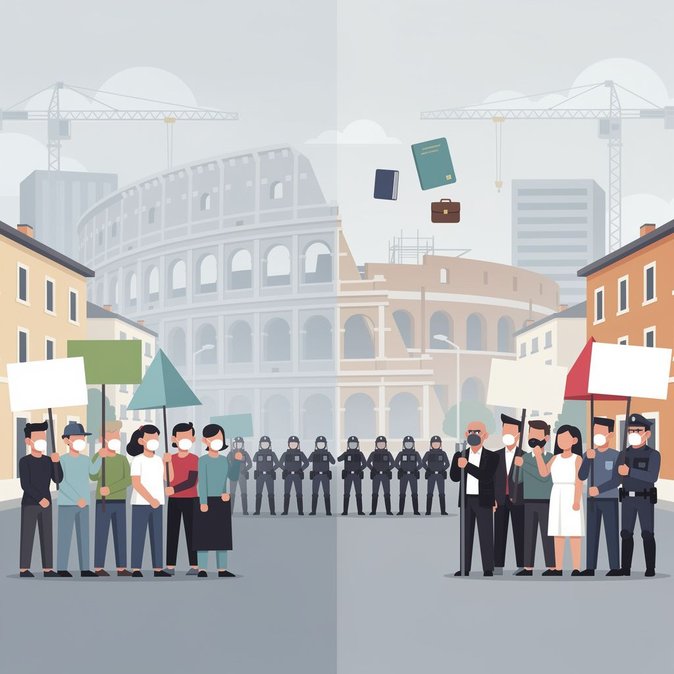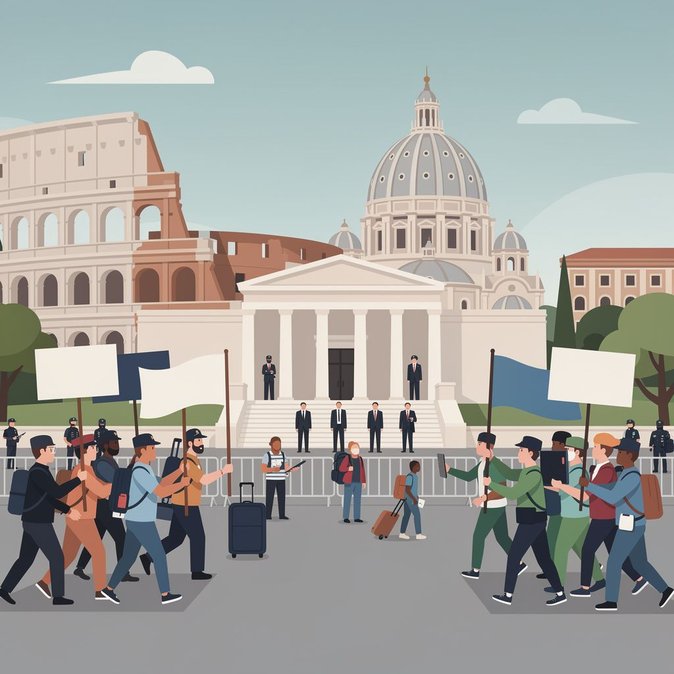
ROME—Italy’s capital became a battleground of banners on 13 June when rival demonstrations filled Via dei Fori Imperiali and Piazza Venezia. On one side, far-right organisers behind the new “Remigration and Reconquest” citizens’ initiative called for mass expulsions of irregular migrants, voluntary‐return cash incentives and a hard cap on future legal immigration. Across town, pro-migrant groups, trade-union confederations and several multinational employers staged a counter-march urging lawmakers to reject the proposal and focus on regularisation pathways. The unrest was triggered after the initiative reached 50,000 certified signatures—the constitutional threshold that obliges the Chamber of Deputies to schedule a debate. While no vote date has been fixed, governing-coalition MPs from Fratelli d’Italia and the League said they are “open to discussion,” raising fears that some elements could end up in the autumn security decree. Corporate mobility teams are watching closely. If even part of the draft were adopted, it would tighten residence-permit renewals, expand police stop-and-check powers within 30 km of ports and airports, and introduce steep fines for companies that employ once-regular workers whose permits subsequently lapse. Legal advisers recommend auditing posted-worker files and renewing permessi at least 90 days before expiry while the political outlook remains fluid. Employers also worry about reputational fallout. Several global tech firms with Rome hubs joined the pro-migration march, highlighting reliance on highly-skilled non-EU staff hired under the ‘Blue Card’ and the 2026 Digital-Nomad Visa. “Expulsion rhetoric undermines Italy’s effort to position itself as a talent magnet,” said Valentina Moretti, mobility lead for a US biomedical company. The Interior Ministry deployed 2,500 officers; minor scuffles and four arrests were reported. Yet the images—right-wing salutes on one side, rainbow flags on the other—illustrate how migration is set to dominate Italy’s policy agenda heading into the 2027 election cycle.
Source: Associated Press