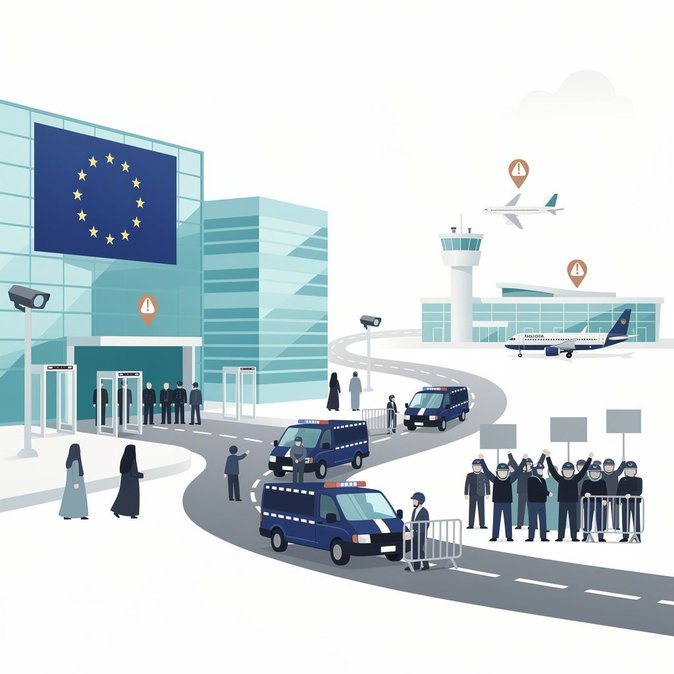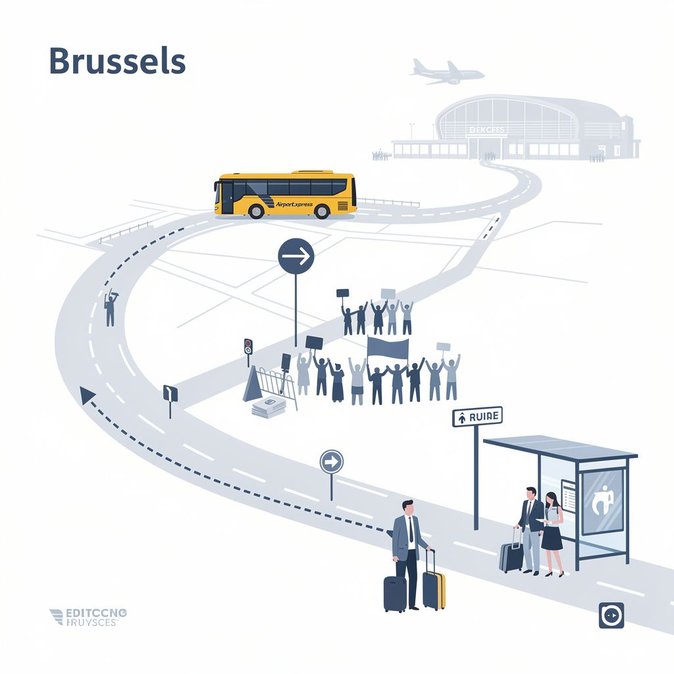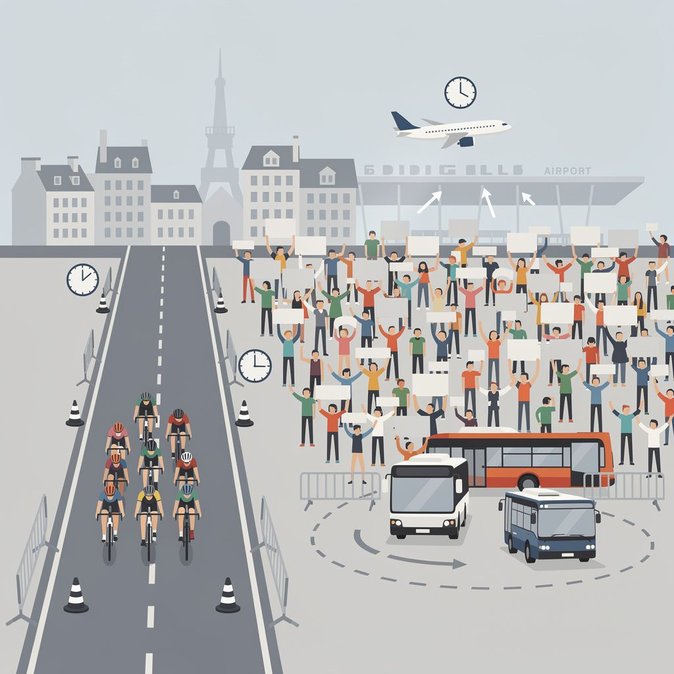
Travellers to and through Brussels faced a perfect storm of road closures and transit detours on Sunday, 14 June, as two large-scale events converged on the capital. The tenth edition of the BXL Tour cycling race shut down a 32–40 km loop of major boulevards from 05:00 to 13:00, while a Europe-wide ‘Welfare Not Warfare’ peace demonstration gathered outside Brussels-North station from 15:00. Brussels mobility agency BX1 warned that Place des Palais, Avenue de Tervuren, Boulevard Reyers and several tunnels along the small ring were closed to cars, with parking bans enforced and vehicles towed from the route. Organisers integrated the course into Waze and Google Maps, but police urged drivers to avoid the city centre altogether until mid-afternoon. Public transport was also hit. De Lijn announced an emergency detour for Airport Express line R26 (Brussels-North – Zaventem) between 13:00 and 18:00, bypassing six inner-city stops including Rogier and Kruidtuin. STIB/MIVB diverted multiple tram and bus lines, and NMBS flagged possible platform changes at Brussels-North as protest crowds gathered. The afternoon rally, backed by the Stop ReArm Europe campaign, marched from the North Station towards the EU quarter, adding another layer of disruption close to corporate head offices and Schengen visa centres. Security services deployed additional barriers and screening points, and some companies advised staff to work remotely. Business-travel implications are immediate: passengers connecting at Brussels Airport should allow extra time for ground transfers, especially those relying on bus links, and verify last-minute taxi surcharges caused by rerouted traffic. Mobility teams organising Monday-morning meetings should confirm participant arrival times and consider virtual formats if residual congestion persists.
Source: BX1 / De Lijn / European Left