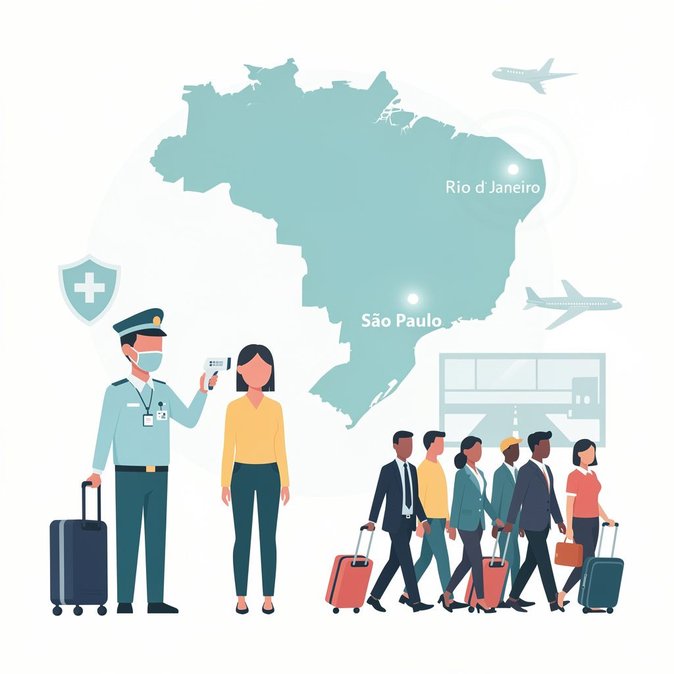
Brazilian authorities moved swiftly over the weekend after two travellers who had recently returned from Uganda and the Democratic Republic of Congo were hospitalised in Rio de Janeiro and São Paulo with high fever, diarrhoea and other haemorrhagic-fever-like symptoms. Preliminary tests triggered an Ebola alert, activating the country’s 2024 National Contingency Plan for Viral Haemorrhagic Fevers. Within 24 hours, the reference laboratories of Fiocruz and the Instituto Adolfo Lutz completed a full PCR panel that ruled out Ebola and confirmed, instead, malaria in the Rio patient and meningococcal disease in the São Paulo case. The Ministry of Health emphasised that Brazil has never recorded a confirmed Ebola infection, but it will maintain heightened airport surveillance of passengers arriving from the African Great Lakes region. Airlines were notified that travellers originating in declared outbreak zones may face secondary screening on arrival, including mandatory temperature checks and contact-history questionnaires. Businesses running frequent-flyer programmes for staff whose itineraries include Africa have been asked to review corporate medical protocols and ensure emergency evacuation coverage is in place. From a mobility-management perspective the incident is a valuable stress test. Multinationals operating in Brazil praised the quick laboratory turnaround but warned that a lack of harmonised communication between state and federal authorities caused uncertainty for travellers who were already en route. Travel-risk consultants are urging companies to add “Ebola ruled out” language to client-facing updates to avoid unnecessary trip cancellations. Practical implications for the coming week are limited: no additional entry restrictions have been imposed and the Contingency Plan specifically rejects border closures. Nevertheless, global mobility teams should monitor any future bulletins, as a single confirmed case would automatically trigger federal quarantine powers under Law 13.979/20. HR departments are advised to remind employees to keep yellow-fever and meningitis vaccinations up to date, given the potential for symptom confusion at border‐health checks.
Source: O Povo / BBC Brasil
How VisaHQ can help
VisaHQ simplifies the visa application process for individuals and businesses. Check current travel requirements, prepare the required documents and manage your application online through the VisaHQ Brazil portal.More From Brazil
View all
President Lula departs for G7 summit in France, raising expectations for breakthrough on U.S. tariffs and EU meat ban

Salvador to halt city-bus departures during Brazil’s World-Cup matches—plan alternate airport transfers