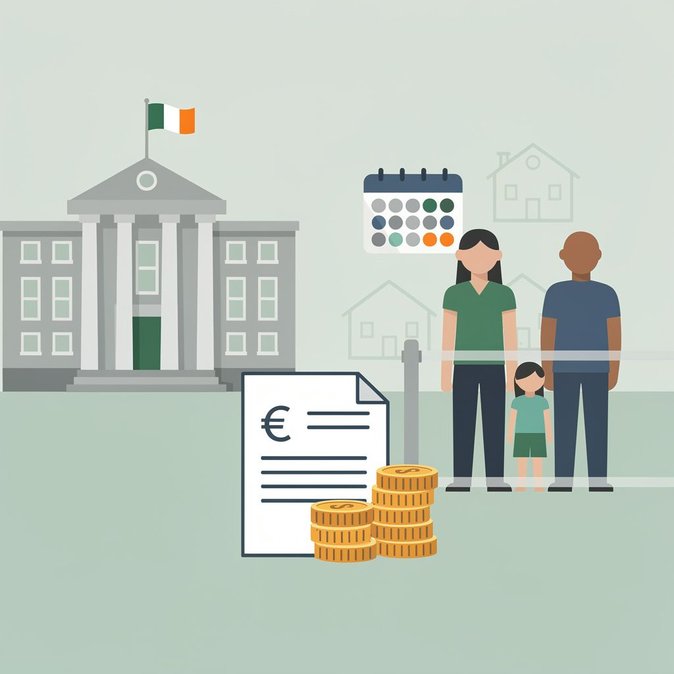
The Department of Justice has published the first major overhaul of Ireland’s Non-EEA Family Reunification Policy since 2017, and the changes came into legal effect on 12 June 2026. An official circular posted on the Immigration Service Delivery (ISD) website and subsequently reported by Chinese-language community outlet “Our Ireland” confirms that sponsors who are Irish citizens must now show aggregate pre-tax earnings of €75,000 over the previous three tax years—almost twice the former €40,000 requirement. Equivalent income thresholds for Critical Skills Employment Permit holders and other work-authorised residents have been raised in line with the Central Statistics Office’s earnings index. The policy also introduces a mandatory two-year “qualifying period” before refugees and subsidiary protection beneficiaries can apply to join family members. Until now, recognised refugees could lodge reunification requests immediately after status recognition. ISD argues that the waiting period is needed to reduce backlogs (currently averaging 18 months) and to bring Ireland into line with the new EU Pact on Migration and Asylum which stresses integration readiness before arrival. Human-rights NGOs have criticised the measure as unnecessarily punitive, warning that prolonged family separation exacerbates trauma and slows labour-market integration. Corporate mobility teams should note several practical changes. First, sponsors living in State-provided or subsidised accommodation (including International Protection accommodation and some employee-transfer hotels) are now ineligible to apply until they secure independent housing. Second, sponsors must provide documentary proof of adequate accommodation at the time of filing—leases, mortgage statements or employer-provided housing letters are acceptable. Third, a new prohibition on certain social-welfare payments in the 12 months prior to application applies, aimed at demonstrating financial self-sufficiency. Law firms report an immediate spike in enquiries from multinational employees whose relocation timelines assumed faster family reunion. Employers may need to review assignment budgets, increase cost-of-living allowances or consider alternative EU postings for dependants while the sponsor builds the required income history. Advisers also stress that the revised policy applies to applications lodged on or after 12 June; any files already submitted will be assessed under the old rules. In the medium term the higher thresholds could deter mid-level talent—particularly in retail, hospitality and public-sector contracting—from accepting Ireland-based roles, unless companies adjust remuneration packages. On the other hand, the Department believes stricter criteria will ease pressure on housing and public services, creating a "more sustainable migration pathway" aligned with Ireland’s 2030 population strategy.