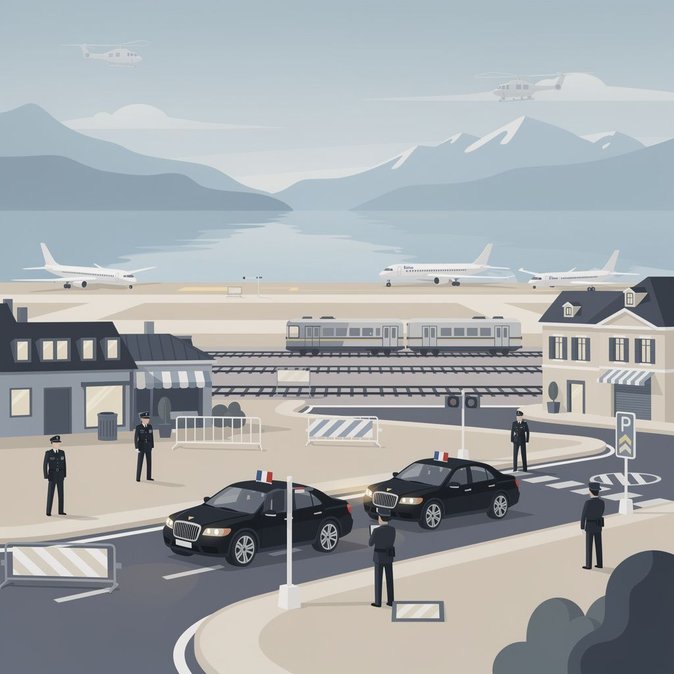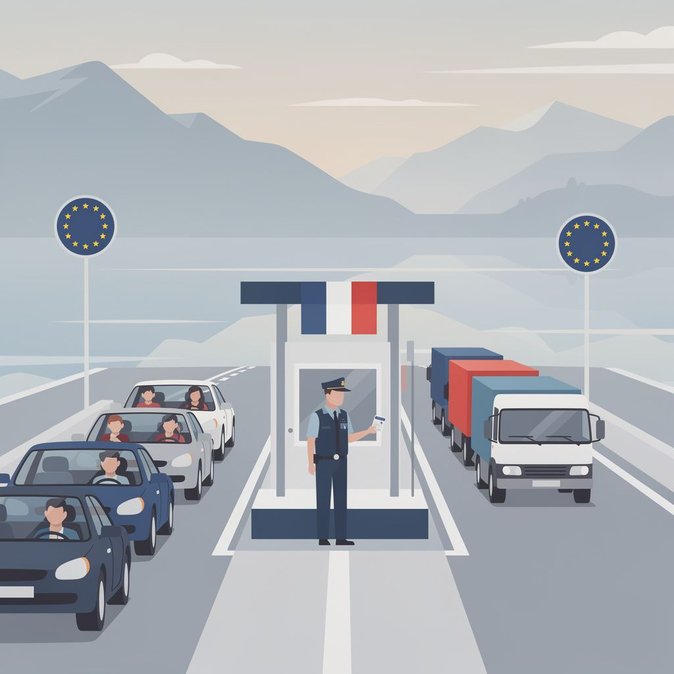
With leaders arriving in Évian-les-Bains for the 15–17 June 2026 G7 summit, French authorities have re-introduced internal Schengen border controls along key crossings in the Doubs and Haute-Savoie departments. The Préfecture du Doubs confirmed the move on 15 June, warning of slow-moving queues at the La Ferrière-sous-Jougne and Vallorbe routes as freight traffic is funnelled away from a partially closed Swiss A1 motorway.
For travellers unfamiliar with cross-border formalities, VisaHQ’s France portal (https://www.visahq.com/france/) provides timely guidance on required documentation, real-time application tracking, and expert support—resources that can prove invaluable when temporary controls like those surrounding the G7 summit are imposed at short notice.
Unlike full reinstatement of passport stamping, the measure empowers police and customs officials to conduct systematic ID checks and vehicle inspections. Cross-border commuters—an estimated 220,000 French residents work daily in Switzerland—are urged to carry passports or national ID cards and to budget extra travel time, especially at morning and evening peaks. Logistics firms running just-in-time deliveries into the Geneva and Lausanne regions could face schedule slippage. Several manufacturers have activated contingency warehouses on the French side to absorb potential delays, underscoring how large-scale political events can ripple through regional supply chains. While no crossings are entirely closed, temporary fencing and chicanes have been installed to slow traffic. Authorities emphasise that the controls are proportionate and time-limited, set to end once the summit concludes on 17 June. Still, the episode reminds mobility managers that Schengen’s free-movement rules allow member states to re-impose checks for security reasons with little notice. Employers sponsoring frontier workers should communicate the requirements promptly, ensure residence permits are up to date, and consider remote-work options during the summit window. Failure to present valid ID at the border can lead to on-the-spot fines or refused entry, even for EU citizens.
For travellers unfamiliar with cross-border formalities, VisaHQ’s France portal (https://www.visahq.com/france/) provides timely guidance on required documentation, real-time application tracking, and expert support—resources that can prove invaluable when temporary controls like those surrounding the G7 summit are imposed at short notice.
Unlike full reinstatement of passport stamping, the measure empowers police and customs officials to conduct systematic ID checks and vehicle inspections. Cross-border commuters—an estimated 220,000 French residents work daily in Switzerland—are urged to carry passports or national ID cards and to budget extra travel time, especially at morning and evening peaks. Logistics firms running just-in-time deliveries into the Geneva and Lausanne regions could face schedule slippage. Several manufacturers have activated contingency warehouses on the French side to absorb potential delays, underscoring how large-scale political events can ripple through regional supply chains. While no crossings are entirely closed, temporary fencing and chicanes have been installed to slow traffic. Authorities emphasise that the controls are proportionate and time-limited, set to end once the summit concludes on 17 June. Still, the episode reminds mobility managers that Schengen’s free-movement rules allow member states to re-impose checks for security reasons with little notice. Employers sponsoring frontier workers should communicate the requirements promptly, ensure residence permits are up to date, and consider remote-work options during the summit window. Failure to present valid ID at the border can lead to on-the-spot fines or refused entry, even for EU citizens.