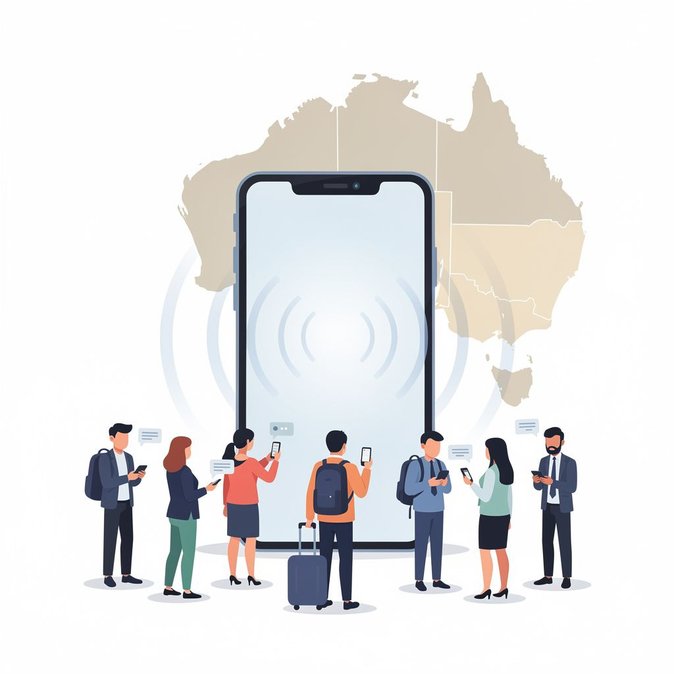
Australia’s new cell-broadcast emergency-warning system, AusAlert, enters its community-testing phase this week, with the first trial in Queensland’s coastal townships of Cooya Beach, Newell and Wonga Beach scheduled for 14:00 AEST on 16 June 2026. The National Emergency Management Agency confirms that a country-wide test will follow on 27 July, reaching every compatible mobile device. AusAlert messages override normal phone settings to deliver a loud ten-second alarm, vibration and on-screen text in English. Crucially for globally mobile employees and tourists, a local SIM is not required—roaming handsets will still receive alerts if they are within broadcast range. That makes AusAlert a critical component of corporate duty-of-care frameworks, particularly for fly-in-fly-out engineering crews, seasonal agriculture workers and short-term assignees who may be unfamiliar with Australia’s natural-hazard profile. Disasters such as bushfires, cyclones and flash floods frequently disrupt transport corridors and remote worksites. By ensuring expatriates and business travellers receive the same warnings as residents, employers can speed up evacuation decisions and meet ISO 31030 travel-risk-management standards. Companies should circulate guidance instructing staff to keep handset operating systems updated and to avoid disabling emergency alerts when swapping eSIMs. Travellers with sensory sensitivities can temporarily switch devices to airplane mode prior to the scheduled tests, but the government stresses that phones placed on silent will still emit the alert tone. Multilingual factsheets in 19 languages are available on the AusAlert website—a useful resource for international assignees and their families. Full deployment is scheduled for late July. From that point, any life-threatening incident—from major bushfires affecting interstate highways to terrorist events in city centres—could trigger an immediate broadcast. Mobility managers should integrate AusAlert activation protocols into crisis plans, including automated SMS follow-ups and check-in requests via travel-tracking platforms.