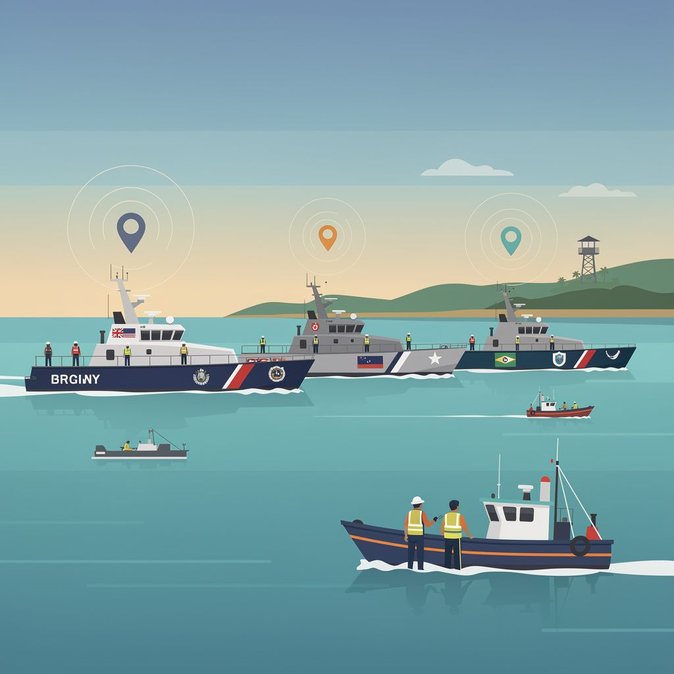
The Australian Border Force (ABF) has intensified cooperation with its nearest northern neighbours, completing a series of joint land-and-sea patrols with Indonesia and Papua New Guinea over the past fortnight. Dubbed Operation Horizon Watch, the four-day sweep saw ABF vessels, Indonesian surveillance aircraft and PNG police craft fan out across the Torres Strait, Ashmore and Cartier Islands and other remote waters where criminal syndicates have long exploited the thin official presence. According to ABF Assistant Commissioner James Copeman, the patrols intercepted four Indonesian vessels, ordering one home for breaching permit conditions and towing another to port after an engine failure. Officers also boarded PNG community boats to share intelligence on drug and weapons trafficking routes that have increasingly used the Strait as a staging point into Australia’s Far North. Rear Admiral Brett Sonter, Commander Maritime Border Command, said the operation “sends a clear message that Australia and its regional partners will not allow illegal, unreported and unregulated fishing or people-smuggling networks to thrive”. For Australian corporates running extractive or agribusiness projects in northern Queensland, the stepped-up presence is welcomed. Foreign-flagged boats siphon millions of dollars’ worth of seafood and can smuggle contraband that ends up on project sites. The latest patrols follow February’s Operation Broadstaff, which led to dozens of foreign fishers being jailed and boats burned at sea. Consistency of enforcement, however, remains the challenge across a sea-border that in places is less than four kilometres wide. Practically, employers moving staff or equipment through Cairns, Weipa or Horn Island should expect tighter ABF inspections of small craft and cargo over coming weeks. Mobility managers are advised to verify that shipping agents are across new reporting requirements and to budget for possible delays in remote airstrips where joint patrol teams may conduct ad-hoc screenings. Companies employing Indonesian or PNG nationals on temporary work visas should ensure crew lists and permits exactly match ABF records to avoid costly detentions. Analysts note that the operation also plays into the federal government’s wider Pacific-step-up strategy. By jointly patrolling rather than acting unilaterally, Australia projects a partnership model that is critical for securing buy-in on sensitive issues such as transnational crime and migration flows. For mobility professionals, the key takeaway is that border compliance in northern Australia is tightening—and it now has three governments checking the paperwork.
Source: Cape York Weekly