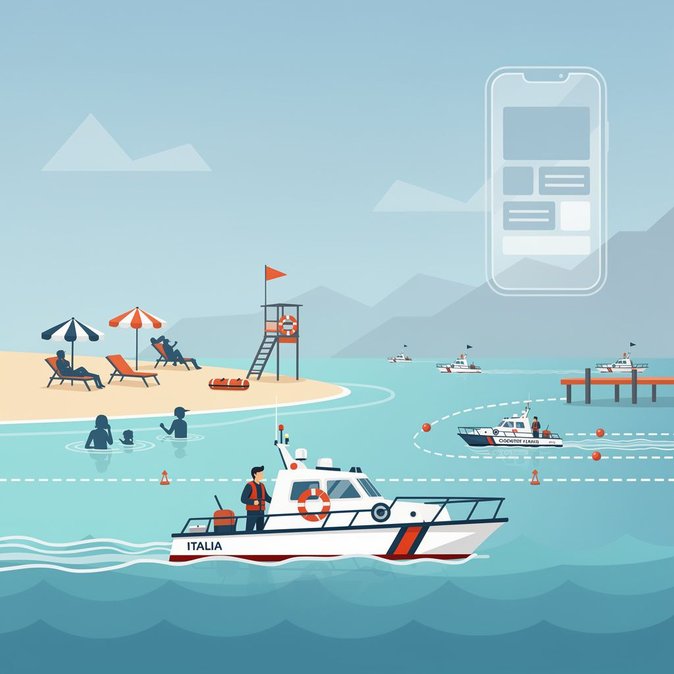
From Porto Rotondo this morning, Deputy-Prime-Minister and Transport Minister Matteo Salvini joined senior Guardia Costiera officials to inaugurate “Operazione Mare e Laghi Sicuri 2026” – a nationwide maritime-safety campaign that runs from mid-June to mid-September. The operation deploys 3,000 officers, 300 patrol boats and 15 helicopters across Italy’s coasts and major lakes, with reinforced presence in Sardinia, Puglia and along the crowded Amalfi–Capri corridor. The initiative tackles three seasonal pain-points for inbound travellers: unauthorised pleasure-craft charters, beach-front safety gaps and slow medical evacuations. New this year is a digital “Safe Sea IT” app allowing tourists to file real-time distress calls and report illegal ticket touts in English, Italian and Chinese – a nod to the rebound of Asian arrivals after visa backlogs eased.
For travellers still arranging entry formalities, VisaHQ’s Italy portal (https://www.visahq.com/italy/) offers an easy way to secure visas and monitor any consular changes before your trip. By consolidating the latest requirements for Schengen, work and study permits, the service helps ensure that documentation is in order well ahead of the stricter on-water checks outlined by the Guardia Costiera, sparing both holiday-makers and corporate groups last-minute headaches.
Last summer the coast-guard recorded a record 12,400 search-and-rescue sorties (35 per day) and seized 220 jet-skis operating without licences in Italian marine parks. With international cruise traffic into Italian ports forecast to exceed 13 million passengers in 2026, authorities say proactive enforcement is essential to prevent reputational damage from high-profile incidents such as the June 12 catamaran fire off Palau. For corporate travel and relocation teams the message is twofold: 1) expect intensified controls on company-chartered ribs and incentive-trip yachts – ensure all paperwork and crew certifications meet Italian regulations; 2) build the new emergency app into traveller-briefing documents, especially for expatriate families frequenting lake regions around Como and Garda. The coast-guard will publish weekly statistics on interventions and fines, giving travel-risk managers fresh data to adjust leisure-travel policies. Combined with the EU’s forthcoming passenger-rights overhaul, Italy is positioning itself as a safer – if more regulated – destination for the record summer influx.
For travellers still arranging entry formalities, VisaHQ’s Italy portal (https://www.visahq.com/italy/) offers an easy way to secure visas and monitor any consular changes before your trip. By consolidating the latest requirements for Schengen, work and study permits, the service helps ensure that documentation is in order well ahead of the stricter on-water checks outlined by the Guardia Costiera, sparing both holiday-makers and corporate groups last-minute headaches.
Last summer the coast-guard recorded a record 12,400 search-and-rescue sorties (35 per day) and seized 220 jet-skis operating without licences in Italian marine parks. With international cruise traffic into Italian ports forecast to exceed 13 million passengers in 2026, authorities say proactive enforcement is essential to prevent reputational damage from high-profile incidents such as the June 12 catamaran fire off Palau. For corporate travel and relocation teams the message is twofold: 1) expect intensified controls on company-chartered ribs and incentive-trip yachts – ensure all paperwork and crew certifications meet Italian regulations; 2) build the new emergency app into traveller-briefing documents, especially for expatriate families frequenting lake regions around Como and Garda. The coast-guard will publish weekly statistics on interventions and fines, giving travel-risk managers fresh data to adjust leisure-travel policies. Combined with the EU’s forthcoming passenger-rights overhaul, Italy is positioning itself as a safer – if more regulated – destination for the record summer influx.