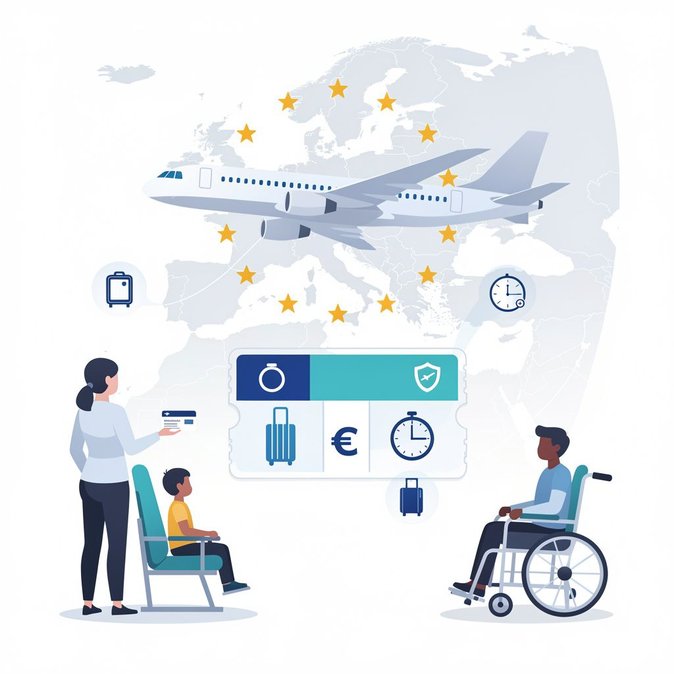
After 13 years of stalled negotiations, EU lawmakers reached a provisional deal on 15 June that will substantially update Regulation 261/2004 – the rule-book that governs compensation, care and information for air travellers. The accord, revealed by the Italian daily Corriere della Sera on 16 June, still needs a confirmatory vote in the European Parliament next month but is expected to pass with broad support. The package responds to the explosion of low-cost carriers and online ticket brokers that has transformed European aviation since the original rules were drafted more than two decades ago. Chief among the changes is a new “total price transparency” requirement: every fare displayed to consumers – whether on an airline website, metasearch engine or travel-management platform – must now include one piece of hand luggage. The goal is to end so-called “drip pricing”, where mandatory extras appear only in the final booking screens, making comparison shopping nearly impossible for business-traveller procurement teams. Other headline items keep the core three-hour delay threshold for cash compensation intact, despite lobbying to raise it to six hours. Carriers may still invoke force-majeure defences, but a detailed (though non-exhaustive) list of extraordinary circumstances has been written into law to curb abuses; it explicitly mentions strikes in ground handling, ATC or airport security – a frequent summer headache in Italy. Families also benefit: seat-assignment surcharges for children under 14 seated next to a parent are banned, as are fees for passengers with reduced mobility sitting next to an accompanying adult. In practice, Italian firms with large travel volumes – from Milan-based fashion houses to Emilia-Romagna automotive suppliers – will have to adapt their self-booking tools and expense policies once the measures enter force, most likely in the second half of 2027. Travel managers welcome the clarity but warn that the obligation to include cabin baggage in the headline fare may simply push up entry-level prices. Low-cost giants operating out of Rome Fiumicino and Bergamo have already hinted that “Basic-No-Bag” bundles will remain, albeit displayed differently. For mobility professionals, the message is clear: update traveller education, review corporate booking contracts, and ensure duty-of-care workflows (meal vouchers, hotel re-routing, digital assistance) align with the beefed-up assistance standards. While the final green light is still pending, the road-map is set – and Italian passengers stand to gain from more transparent, enforceable rights across the bloc.
Source: Corriere della Sera