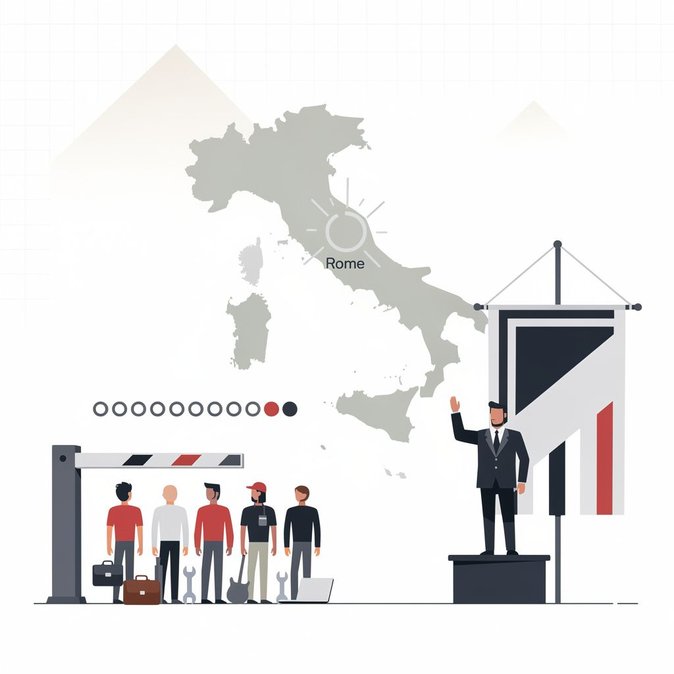
A dramatic day in the Italian capital laid bare the polarised national debate over immigration. On Saturday, 13 June, around 4,000 supporters of the ultra-right CasaPound and the new Futuro Nazionale party marched from Circo Massimo to the Aventine Hill behind a huge banner reading “Remigrazione e riconquista”. Demonstrators chanted “Duce, Duce” and brandished tricolour flags while party founder, retired general Roberto Vannacci, called for foreigners “to be sent back home” and for a constitutional amendment restricting citizenship. Only a few streets away, an estimated 20,000 anti-racist protesters led by trade-union, student and faith groups converged near the Colosseum under the slogan “Roma è meticcia e antifascista” (“Rome is mixed-race and anti-fascist”). They denounced what they described as a “test run” for mass deportations and warned that the far-right initiative—having gathered the 50,000 signatures needed for parliamentary debate—could normalise collective expulsions in breach of EU freedom-of-movement rules. While Saturday’s marches remained largely peaceful, business associations voiced concern that an escalation in anti-immigrant rhetoric could deter highly skilled foreign workers and investors. Italy’s manufacturing sector relies on an estimated 700,000 third-country nationals, and the country has one of the EU’s most acute STEM-skills shortages. Employers’ group Confindustria urged lawmakers to “keep labour-market needs in mind” when the proposal reaches committee stage later this summer. Legal experts stress that any blanket ‘remigration’ law would collide with Article 21 of the EU Charter of Fundamental Rights and multiple Schengen directives. “Even if the text is watered down, debate alone risks signalling to mobile talent that Italy is closing its doors,” says immigration lawyer Chiara Di Stefano. Companies with intra-EU transferees are advised to monitor parliamentary calendars and prepare talking-points for concerned staff. For now the government of Giorgia Meloni, which is trying to implement the new EU Migration & Asylum Pact, has distanced itself from the march. Yet Saturday’s images—raising arms in fascist salutes against a backdrop of Roman ruins—have already ricocheted across global media, underscoring the reputational stakes for Italy’s international business community.