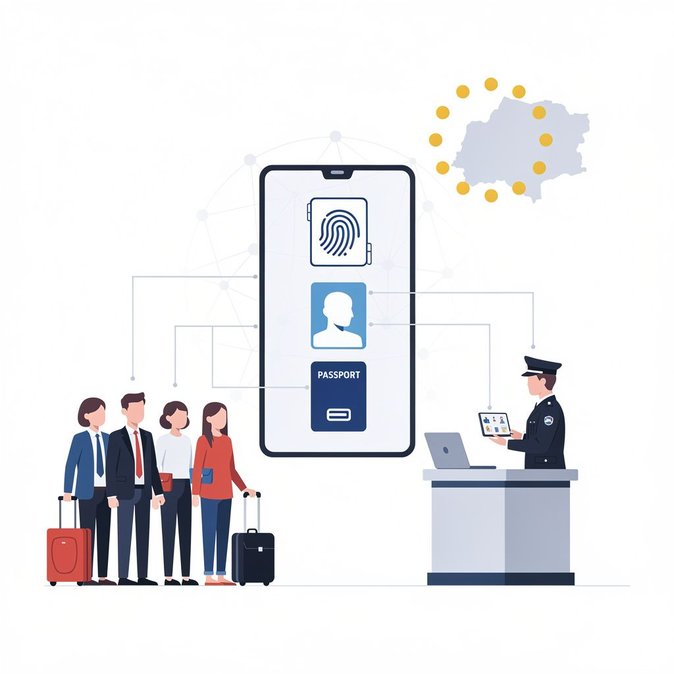
Poland’s Ministry of the Interior and Administration (MSWiA) has officially switched on the upgraded EURODAC database, marking what officials call a “milestone in border security.” The new platform expands the biometric repository used by the Border Guard (Straż Graniczna) and Police to include fingerprints, facial images and travel‐document data for anyone who applies for asylum, is detected crossing the EU’s external border irregularly, or is found to be staying without authorization. The launch comes just weeks before the EU’s broader Migration & Asylum Pact deadlines kick in and puts Poland among the first member states to finish the complicated IT overhaul. EURODAC’s new features allow instant cross-checks against terrorism and serious-crime watch-lists, giving Polish officers a real-time alert if a person is wanted elsewhere in Europe. According to MSWiA, the system can now match prints in less than two seconds and stores data for up to ten years—crucial for repeat-entry detection. For employers, relocation managers and global mobility teams, the upgrade means that identity checks at the border and in inland controls will become faster but also more stringent. Any inconsistencies between visa data, work-permit letters and actual biometrics are likely to trigger investigations, so companies are being advised to audit their posted-worker files and ensure that seconded staff travel with passports that contain up-to-date biometric chips. The Interior Ministry stresses that the project was co-financed by EU funds earmarked for migration management, and that no additional data is collected from Polish citizens. However, privacy advocates warn that the extended retention periods require strong oversight. MSWiA says it is preparing a public information campaign explaining travelers’ rights and the complaint mechanism for data corrections. In practical terms, travelers entering or leaving Poland—particularly those subject to visa requirements—should expect more frequent fingerprint scans at land borders and airports. The government hopes the tighter net will deter document fraud and reduce secondary movements within the Schengen Area ahead of the peak summer travel season.
Source: PAP MediaRoom