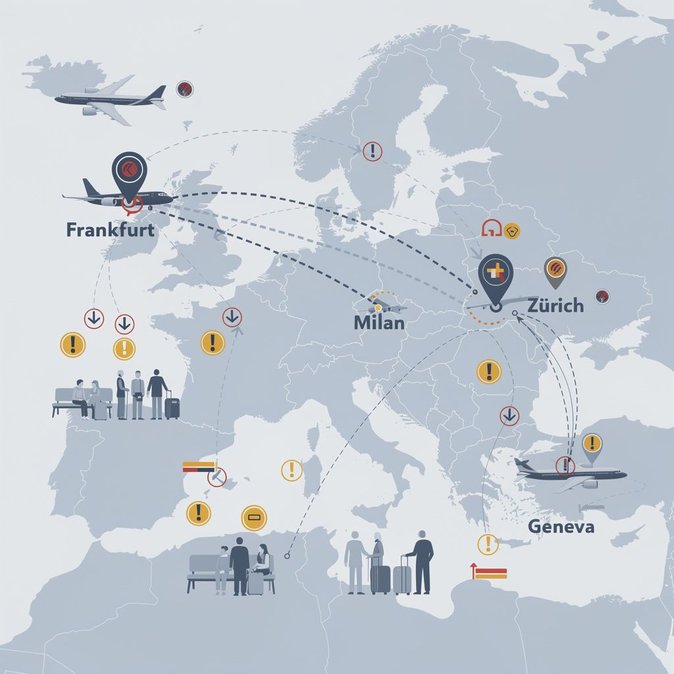
Europe’s air-travel network suffered a dramatic seizure on 17 June as Frankfurt (FRA) and Milan Malpensa (MXP) logged 295 delays and 25 cancellations in a single morning, according to FlightAware data cited by travel-news outlet Nomad Lawyer. Although the epicentres are in Germany and Italy, the disruption quickly hit Swiss passengers: SWISS and Lufthansa feeders from Zürich and Geneva faced slot restrictions, and dozens of travellers bound for Switzerland missed onward rail connections at Basel SBB and Zürich HB. Corporate flyers relying on hub-and-spoke routings via FRA were hardest hit, with Lufthansa cancelling 21 flights and forcing same-day business meetings in Zurich and Zug to be rescheduled or shifted online. Low-cost carriers operating GVA–MXP day trips for pharmaceutical reps reported delays exceeding three hours, triggering EU 261 compensation eligibility. Swiss travel-management companies advised rerouting through Munich or Vienna and highlighted Zürich’s role as an alternative hub: SWISS added two extra flights to Frankfurt late in the day to clear the backlog, though seats sold out within minutes. The episode underscores the interconnectedness of European airspace: a ground-handling shortfall in Frankfurt cascaded into Zurich’s early-evening arrival bank, pushing baggage-belt wait times over 50 minutes and delaying the last InterCity trains to Bern. Logistics firms moving spare parts and high-value pharmaceuticals via time-critical airfreight saw consignments diverted to EuroAirport Basel and trucked overnight to meet delivery SLAs. With summer peak season opening, Swiss based mobility managers are urged to add contingency routings, monitor NOTAMs, and brief travellers on EU 261 rights and travel-insurance provisions that cover forced overnight stays outside Switzerland.
Source: Nomad Lawyer – Airline News
How VisaHQ can help
VisaHQ simplifies the visa application process for individuals and businesses. Check current travel requirements, prepare the required documents and manage your application online through the VisaHQ Switzerland portal.More From Switzerland
View all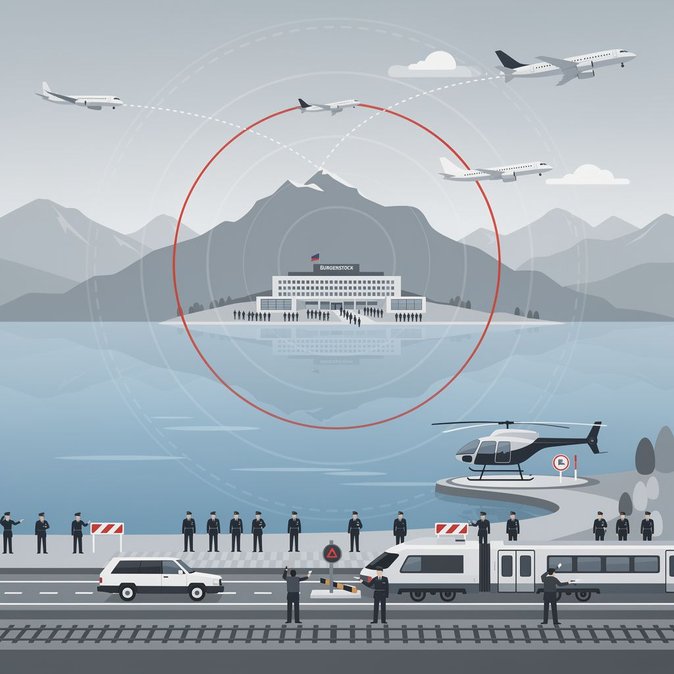
Switzerland Closes Airspace and Deploys 2,000 Troops for 19 June U.S.–Iran Summit at Bürgenstock
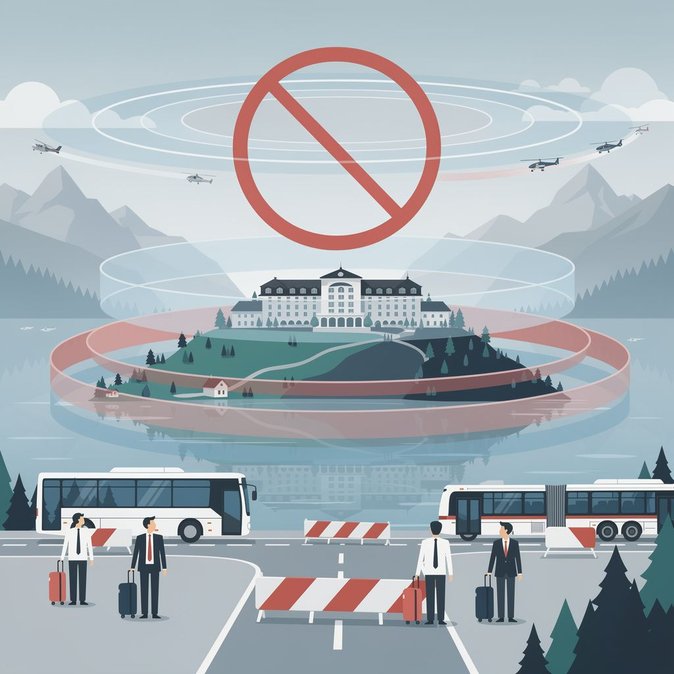
Security lockdown on Switzerland’s Bürgenstock triggers road, public-transport and air-space restrictions ahead of historic US-Iran signing