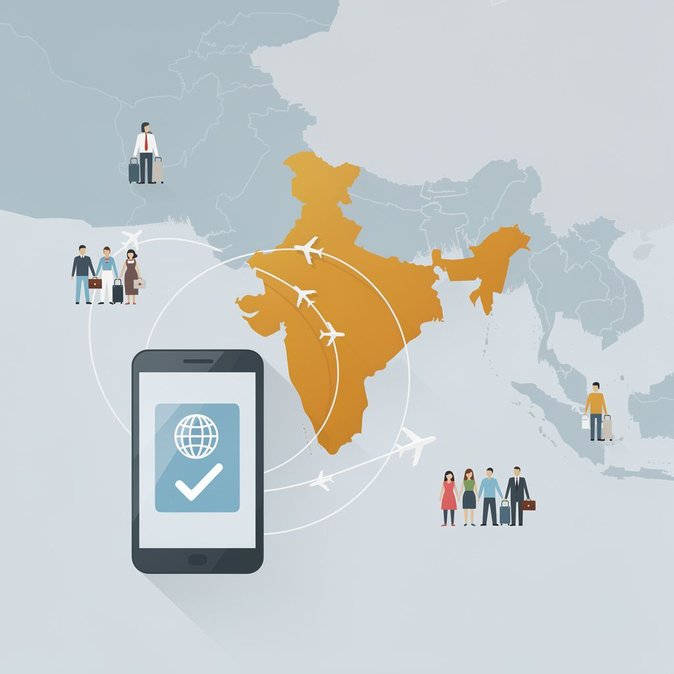
India’s Ministry of Home Affairs has slipped a highly-anticipated upgrade into its electronic travel authorisation (e-TV) system: the 30-day e-Tourist Visa (category e-T1) is now valid for multiple entries instead of the previous two-entry limit. According to industry site Body and Soul International, all e-T1 approvals issued on or after 12 June 2026 carry the new annotation. For corporate mobility managers, the change removes a longstanding pain-point. Short-stay incentive or leadership programmes that hop in and out of India—Delhi–Kathmandu–Goa, for example—previously required planners to count entries carefully or fall back on the far more expensive one-year e-T3 visa. Under the revised rules, travellers can exit and re-enter India any number of times within the visa’s 30-day validity, provided the first arrival still occurs within four months of approval. Background: India re-opened its e-visa platform in stages after the pandemic, reinstating the 30-day option only in late 2024. Demand has soared: the Ministry of Tourism reports 2.8 million e-visa arrivals in FY 2025-26, a 37 % jump year-on-year. The new flexibility aligns India’s offer more closely with Thailand and Vietnam, both of which already issue multi-entry electronic tourist visas. Practical implications: HR and travel teams can now route regional conferences through India without issuing additional visas, provided the entire programme concludes within 30 days of first entry. Airlines with sixth-freedom hubs—Singapore Airlines, Emirates and Qatar Airways—are expected to market “India +1” itineraries more aggressively in their MICE brochures. Compliance tips: The biometric capture-on-arrival requirement and the ₹10,000 over-stay penalty remain unchanged. Travellers must still carry a print-out or digital copy of the ETA approval and hold proof of onward or return travel at each re-entry.
Source: Body and Soul International