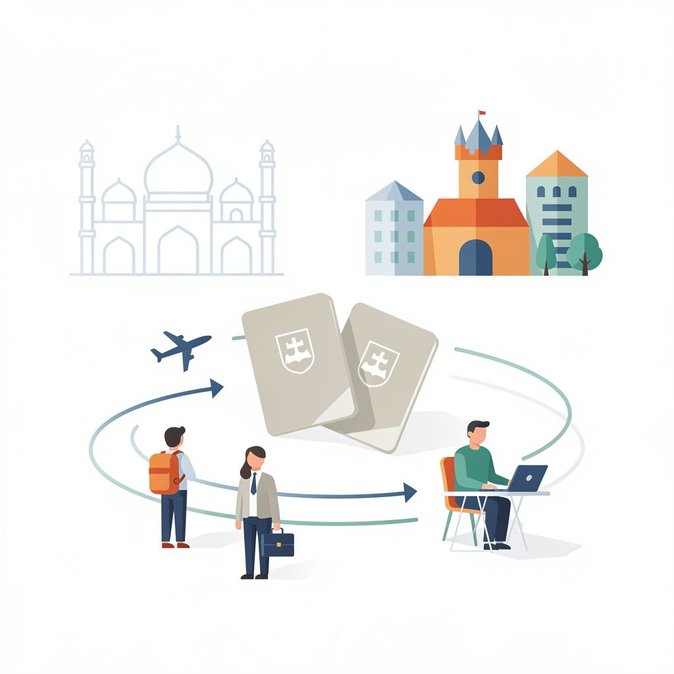
During Foreign Minister-level consultations in Bratislava on 15 June, India and Slovakia agreed to establish a permanent ‘Consular & Mobility Mechanism’ that will meet twice a year to troubleshoot visa processing, streamline work-permit quotas and create fast-track channels for students and tech professionals. The announcement follows a 42 percent jump in bilateral trade last year—driven by Indian auto-component makers setting up plants near Košice—and growing Slovak interest in sending IT engineers to India for short “reverse off-shoring” rotations. Officials say the working group’s first agenda item will be to pilot a 10-day business-visa turnaround for companies that have invested at least €1 million in either market. For corporates, the biggest win could be mutual recognition of police-clearance certificates and medical exams, cutting documentation times for intra-company transfers to six weeks instead of the current three months. Universities are also pushing for a common template for transcripts so that Indian undergraduates attending Slovak technical institutes can secure post-study internship visas without additional apostilles. Why Slovakia? With labour shortages pinching Central Europe, Bratislava is marketing itself as “the Bangalore of the Visegrád”, courting Indian coders who already have EU-Blue-Card experience. Conversely, Indian ports view Slovak inland logistics parks as entry points for Central-European distribution. The new forum gives both sides a direct channel to adjust rules in near-real time rather than waiting for broader EU negotiations.
Source: NewKerala