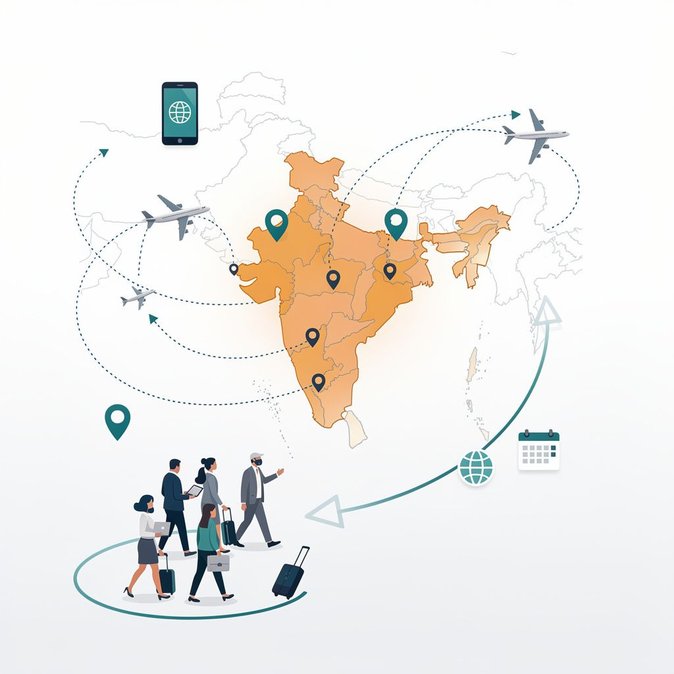
In a notice dated 12 June but publicised only this week, the Ministry of Home Affairs has upgraded the popular 30-day e-Tourist Visa to ‘Multiple Entry’ status. Travel trade portal Body & Soul International highlighted the change on 16 June, calling it “the most flexible short-stay visa India has ever offered”. Previously, holders were limited to two entries—problematic for corporate incentive groups that combine India with side trips to Nepal, Bhutan or the Maldives.
Travellers eager to take advantage of the new flexibility can save time by using VisaHQ’s India service (https://www.visahq.com/india/), which keeps all e-Visa updates in one place, offers intuitive online forms, and supports group applications—ideal for incentive houses and conference planners juggling complex, multi-country itineraries.
The new rule lets travellers exit and re-enter India any number of times within the 30-day validity, provided the first entry occurs within four months of approval. For multinational companies staging regional reward programmes, the tweak means an itinerary can now start in Delhi, dip into neighbouring countries for high-altitude experiences, and finish with a gala in Goa without reapplying for a visa. Destination-management companies say they are already drafting multi-country circuits for pharma and auto clients that had shelved South Asia meetings because of visa complexity. The change also dovetails with India’s plan to integrate e-Visa status alerts into WhatsApp later this year, promising near-real-time notifications for large mobile workforces. Applicants still pay US$25 in the April–June low season or US$40 the rest of the year—significantly cheaper than multiple single-entry visas.
Travellers eager to take advantage of the new flexibility can save time by using VisaHQ’s India service (https://www.visahq.com/india/), which keeps all e-Visa updates in one place, offers intuitive online forms, and supports group applications—ideal for incentive houses and conference planners juggling complex, multi-country itineraries.
The new rule lets travellers exit and re-enter India any number of times within the 30-day validity, provided the first entry occurs within four months of approval. For multinational companies staging regional reward programmes, the tweak means an itinerary can now start in Delhi, dip into neighbouring countries for high-altitude experiences, and finish with a gala in Goa without reapplying for a visa. Destination-management companies say they are already drafting multi-country circuits for pharma and auto clients that had shelved South Asia meetings because of visa complexity. The change also dovetails with India’s plan to integrate e-Visa status alerts into WhatsApp later this year, promising near-real-time notifications for large mobile workforces. Applicants still pay US$25 in the April–June low season or US$40 the rest of the year—significantly cheaper than multiple single-entry visas.