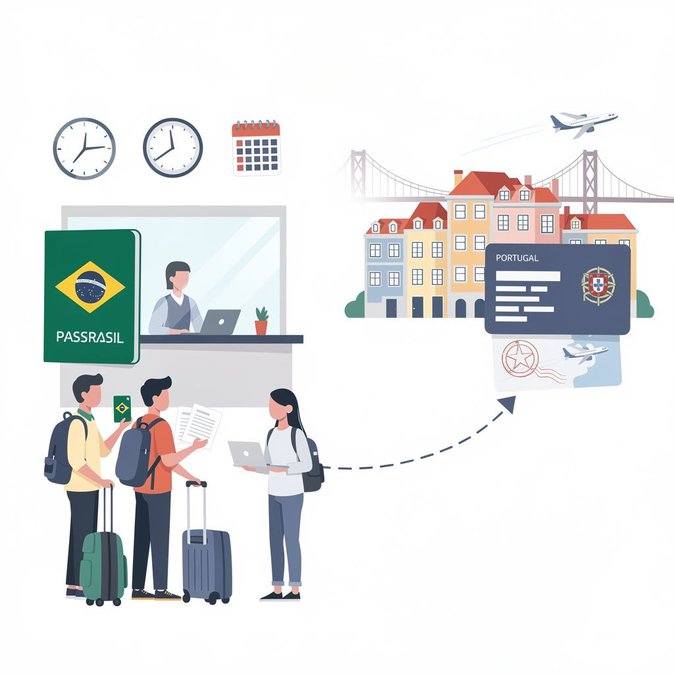
The Portuguese parliament has closed a popular loophole used by thousands of Brazilian students: as of 18 June 2026, foreigners must hold an approved long-stay study visa before boarding a flight.
For Brazilian nationals wondering how to navigate the new pre-departure paperwork, VisaHQ can streamline the process by guiding applicants through Portugal’s study-visa checklist, arranging document translations and scheduling consular appointments—learn more at https://www.visahq.com/brazil/
The amendment abolishes the practice of entering Portugal as a visa-exempt tourist, enrolling in a course and subsequently converting status in country. Immigration lawyers explain that article 89 of Portugal’s Aliens Act has been revised to bar in-country regularisation for educational purposes. Applicants now need to file at a Portuguese consulate in their home jurisdiction, present a letter of acceptance, proof of means and health insurance, then await approval – a process that can take up to 90 days. Brazilians are the largest foreign community in Portugal (c. 400,000 residents) and account for roughly half of student visa conversions. Wilson Bicalho of Bicalho Consulting notes that “the change restores predictability but demands far earlier planning; universities will have to issue acceptance letters months in advance.” Felipe Ricardo of Q7R Advogados warns of higher costs and longer lead-times that could deter enrolments in vocational courses. Brazilian corporates that sponsor talent for MBAs or technical programmes in Portugal must now budget for consular fees, translation of documents and potential start-date delays. Mobility managers should audit assignee pipelines and ensure candidates have at least four months between admission and course commencement. Dependants will still require separate accompanying-family visas. Students already in Portugal with pending residence requests should be protected under transitional provisions, but advisers recommend keeping proof of application receipts. Universities are lobbying the Serviço de Estrangeiros e Fronteiras (SEF) for priority processing ahead of the September intake.

For Brazilian nationals wondering how to navigate the new pre-departure paperwork, VisaHQ can streamline the process by guiding applicants through Portugal’s study-visa checklist, arranging document translations and scheduling consular appointments—learn more at https://www.visahq.com/brazil/
The amendment abolishes the practice of entering Portugal as a visa-exempt tourist, enrolling in a course and subsequently converting status in country. Immigration lawyers explain that article 89 of Portugal’s Aliens Act has been revised to bar in-country regularisation for educational purposes. Applicants now need to file at a Portuguese consulate in their home jurisdiction, present a letter of acceptance, proof of means and health insurance, then await approval – a process that can take up to 90 days. Brazilians are the largest foreign community in Portugal (c. 400,000 residents) and account for roughly half of student visa conversions. Wilson Bicalho of Bicalho Consulting notes that “the change restores predictability but demands far earlier planning; universities will have to issue acceptance letters months in advance.” Felipe Ricardo of Q7R Advogados warns of higher costs and longer lead-times that could deter enrolments in vocational courses. Brazilian corporates that sponsor talent for MBAs or technical programmes in Portugal must now budget for consular fees, translation of documents and potential start-date delays. Mobility managers should audit assignee pipelines and ensure candidates have at least four months between admission and course commencement. Dependants will still require separate accompanying-family visas. Students already in Portugal with pending residence requests should be protected under transitional provisions, but advisers recommend keeping proof of application receipts. Universities are lobbying the Serviço de Estrangeiros e Fronteiras (SEF) for priority processing ahead of the September intake.