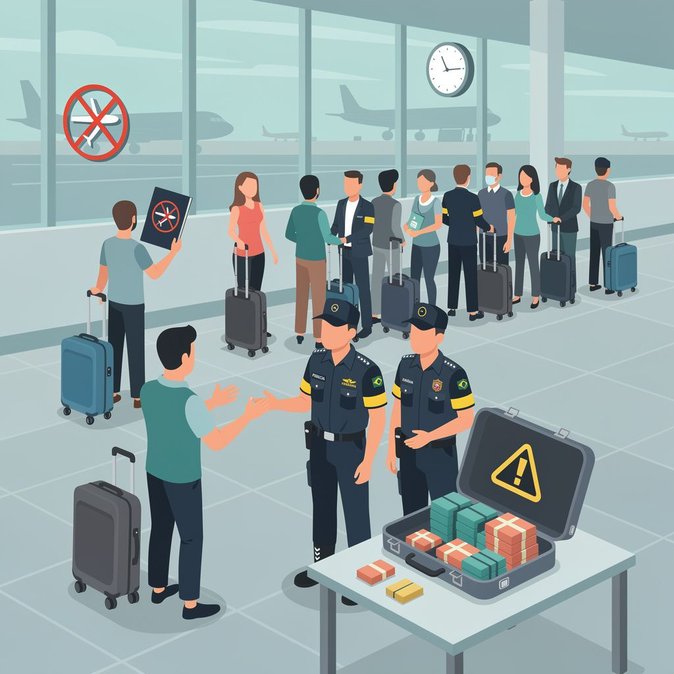
Brazil’s Federal Police (PF) reported a string of interceptions on 18 June at São Paulo/Guarulhos—Latin America’s busiest hub—highlighting the security dimension of global mobility. Among the cases: two Thai passengers carrying 44 kg of skunk and hashish in checked bags; a Brazilian ‘body-packer’ heading to Paris with cocaine capsules ingested; and two travellers (from the Dominican Republic and Burkina Faso) attempting to board with fraudulent documents. One Brazilian passport was confiscated under a Volta Redonda court order. The PF said the actions were part of an intensified ‘winter-vacation’ operation combining behavioural analytics, x-ray screening and advance passenger information provided by airlines. International carriers were briefed on new document fraud patterns involving recycled Brazilian passports. For corporate travel managers, the incident underscores the importance of compliance with Brazil’s Advance Passenger Information System (API-BR) and ensuring employees carry passports valid for at least six months, as secondary inspections are increasingly rigorous. Logistics firms moving high-value cargo through GRU should expect longer dwell times as random checks rise. The blitz also fuels debate over whether Brazil should accelerate the installation of biometric e-Gates for outbound passengers, a project currently stalled at the National Civil Aviation Agency (ANAC).
Source: Polícia Federal