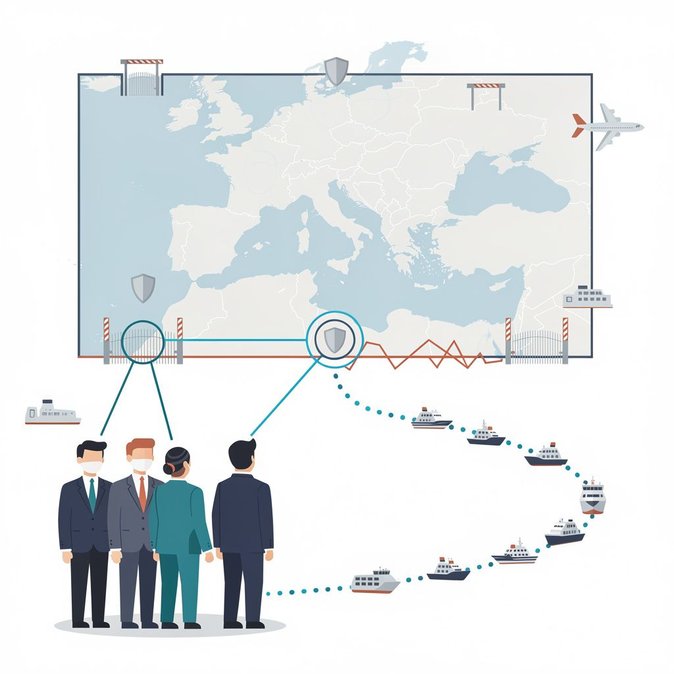
Home-affairs ministers from Malta, Italy, Cyprus and Greece met in Rome on 18 June 2026 to tighten regional coordination against irregular migration. The gathering, requested by Italy’s Matteo Piantedosi and building on an April summit hosted in Nicosia, concluded with a pledge to create a permanent network of national contact points. The ministers—Cyprus was represented by Migration Minister Nicholas Ioannides—said the contact-point system would allow “rapid, coordinated responses” during maritime influxes and make it easier to dismantle smuggling rings by pooling intelligence. They also backed stronger external-border funding and a push for EU-wide assisted voluntary-return programmes, underlining that NGO search-and-rescue vessels must not become “pull factors.” For employers reliant on seasonal or project labour, the statement signals that visa issuance may become more selective, while returns procedures will accelerate. However, coordinated enforcement should also reduce ad-hoc entry restrictions that can disrupt supply-chain rotations. The bloc will now table the proposals at forthcoming Justice & Home Affairs Councils, where Cyprus—holding the Council presidency—will shepherd them through. Mobility managers should expect tighter carrier-liability checks and possibly new advance-passenger-information requirements on ferries operating from North Africa.