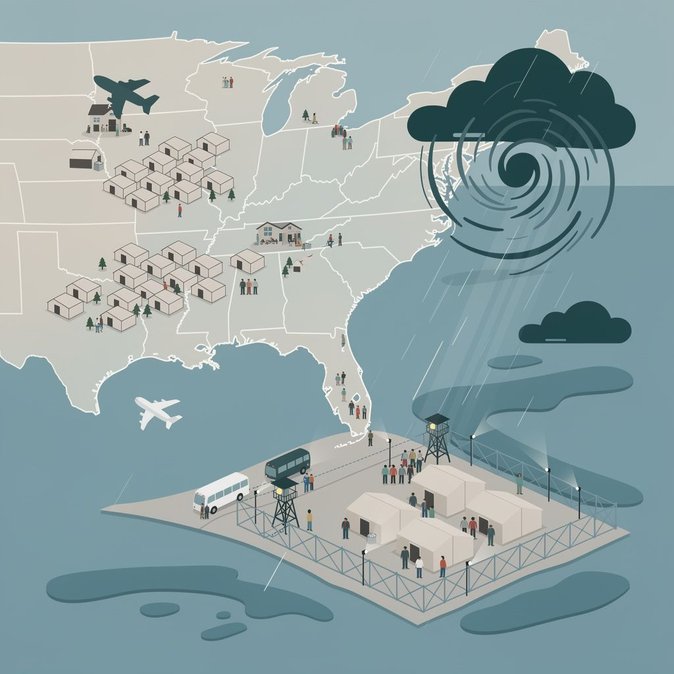
The Department of Homeland Security confirmed on June 18 that every detainee housed at the makeshift South Florida Detention Center—nicknamed “Alligator Alcatraz” for its remote Everglades location—has been transferred to other facilities nationwide. Officials cited safety concerns as the Atlantic hurricane season begins, but critics called the move overdue acknowledgment that the tarp-roofed camp was unfit for human habitation. Since opening in July 2025, the state-run complex had drawn lawsuits over allegations of spoiled food, flooded toilets and limited legal access. President Trump toured the site last year, praising its rapid construction, yet lawyers say detainees frequently disappeared into the system for days after weather-related evacuations. DHS has not said whether the camp will reopen after November. If it closes permanently, ICE will need to find alternative beds for roughly 1,200 daily occupants, potentially increasing reliance on county jails in Louisiana and Texas. That could affect hearing dockets and require attorneys to travel farther, raising costs for employers seeking to secure release of foreign workers caught in enforcement sweeps. Advocates argue the transfer offers a chance to pilot community-based supervision in South Florida’s immigrant communities rather than shifting people to distant facilities. Companies with significant Latin American workforces may wish to support such initiatives, which could reduce detention disruptions that sideline employees for months.