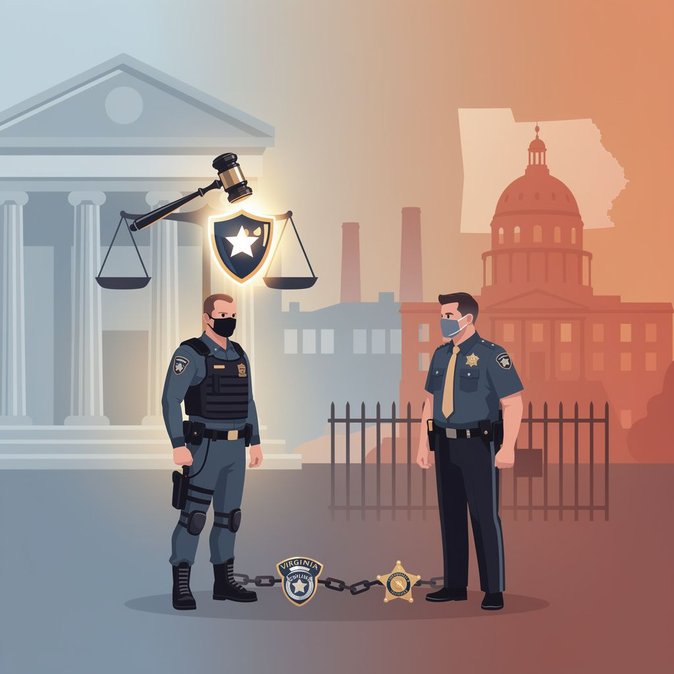
The U.S. Department of Justice filed suit on June 19 to block two Virginia statutes set to take effect July 1: one that makes it a misdemeanor for law-enforcement officers—including federal agents—to wear face coverings while on duty, and another that bars local agencies from entering into 287(g) cooperation agreements with Immigration and Customs Enforcement. In its complaint, DOJ argues the mask ban endangers undercover and immigration officers who routinely conceal their identities for operational security, and that the 287(g) restriction unlawfully intrudes on federal authority over immigration enforcement.
For individuals and organizations trying to anticipate how these legal shifts might affect travel, sponsorship, or visa maintenance for their personnel, VisaHQ can streamline the process with real-time guidance on U.S. entry requirements and document processing. Their online platform (https://www.visahq.com/united-states/) keeps applicants informed of rule changes, helping employers and foreign nationals stay compliant even as federal and state policies evolve.
Acting Attorney General Todd Blanche called the laws “anti-law-enforcement and pre-empted by the Constitution.” If the statutes were allowed to stand, ICE and CBP officers operating in Virginia courthouses, jails and worksites could face criminal charges, complicating workplace investigations and detainee transfers. Corporate counsel warn that the uncertainty could delay I-9 work-site audits and create patchwork enforcement standards along interstate corridors critical to logistics companies. The lawsuit asks the Eastern District of Virginia for an immediate injunction. Until the court rules, employers with multi-state operations should monitor the case and review internal protocols for hosting federal officers on premises in Virginia. Foreign nationals in state custody for non-immigration offenses may also experience release delays while inter-agency hand-offs are litigated.
For individuals and organizations trying to anticipate how these legal shifts might affect travel, sponsorship, or visa maintenance for their personnel, VisaHQ can streamline the process with real-time guidance on U.S. entry requirements and document processing. Their online platform (https://www.visahq.com/united-states/) keeps applicants informed of rule changes, helping employers and foreign nationals stay compliant even as federal and state policies evolve.
Acting Attorney General Todd Blanche called the laws “anti-law-enforcement and pre-empted by the Constitution.” If the statutes were allowed to stand, ICE and CBP officers operating in Virginia courthouses, jails and worksites could face criminal charges, complicating workplace investigations and detainee transfers. Corporate counsel warn that the uncertainty could delay I-9 work-site audits and create patchwork enforcement standards along interstate corridors critical to logistics companies. The lawsuit asks the Eastern District of Virginia for an immediate injunction. Until the court rules, employers with multi-state operations should monitor the case and review internal protocols for hosting federal officers on premises in Virginia. Foreign nationals in state custody for non-immigration offenses may also experience release delays while inter-agency hand-offs are litigated.