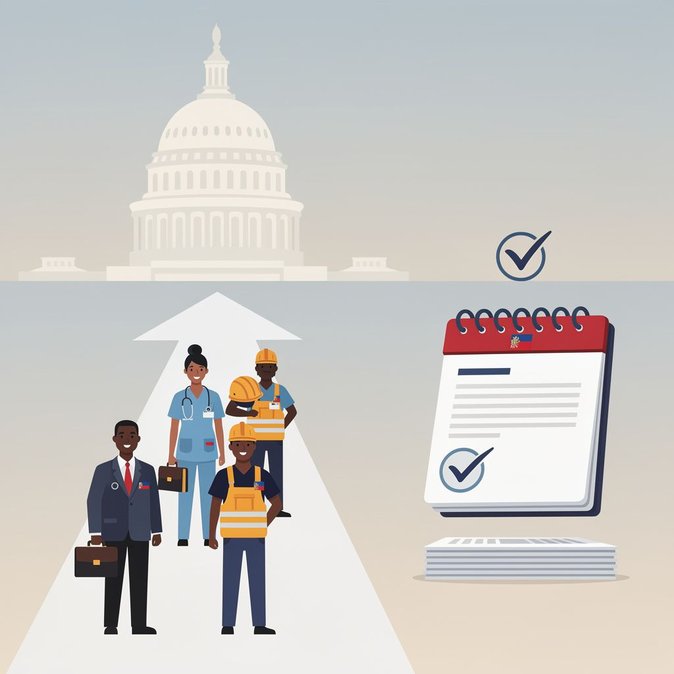
In the early hours of 19 June, Rep. Laura Gillen (D-NY) issued a statement welcoming the introduction of a Senate companion to her bill that would extend Temporary Protected Status (TPS) and work authorization for more than 300,000 Haitian nationals living in the United States. The House passed Gillen’s measure in April with 34 Republican votes, but the Senate had been silent until Sens. Edward Markey and Lisa Blunt Rochester filed S.-4919 this week. TPS for Haiti is currently set to expire on 3 February 2026, and the Trump administration has signaled it will not renew the designation, citing the president’s view that “TPS has become a back-door route to permanent residency.”
For organizations or individuals unsure how potential TPS changes might affect their travel or residency plans, VisaHQ offers step-by-step guidance and application support for a wide range of U.S. immigration solutions. Their online portal pairs real-time status tracking with expert document review, helping both employers and Haitian nationals explore visas, extensions, or alternative pathways—visit https://www.visahq.com/united-states/ to learn more.
Gillen’s bill would automatically extend protections through 2030 and instruct DHS to create a streamlined adjustment-of-status path for long-term beneficiaries. Although press releases rarely sway Senate calendars, the move keeps the issue alive as litigation over the program grinds on in multiple circuits. For employers, particularly in health care, hospitality, and home-care sectors with large Haitian workforces, the legislative push offers a glimmer of certainty. HR teams may use the development to reassure employees whose work authorization will otherwise lapse and to plan I-9 reverification timelines. Global-mobility programs with Haitian assignees should monitor the bill and any DHS announcements; failure to extend TPS would force tens of thousands to seek alternative visas or depart, disrupting project staffing. Companies may also consider internal sponsorship for eligible employees under EB-3 or EB-2 categories to hedge against legislative failure. If the Senate advances the bill—or if growing bipartisan pressure prompts DHS to issue an administrative extension—employers will gain at least four more years of stability and a potential green-card off-ramp for valued staff. The next procedural milestone is a Senate Judiciary Committee hearing expected later this summer.

For organizations or individuals unsure how potential TPS changes might affect their travel or residency plans, VisaHQ offers step-by-step guidance and application support for a wide range of U.S. immigration solutions. Their online portal pairs real-time status tracking with expert document review, helping both employers and Haitian nationals explore visas, extensions, or alternative pathways—visit https://www.visahq.com/united-states/ to learn more.
Gillen’s bill would automatically extend protections through 2030 and instruct DHS to create a streamlined adjustment-of-status path for long-term beneficiaries. Although press releases rarely sway Senate calendars, the move keeps the issue alive as litigation over the program grinds on in multiple circuits. For employers, particularly in health care, hospitality, and home-care sectors with large Haitian workforces, the legislative push offers a glimmer of certainty. HR teams may use the development to reassure employees whose work authorization will otherwise lapse and to plan I-9 reverification timelines. Global-mobility programs with Haitian assignees should monitor the bill and any DHS announcements; failure to extend TPS would force tens of thousands to seek alternative visas or depart, disrupting project staffing. Companies may also consider internal sponsorship for eligible employees under EB-3 or EB-2 categories to hedge against legislative failure. If the Senate advances the bill—or if growing bipartisan pressure prompts DHS to issue an administrative extension—employers will gain at least four more years of stability and a potential green-card off-ramp for valued staff. The next procedural milestone is a Senate Judiciary Committee hearing expected later this summer.