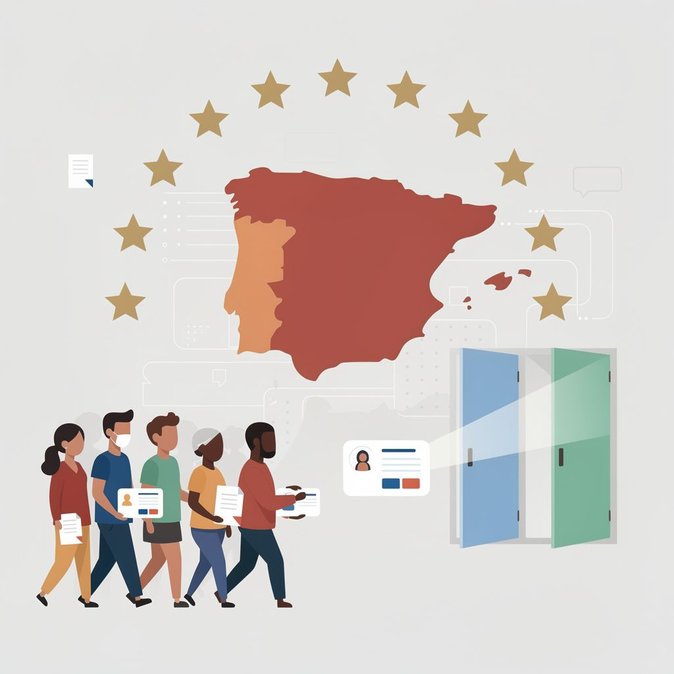
Spain marked World Refugee Day with dozens of grassroots events, the most visible taking place in Madrid’s multicultural Lavapiés district at 20:00 on 20 June 2026. Organised by coalitions such as Alcalá Acoge, Territorio Doméstico and Red Interlavapiés, the rally called for faster asylum processing and condemned what speakers labelled the “dehumanising drift” of the new EU Migration & Asylum Pact. Activists highlighted official statistics showing 220,000 Spanish asylum files still unresolved and warned that many applicants resort to irregular employment because the 18-month work-ban clock only starts when documentation is issued. The demonstration also applauded Spain’s ongoing extraordinary regularisation but stressed that humanitarian protection “cannot rely on ad-hoc amnesties”. For employers engaged in refugee-to-work pipelines, the event is a reminder that administrative backlogs continue to hamper legal onboarding even when candidates are located in Spain. Mobility teams may need to budget extra time—or consider the regularisation route where eligible—before new hires can access payroll systems and social-security numbers. The rally’s timing—eight days after the EU pact took effect—underscores the widening gap between Brussels’ emphasis on border procedures and local Spanish networks pressing for inclusive labour-market access. International assignees resident in Spain should expect heightened debate and possible policy tweaks as the Spanish Parliament reviews transposition measures in the autumn.
Source: Noticias Obreras