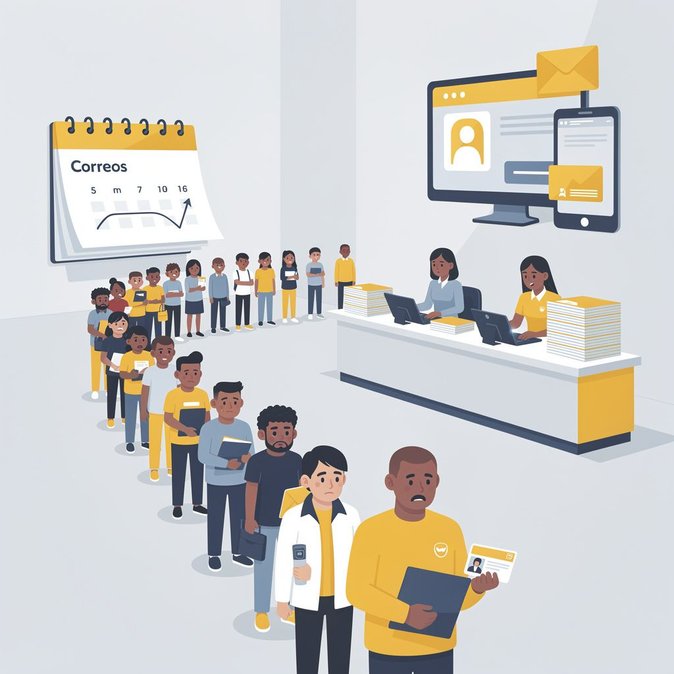
Spain’s regularisation drive has a hidden operational linchpin: the state-owned postal operator, Correos. Throughout the spring, thousands of migrants have used Correos branches to book appointments, certify documents and submit paper copies of their applications. That safety-valve ends on 30 June, when the Ministry of Inclusion will stop accepting face-to-face filings and switch to a purely digital channel. Internal memos leaked to El Debate on 17 June warn that removing the appointment system and walk-in counter service could unleash disorder at already understaffed branches just as summer holidays thin the workforce.
As a practical workaround, VisaHQ can help both employers and migrants navigate Spain’s evolving paperwork maze. By visiting https://www.visahq.com/spain/ users gain access to tailored checklists, document-preparation tools and expedited submission options, reducing dependence on in-person Correos appointments and mitigating the risk of missed deadlines.
Union estimates suggest that up to 20 % of Correos staff are on part-time contracts; managers are lobbying to upgrade those hours to full-time, but decisions are stalled until an autumn workforce review. From July, migrants who still lack a digital certificate will be forced to rely on public computer terminals or intermediaries. Correos fears queues around the block as applicants attempt last-minute corrections, resubmissions or postal identity verifications. Because employee costs represent 90 % of revenues, the company’s ability to add overtime or temporary staff is limited, even though the government is injecting €3 billion over four years in exchange for a wider public-service remit. HR teams sponsoring applicants should therefore: (a) schedule any outstanding *cita previa* before 28 June; (b) issue written instructions on how to obtain a Cl@ve digital identity; and (c) prepare to courier original documents to employees who may be traveling during the summer peak. In the longer term, Correos sees the migration paperwork contract as a lifeline that could offset declining letter volumes—but only if it can modernise its digital front-end and automate back-office scanning. For mobility professionals, the episode is a reminder that ‘soft infrastructure’ such as postal networks can become unexpected chokepoints in large-scale immigration programmes.
As a practical workaround, VisaHQ can help both employers and migrants navigate Spain’s evolving paperwork maze. By visiting https://www.visahq.com/spain/ users gain access to tailored checklists, document-preparation tools and expedited submission options, reducing dependence on in-person Correos appointments and mitigating the risk of missed deadlines.
Union estimates suggest that up to 20 % of Correos staff are on part-time contracts; managers are lobbying to upgrade those hours to full-time, but decisions are stalled until an autumn workforce review. From July, migrants who still lack a digital certificate will be forced to rely on public computer terminals or intermediaries. Correos fears queues around the block as applicants attempt last-minute corrections, resubmissions or postal identity verifications. Because employee costs represent 90 % of revenues, the company’s ability to add overtime or temporary staff is limited, even though the government is injecting €3 billion over four years in exchange for a wider public-service remit. HR teams sponsoring applicants should therefore: (a) schedule any outstanding *cita previa* before 28 June; (b) issue written instructions on how to obtain a Cl@ve digital identity; and (c) prepare to courier original documents to employees who may be traveling during the summer peak. In the longer term, Correos sees the migration paperwork contract as a lifeline that could offset declining letter volumes—but only if it can modernise its digital front-end and automate back-office scanning. For mobility professionals, the episode is a reminder that ‘soft infrastructure’ such as postal networks can become unexpected chokepoints in large-scale immigration programmes.