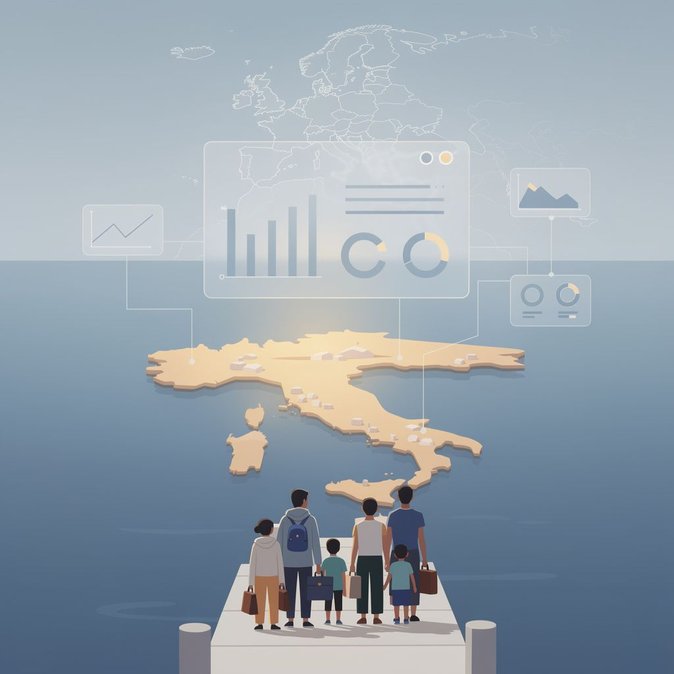
A new civil-society platform called “Rete Lampedusa” was unveiled on 22 June in a bid to change the way migration to Italy is discussed and managed. The initiative is spearheaded by Dr Pietro Bartolo— the island doctor who treated thousands of newly-arrived migrants before becoming a member of the European Parliament— together with NGOs Don Bosco 2000 and other faith-based and secular associations. Although migrant arrivals to Italy have fallen sharply (13,179 landings between 1 January and 19 June 2026, compared with 28,549 in the same period of 2025), founders say the political narrative remains stuck between “invasion” rhetoric and electoral silence. Rete Lampedusa aims to fill that vacuum with verified data, first-hand field experience and EU-level advocacy. Its first public conference is set for 15 July in Rome; working groups will focus on regular migration corridors, reception standards, minors’ protection and post-arrival integration—topics expected to dominate Italy’s autumn parliamentary agenda when the government starts transposing the new EU Pact on Migration and Asylum. For global-mobility managers, the network could become a valuable, on-the-ground source of information about reception capacity at key entry points such as Lampedusa, Pozzallo and Augusta. Corporate relocation teams currently struggle to predict processing times for humanitarian permits, humanitarian visas and residence permits; the platform promises monthly dashboards that cross-reference Interior-Ministry statistics with port-authority and health-authority data, offering early warnings of capacity bottlenecks. More broadly, Rete Lampedusa’s emphasis on “responsabilità europea” dovetails with Brussels’ recent call for member states—including Italy—to phase out internal Schengen border checks. Observers say the NGO data could strengthen Rome’s hand in future EU burden-sharing talks, potentially accelerating mutual-recognition procedures for work permits and reducing uncertainty for firms deploying staff across multiple EU locations.
Source: Corriere della Sera