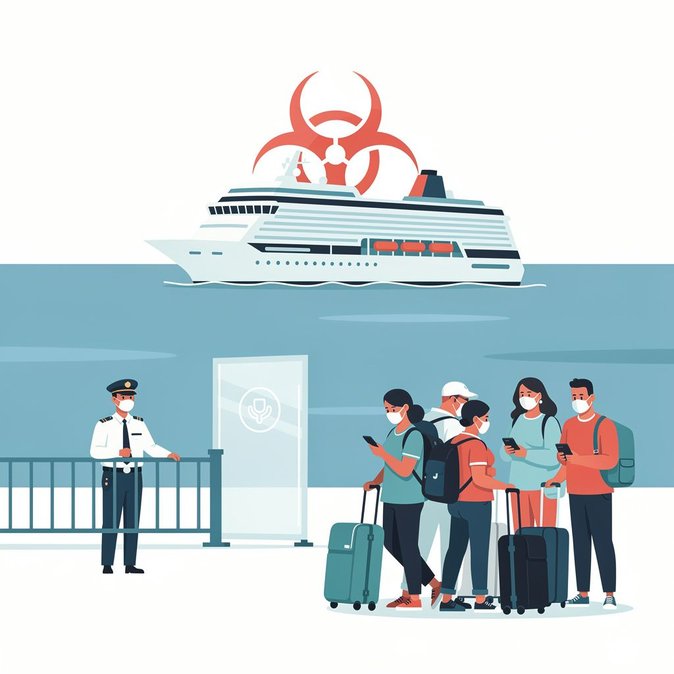
Six long-isolated passengers from the Dutch-flagged expedition vessel MV Hondius walked out of the federal quarantine facility at Bullsbrook, near Perth, on the morning of 23 June after 42 days in isolation. Five Australians and one New Zealander had been repatriated in mid-May after an Andes-strain Hantavirus outbreak killed three fellow travellers in the Atlantic. Their release follows a series of negative PCR tests and medical examinations cleared by the Australian Centre for Disease Control and WA Health. The episode has been closely watched by global mobility managers because it is the first time since the Covid-19 pandemic that Australia has re-activated a full 42-day quarantine order under the Biosecurity Act. The Department of Home Affairs confirmed that the order applied only to the six passengers and that no new border measures are planned, but officials emphasised that “post-pandemic infrastructure” remains in place should another high-mortality pathogen arrive. For cruise operators, the case is a reminder that pandemic-era contingency planning is still an operational requirement. Several lines have already inserted Hantavirus clauses into their Australian booking terms, and at least two insurers told SBS they are reassessing medical-evacuation coverage for remote expedition itineraries in the Southern Ocean. Employers sending staff on incentive cruises or fly-in/fly-out (FIFO) rotations have been advised to review crisis-response protocols and to keep emergency travel funds liquid. Travellers should also note that Andes-strain Hantavirus was quietly added to Australia’s list of “listed human diseases” on 12 May, meaning infected individuals can be removed from short-stay visas and placed into isolation by force if necessary. Migration agents say they are already fielding questions from anxious parent-visit and working-holiday clients about whether the new listing could trigger broader travel bans; authorities insist it will not, provided there is no sustained local transmission.
Source: SBS News