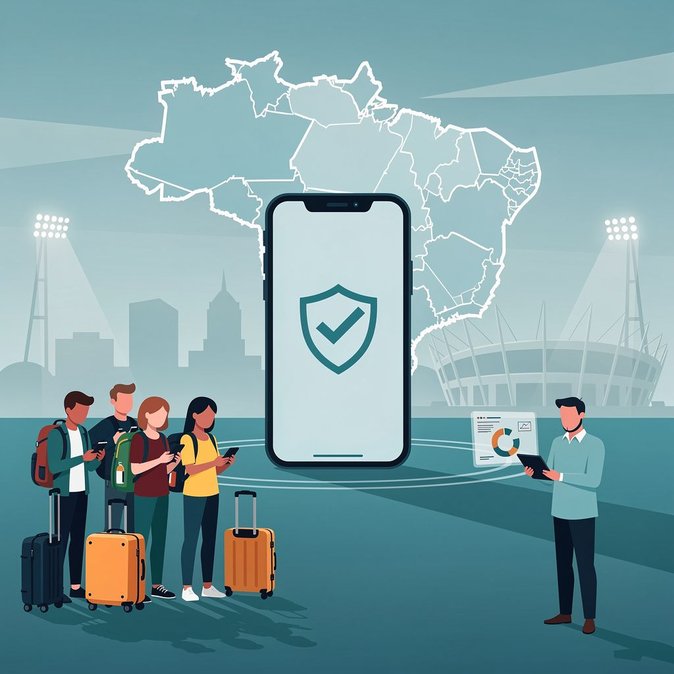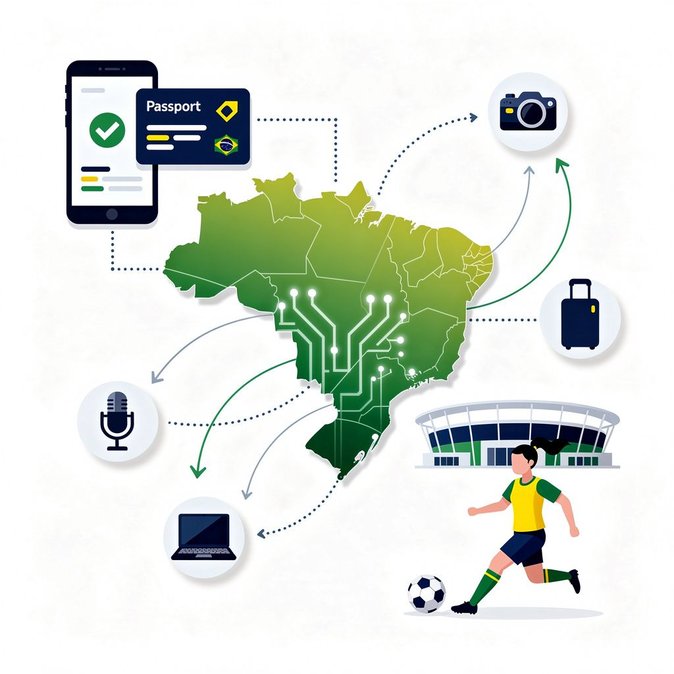
Starting today, 24 June 2026, Brazil officially activates the special visa and immigration framework contained in Chapter VIII of Law 15.421/2026— the legal package that underpins the country’s hosting of the 2027 FIFA Women’s World Cup. Although the law was sanctioned on 1 June, it stipulated that its migration provisions would *produce effects* only from 24 June. As a result, the Ministry of Foreign Affairs and the Ministry of Justice may now begin issuing event-linked temporary visas and electronic visitor visas (e-Visas) through a fully digital process. The new regime waives consular-sticker requirements and allows applicants— athletes, media, FIFA officials, sponsors, accredited suppliers and identified family members— to apply entirely online, submit biometric data on arrival and perform **any activity necessary for the tournament** without needing a separate work permit. Multiple-entry validity is aligned with the tournament’s operational window (January 2026-December 2027) and holders may remain in Brazil for up to 90 days per entry, extendable once, making it easier for international teams to organise pre-tournament training camps and test events. Crucially for companies that will second staff or bring in high-skilled contractors, the law mandates that decisions on visa applications be issued within five business days and expressly recognises remote work, allowing accredited foreigners to continue working for their overseas employer while in Brazil. The Foreign Ministry must publish a complementary ordinance within 45 days setting out technical specifications for the new e-Visa portal and API connectivity so that sponsors’ mobility teams can bulk-submit data. Immigration advisers warn that travel demand will spike once match schedules are confirmed. Businesses should therefore audit project timelines, identify personnel who will need credentials and budget additional time for the still-to-be-defined biometric collection step that will occur on arrival at designated airports. For Brazil, today’s milestone signals that the logistical countdown has truly begun. The government hopes the streamlined scheme will avoid the visa bottlenecks that marred previous mega-events and will showcase Brazil’s new digital immigration infrastructure to future investors and tourists alike.