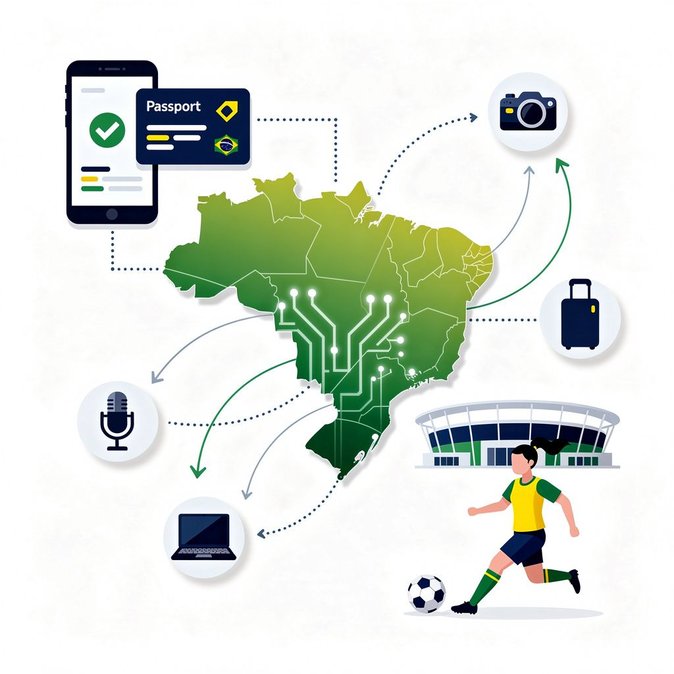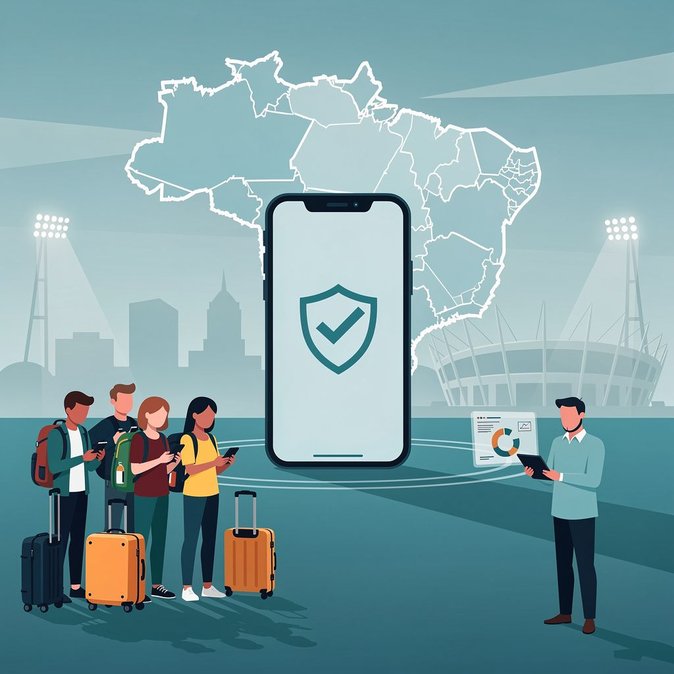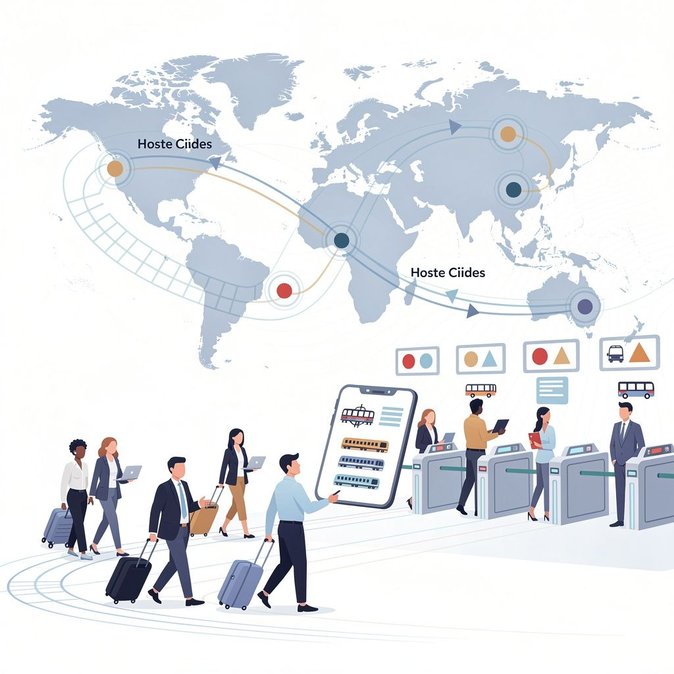
Exactly one year before kick-off, the Brazilian Football Confederation (CBF) released a *“Falta 1 Ano”* (One Year to Go) report on 24 June 2026 outlining infrastructure, security and mobility preparations for the FIFA Women’s World Cup. Eight host cities— Belo Horizonte, Brasília, Fortaleza, Porto Alegre, Recife, Rio de Janeiro, Salvador and São Paulo— must finalise airport upgrades, bilingual signage and last-mile transport plans by December. The CBF confirmed that priority immigration lanes and dedicated customs desks will operate at 12 international airports. These will interface with the new e-Visa system activated today under Law 15.421, allowing teams and accredited personnel to clear entry within 25 minutes on average.
For travellers who need guidance on Brazil’s updated entry rules, VisaHQ offers a streamlined online application platform and real-time assistance. Its dedicated Brazil portal (https://www.visahq.com/brazil/) helps fans, media crews and corporate delegations complete e-Visa submissions swiftly, track processing status, and avoid last-minute administrative delays—ensuring everyone arrives tournament-ready.
A pilot at Guarulhos (GRU) using QR-code entry permits processed 600 passengers during a recent test event. Host cities are also expanding urban-mobility apps to integrate match tickets with metro, BRT and rideshare vouchers— a model trialled successfully during the 2016 Rio Olympics. Business-event organisers are urged to coordinate schedules with local authorities, as temporary traffic-restriction zones will operate around stadiums on match-days. From a corporate-mobility perspective, the CBF’s roadmap provides the first authoritative timeline for travel-policy planning. Companies expecting a surge in client visits or expatriate moves should begin block-booking accommodation and registering for city-centre vehicle permits where required. The report concludes that Brazil expects more than 1.2 million international arrivals during the tournament, with an economic impact projected at R$5.4 billion— figures that make early strategic mobility planning essential for firms with Brazilian operations.
For travellers who need guidance on Brazil’s updated entry rules, VisaHQ offers a streamlined online application platform and real-time assistance. Its dedicated Brazil portal (https://www.visahq.com/brazil/) helps fans, media crews and corporate delegations complete e-Visa submissions swiftly, track processing status, and avoid last-minute administrative delays—ensuring everyone arrives tournament-ready.
A pilot at Guarulhos (GRU) using QR-code entry permits processed 600 passengers during a recent test event. Host cities are also expanding urban-mobility apps to integrate match tickets with metro, BRT and rideshare vouchers— a model trialled successfully during the 2016 Rio Olympics. Business-event organisers are urged to coordinate schedules with local authorities, as temporary traffic-restriction zones will operate around stadiums on match-days. From a corporate-mobility perspective, the CBF’s roadmap provides the first authoritative timeline for travel-policy planning. Companies expecting a surge in client visits or expatriate moves should begin block-booking accommodation and registering for city-centre vehicle permits where required. The report concludes that Brazil expects more than 1.2 million international arrivals during the tournament, with an economic impact projected at R$5.4 billion— figures that make early strategic mobility planning essential for firms with Brazilian operations.