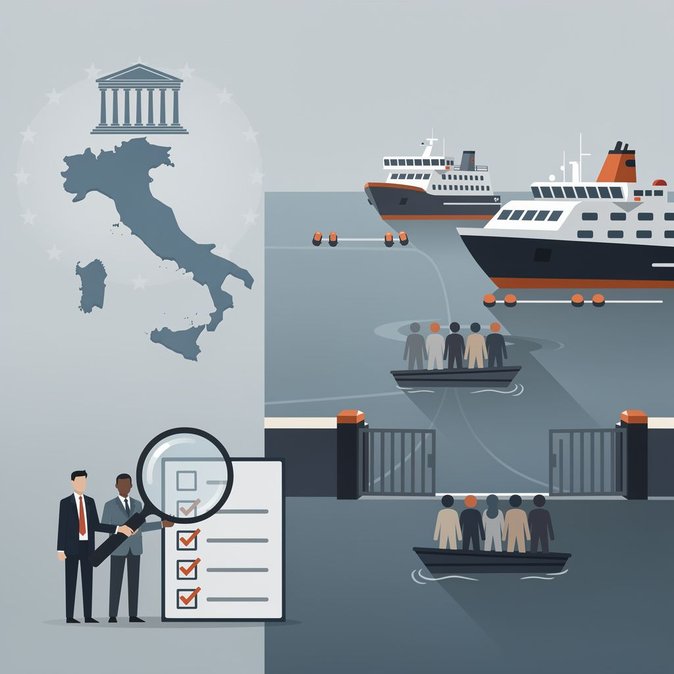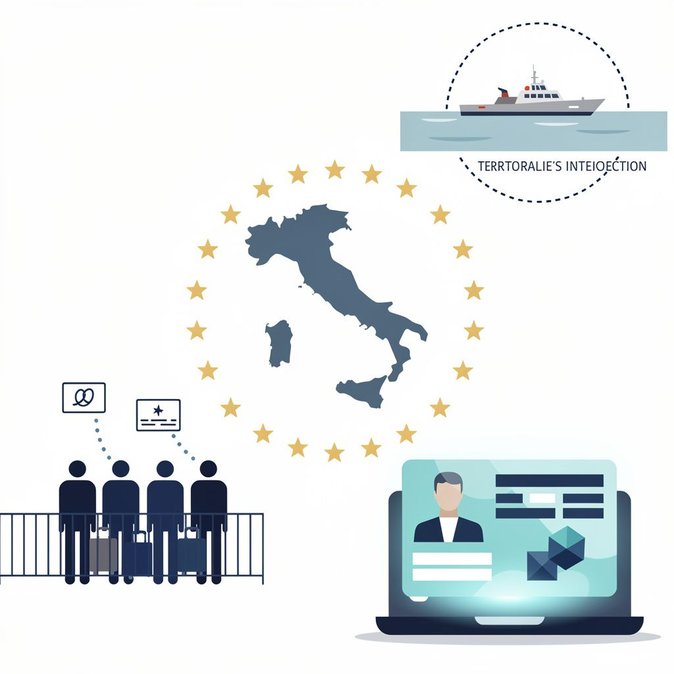
In a separate but related move, the government has tabled a 142-page draft bill that rewrites Italy’s immigration framework to mirror forthcoming EU regulations. The text establishes a dual track: measures that take effect upon publication—chiefly the power to bar vessels from territorial waters for up to 30 days, extendable to 180—and a six-month delegation for issuing decrees that transpose specific EU acts covering crisis management, returns and screening. The bill’s flagship provision is the "interdizione temporanea" of territorial waters, an administrative tool meant to deter smuggling ships without violating the duty to rescue. The measure will be coordinated with the Coast Guard, Navy and Frontex and will rely on EU crisis regulations once they apply on 1 July 2026. Other chapters tighten complementary protection, restrict family reunification, and envisage confiscation of NGO ships that breach coordination rules. Civil-society groups argue that such rules criminalise rescue, while business lobbies worry about diplomatic fallout with source countries whose seasonal workers underpin agriculture and tourism. For HR teams the bill’s most concrete change is the switch to fully digital residence-permit renewals by 1 January 2027, a step designed to interface with the EU’s Entry/Exit System (EES) and ETIAS authorisation. Companies employing large numbers of non-EU staff will need to upgrade HR-IT systems to collect biometric and QR-code data generated by the new permits. The draft now moves to the Chamber of Deputies, but with the ruling coalition holding comfortable majorities, passage before the summer recess looks likely.
Source: La Sicilia