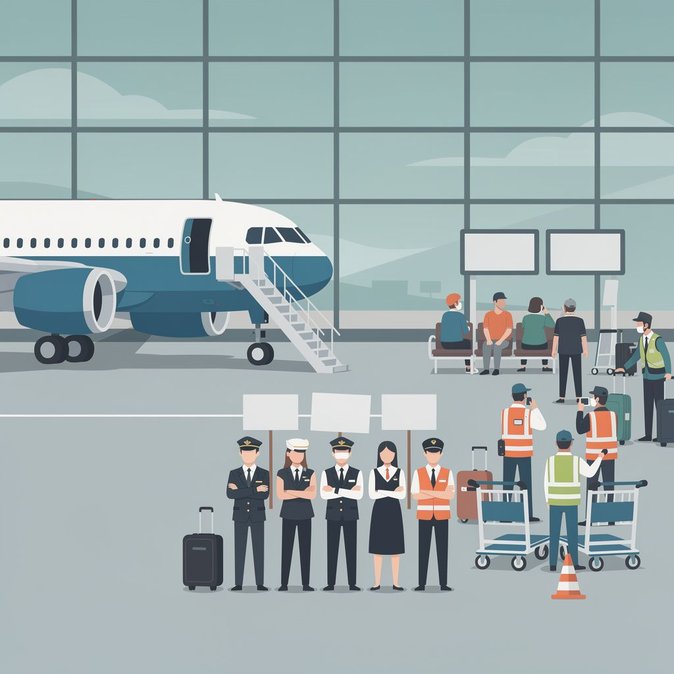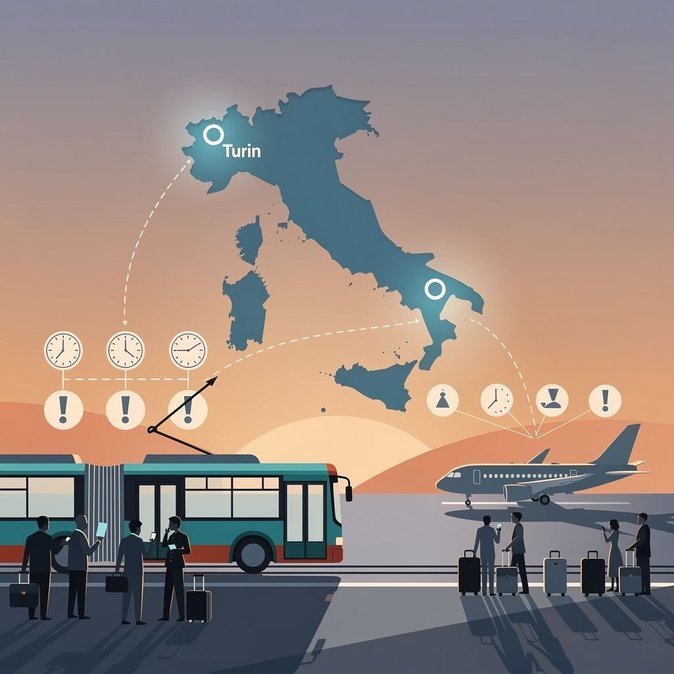
Italy’s strike calendar delivered a double punch today, with a four-hour walk-out by GTT urban-transport employees in Turin (18:00–22:00) and a separate four-hour stoppage by ground-handling and security staff at Lamezia Terme Airport in Calabria (12:00–16:00). Travellers faced reduced bus and tram frequencies in the Piedmont capital, while at Lamezia at least six departures—including two Ryanair and one ITA Airways flight—were delayed or cancelled. Although limited in duration, the actions highlight Italy’s fragmented industrial relations landscape, in which local unions can call sector-specific strikes with only five days’ notice.
For travellers whose itineraries can be upended at short notice by walk-outs like these, VisaHQ’s online platform (https://www.visahq.com/italy/) streamlines the process of obtaining or renewing Italian visas. The service offers expedited processing, real-time application tracking, and tailored email alerts on entry requirements and potential transport disruptions—giving corporate mobility managers and individual passengers one less headache to worry about when replanning trips.
For corporate mobility managers the lesson is to monitor regional calendars as closely as national ones: today’s walkouts were not part of the nationwide air-transport strike scheduled for 5 July but still disrupted same-day business trips. Under Italian law "minimal essential services" must be guaranteed, yet the definition varies by region and carrier. In Turin, GTT kept one in three buses running on core routes, but coverage in suburban zones dropped by 70 percent, complicating last-mile commutes to factories in Settimo Torinese and Orbassano. At Lamezia, ground-handling queues more than doubled, and priority lanes for connecting passengers were suspended. With further strikes announced for Venice (25 June) and Milan (26 June), HR policies should include contingency budgets for taxis and overnight stays. Multinationals with time-critical operations are increasingly negotiating "mobility clauses" in collective agreements to guarantee skeleton staffing during peak trade-fair and cruise-ship seasons.
For travellers whose itineraries can be upended at short notice by walk-outs like these, VisaHQ’s online platform (https://www.visahq.com/italy/) streamlines the process of obtaining or renewing Italian visas. The service offers expedited processing, real-time application tracking, and tailored email alerts on entry requirements and potential transport disruptions—giving corporate mobility managers and individual passengers one less headache to worry about when replanning trips.
For corporate mobility managers the lesson is to monitor regional calendars as closely as national ones: today’s walkouts were not part of the nationwide air-transport strike scheduled for 5 July but still disrupted same-day business trips. Under Italian law "minimal essential services" must be guaranteed, yet the definition varies by region and carrier. In Turin, GTT kept one in three buses running on core routes, but coverage in suburban zones dropped by 70 percent, complicating last-mile commutes to factories in Settimo Torinese and Orbassano. At Lamezia, ground-handling queues more than doubled, and priority lanes for connecting passengers were suspended. With further strikes announced for Venice (25 June) and Milan (26 June), HR policies should include contingency budgets for taxis and overnight stays. Multinationals with time-critical operations are increasingly negotiating "mobility clauses" in collective agreements to guarantee skeleton staffing during peak trade-fair and cruise-ship seasons.