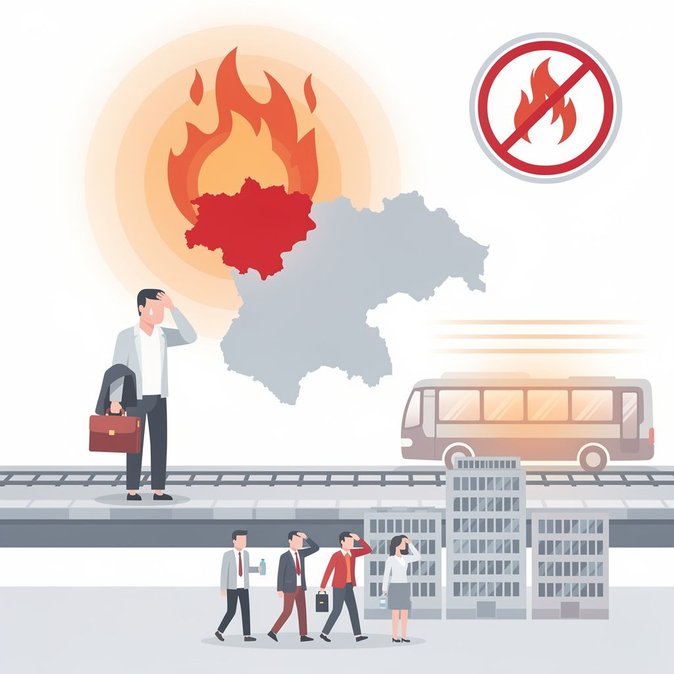
GeoSphere Austria, the national meteorological service, escalated its heat advisory to the maximum red level for Vienna, Lower Austria and Burgenland after forecasts showed daytime highs of 39–40 °C and tropical nights above 25 °C through Monday. At the same time the Interior Ministry invoked section 32 of the Wildfire Act, prohibiting open flames and agricultural burning across all eastern districts.
If the extreme temperatures disrupt travel plans or necessitate last-minute visa extensions, VisaHQ can expedite the process and handle the paperwork online for you. Its platform (https://www.visahq.com/austria/) offers quick, step-by-step guidance for business travelers, assignees, and their families, ensuring that administrative tasks don’t add to the heat-related stress.
The combined measures trigger automatic obligations for employers: outdoor work must be rescheduled or equipped with shaded rest areas; construction sites must document cooling breaks; and companies operating fleet vehicles are required to carry at least three litres of drinking water per employee. Violations can attract fines up to €5 000 under Austria’s Occupational Health Ordinance. Corporate mobility planners should also note that Vienna Airport has warned that runway asphalt can soften above 58 °C surface temperature, potentially forcing afternoon slot restrictions if the heat peak coincides with the German holiday rush this weekend. For expatriates and cross-border commuters, provincial governments have opened “cooling centres” in Vienna’s Messe exhibition halls and in Graz’s Stadthalle, accessible free of charge with any Austrian residence card. International schools were authorised to shift to online classes, affecting families on short-term assignments. GeoSphere Austria said the alert would be downgraded only after three consecutive days with maxima below 30 °C, implying that contingency planning could remain in force well into next week.
If the extreme temperatures disrupt travel plans or necessitate last-minute visa extensions, VisaHQ can expedite the process and handle the paperwork online for you. Its platform (https://www.visahq.com/austria/) offers quick, step-by-step guidance for business travelers, assignees, and their families, ensuring that administrative tasks don’t add to the heat-related stress.
The combined measures trigger automatic obligations for employers: outdoor work must be rescheduled or equipped with shaded rest areas; construction sites must document cooling breaks; and companies operating fleet vehicles are required to carry at least three litres of drinking water per employee. Violations can attract fines up to €5 000 under Austria’s Occupational Health Ordinance. Corporate mobility planners should also note that Vienna Airport has warned that runway asphalt can soften above 58 °C surface temperature, potentially forcing afternoon slot restrictions if the heat peak coincides with the German holiday rush this weekend. For expatriates and cross-border commuters, provincial governments have opened “cooling centres” in Vienna’s Messe exhibition halls and in Graz’s Stadthalle, accessible free of charge with any Austrian residence card. International schools were authorised to shift to online classes, affecting families on short-term assignments. GeoSphere Austria said the alert would be downgraded only after three consecutive days with maxima below 30 °C, implying that contingency planning could remain in force well into next week.