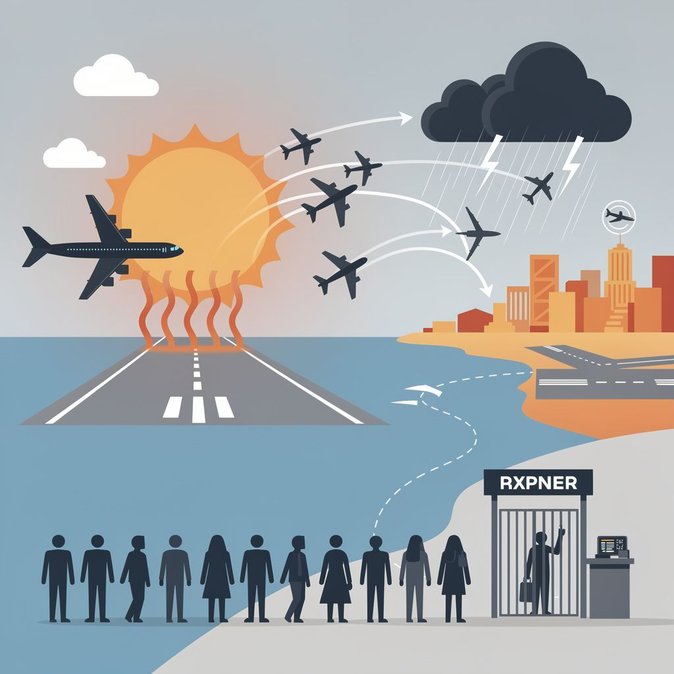
The Met Office issued an unprecedented third consecutive red ‘extreme heat’ alert for London and the South-East on 26 June 2026 after temperatures hit 37.1 °C in Suffolk – the UK’s hottest June reading since records began. Yellow thunder-storm alerts now blanket much of the rail network, while bus drivers won assurances they can stop work if cabs exceed safe limits. Airports reported runway-surface inspections and air-traffic flow restrictions as tarmac temperatures climbed.
For travellers whose plans might now involve re-routing through cooler hubs or rescheduling trips altogether, VisaHQ can help ensure the paperwork keeps pace. Its online platform for UK residents (https://www.visahq.com/united-kingdom/) streamlines visa and passport services for more than 200 destinations, so even last-minute itinerary changes triggered by extreme weather don’t become a documentation headache.
Hospitals in Portsmouth, Norwich and Southampton declared critical incidents, cancelling elective procedures to free up capacity for heat-related emergencies. London Ambulance Service said ‘category 1’ 999 calls on Wednesday were 50 % higher than a typical June day, underscoring the wider strain on public services. The National Energy System Operator meanwhile issued an Electricity Margin Notice for Friday evening, asking generators to release extra capacity. For mobility teams the immediate concern is transport. Network Rail warned that steel rails can reach 20 °C above air temperature, forcing speed restrictions. Eurostar told passengers to allow additional time at St Pancras, while several UK-bound flights from Europe were held for cooling-related runway checks. Employers should activate travel-tracking protocols and remind staff to carry water, sun protection and back-up power banks in case of delays. Longer-term, the heatwave is a reminder that duty-of-care policies written for winter disruption may now need a ‘climate’ chapter. Relocation programmes should audit temporary housing for effective ventilation and consider flexible working to avoid peak heat periods. Global mobility tax teams should also note HMRC’s confirmation that employer-provided cooling equipment can be treated as a tax-free benefit where installed to protect worker health. With red warnings due to expire at 21:00 on Friday, normal operations should resume gradually over the weekend; however, yellow thunder-storm alerts could still cause localised flooding and signalling failures. Mobility managers are advised to issue a weekend travel advisory and re-confirm Monday morning flights and rail services for critical travellers.
For travellers whose plans might now involve re-routing through cooler hubs or rescheduling trips altogether, VisaHQ can help ensure the paperwork keeps pace. Its online platform for UK residents (https://www.visahq.com/united-kingdom/) streamlines visa and passport services for more than 200 destinations, so even last-minute itinerary changes triggered by extreme weather don’t become a documentation headache.
Hospitals in Portsmouth, Norwich and Southampton declared critical incidents, cancelling elective procedures to free up capacity for heat-related emergencies. London Ambulance Service said ‘category 1’ 999 calls on Wednesday were 50 % higher than a typical June day, underscoring the wider strain on public services. The National Energy System Operator meanwhile issued an Electricity Margin Notice for Friday evening, asking generators to release extra capacity. For mobility teams the immediate concern is transport. Network Rail warned that steel rails can reach 20 °C above air temperature, forcing speed restrictions. Eurostar told passengers to allow additional time at St Pancras, while several UK-bound flights from Europe were held for cooling-related runway checks. Employers should activate travel-tracking protocols and remind staff to carry water, sun protection and back-up power banks in case of delays. Longer-term, the heatwave is a reminder that duty-of-care policies written for winter disruption may now need a ‘climate’ chapter. Relocation programmes should audit temporary housing for effective ventilation and consider flexible working to avoid peak heat periods. Global mobility tax teams should also note HMRC’s confirmation that employer-provided cooling equipment can be treated as a tax-free benefit where installed to protect worker health. With red warnings due to expire at 21:00 on Friday, normal operations should resume gradually over the weekend; however, yellow thunder-storm alerts could still cause localised flooding and signalling failures. Mobility managers are advised to issue a weekend travel advisory and re-confirm Monday morning flights and rail services for critical travellers.