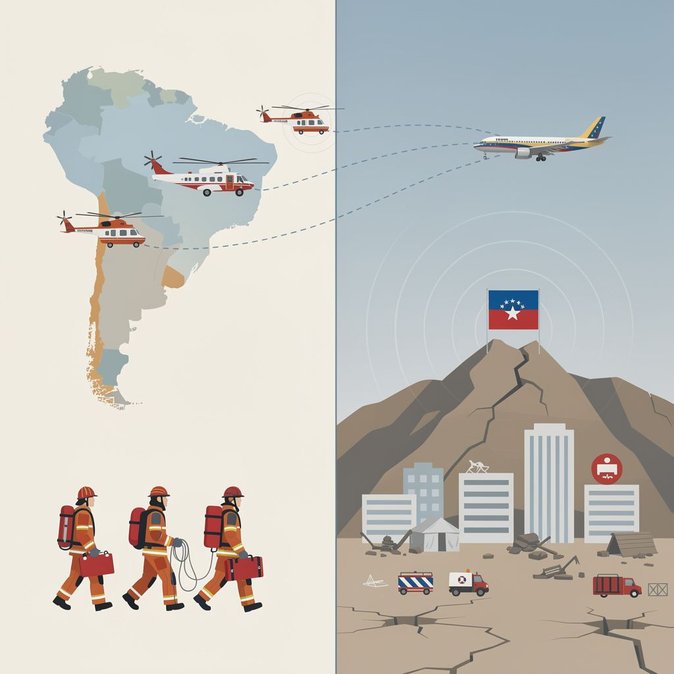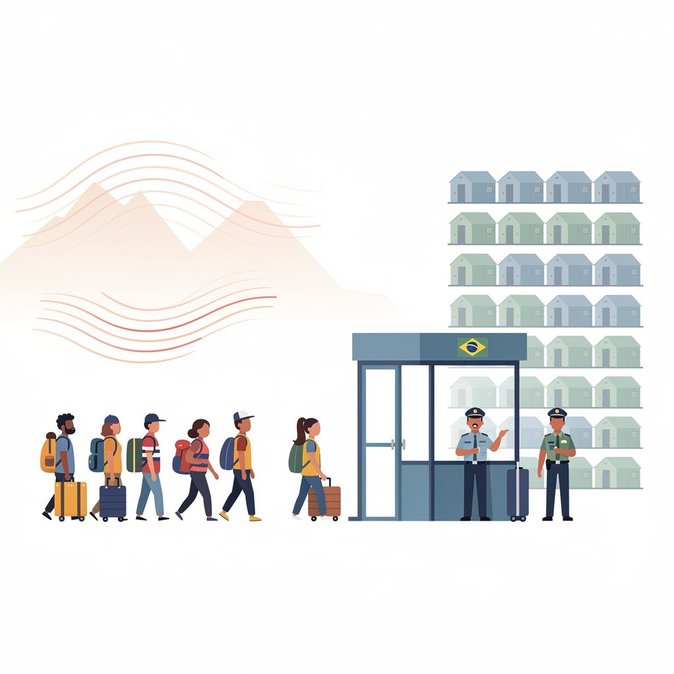
Despite the severe earthquakes that struck Venezuela on 24 June, Brazil’s Operação Acolhida—the inter-agency task-force that manages the northern border—reported on 27 June that daily crossings remain stable at 100-200 people. According to the Ministry of Development and Assistance, monitoring systems at Pacaraima and Boa Vista show “no extraordinary demand for shelter or documentation services.” UNHCR field officers confirm that the epicentre in La Guaira is more than 1,400 km from the Brazilian frontier, limiting immediate displacement toward Brazil.
Whether you’re an individual traveler or a company arranging multiple work permits, VisaHQ’s Brazil resource page (https://www.visahq.com/brazil/) can help you navigate the new electronic visa pathway by providing clear checklists, online submission tools, and live support—adding certainty when policy or migration flows suddenly shift.
Nevertheless, contingency shelters and stockpiles have been readied in case onward migration accelerates once transport links inside Venezuela are restored. For employers benefiting from the special labour-authorisation channel that Operação Acolhida provides, today’s status means work-permit processing times remain unchanged. Companies planning large-scale recruitment of Venezuelan nationals should, however, budget for possible delays if a late-season migration wave materialises. Immigration advisers also note that any future surge would occur under Brazil’s unified humanitarian visa system introduced in January 2026, which replaces country-specific quotas with a single framework. Businesses should therefore familiarise themselves with the new electronic application pathway on MigranteWeb to avoid paperwork bottlenecks.
Whether you’re an individual traveler or a company arranging multiple work permits, VisaHQ’s Brazil resource page (https://www.visahq.com/brazil/) can help you navigate the new electronic visa pathway by providing clear checklists, online submission tools, and live support—adding certainty when policy or migration flows suddenly shift.
Nevertheless, contingency shelters and stockpiles have been readied in case onward migration accelerates once transport links inside Venezuela are restored. For employers benefiting from the special labour-authorisation channel that Operação Acolhida provides, today’s status means work-permit processing times remain unchanged. Companies planning large-scale recruitment of Venezuelan nationals should, however, budget for possible delays if a late-season migration wave materialises. Immigration advisers also note that any future surge would occur under Brazil’s unified humanitarian visa system introduced in January 2026, which replaces country-specific quotas with a single framework. Businesses should therefore familiarise themselves with the new electronic application pathway on MigranteWeb to avoid paperwork bottlenecks.