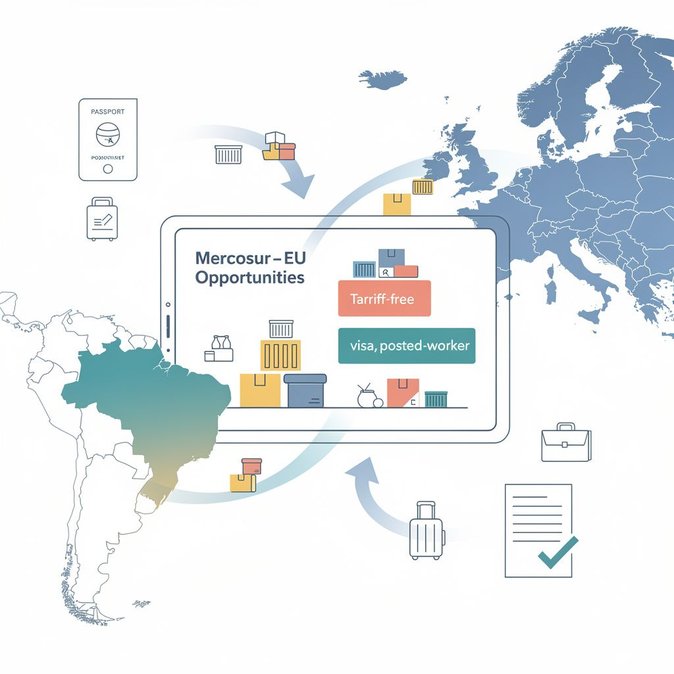
As companies scramble to understand mobility and trade implications of the Mercosur-European Union Association Agreement—ratified in May—ApexBrasil unveiled an online dashboard on 27 June 2026 designed to map 543 immediate tariff-free export opportunities to 25 EU member states. The “Mercosur-EU Opportunities by State” panel was presented during the Conexões Produtivas forum in São Paulo, co-hosted by the Ministry of Industry and the Brazilian Development Agency (ABDI). Although primarily a trade tool, the platform includes a mobility module highlighting visa-free stay limits, posted-worker regulations and cabotage restrictions sector by sector. This is critical for manufacturers and service providers planning to dispatch Brazilian technicians, sales teams or project managers to Europe once orders materialise. Vice-President Geraldo Alckmin told participants that the agreement could add “billions” in EU-bound sales and trigger reciprocal investment—moves that will inevitably increase short-term business travel and long-term expatriate assignments. Small and medium-sized enterprises, which account for less than 5 % of current Brazil-EU trade, stand to gain the most but often lack in-house mobility expertise. Global-mobility managers are advised to use the dashboard to cross-reference customs data with EU immigration rules, ensuring that engineers or after-sales staff travel under the correct visa category (usually the EU’s new short-stay business visa) and comply with Posted Workers Directive filings. Companies should also track the forthcoming Brazilian e-visa requirement for EU nationals from 15 July, which could create reciprocity debates if not properly communicated.
Source: GS Notícias / Agência Brasil