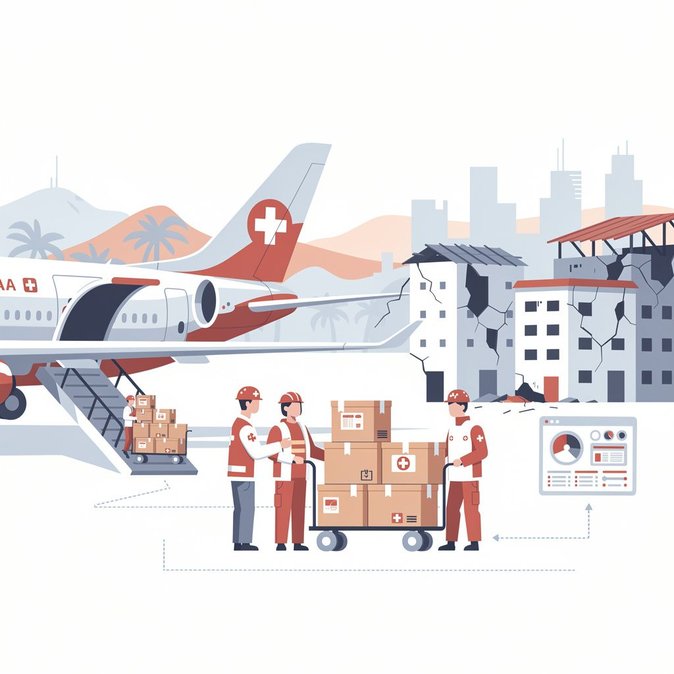
Switzerland has dispatched 80 members of its Swiss Rescue Unit to Caracas following a series of devastating earthquakes that rocked Venezuela’s interior provinces. The team – a partnership between the army, police and civilian medical services – landed early Saturday with 18 tonnes of equipment including search-and-rescue dogs, field hospitals and water-purification units. Although primarily a humanitarian response, the deployment demonstrates Switzerland’s capacity to move skilled personnel and heavy cargo across continents at short notice – a logistical capability increasingly relevant for multinationals managing emergency evacuations. The operation relied on a chartered Edelweiss Air A340 and required expedited overflight clearances via Spain, Cape Verde and Brazil, coordinated through Switzerland’s foreign ministry. Swiss Rescue will operate under UN OCHA guidelines and in coordination with Venezuelan authorities for an initial 14-day window. Employers with staff in the region are encouraged to register with the embassy’s crisis unit to receive real-time security and medical updates. The mission also offers a template for rapid deployment of corporate emergency-response teams, highlighting best practices in customs pre-clearance and cold-chain management for pharmaceuticals. Venezuela’s immigration service waived visa fees for the contingent under a bilateral disaster-relief agreement signed in 2019. Global mobility professionals should note that similar agreements exist with 22 other countries, potentially speeding entry for Swiss nationals during crises. As climate-linked natural disasters become more frequent, the ability to mobilise cross-border aid – and to extract staff – will be an increasingly critical component of duty-of-care strategies.
Source: SWI swissinfo.ch