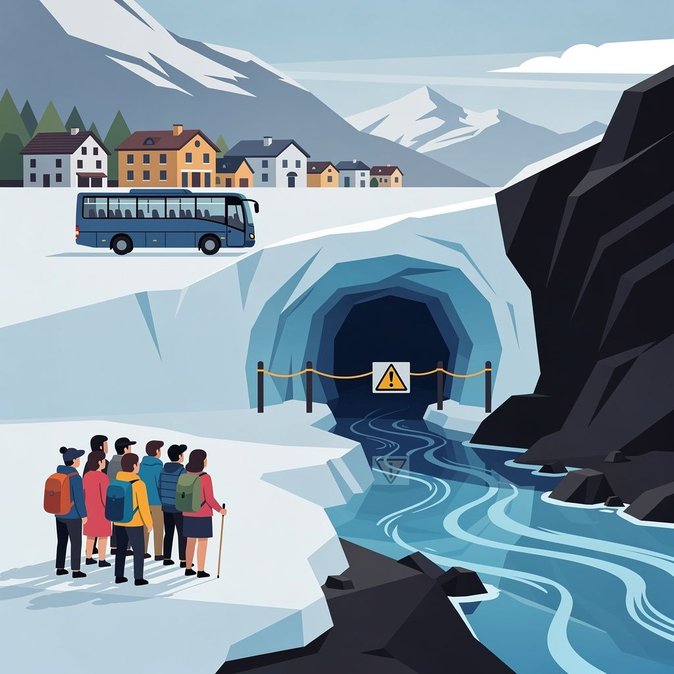
Environmental campaigners handed the Valais cantonal government an 8,000-signature petition on Saturday demanding the immediate removal of the man-made ice cave at the Rhône Glacier. The grotto, carved annually since 1870, allows tourists to walk through the ancient ice for a fee – but critics argue that tunnelling accelerates melt rates and puts visitors at risk as Switzerland’s glaciers recede at record speed. Tour operators in the Goms valley welcomed more than 100,000 sightseers last summer, many arriving on package day-trips from Geneva and Milan. Local businesses warn that closing the attraction could slash summer revenue by up to CHF 10 million.
Travel planners seeking to streamline visa and entry requirements for Switzerland amid these evolving excursion policies can turn to VisaHQ’s dedicated portal (https://www.visahq.com/switzerland/), which simplifies application steps for tourists, business travellers and relocating staff alike. Their up-to-date guidance ensures groups aren’t caught off guard by documentation issues when revising alpine itineraries.
Yet scientific studies from ETH Zurich show the glacier has lost 5 metres of thickness per year since 2020, raising fears that parts of the cave could collapse without warning. Global-mobility planners whose expatriate staff arrange alpine excursions as part of relocation packages should watch the debate closely. If authorities revoke the operating licence, itineraries promoted by destination-services providers will need updating, and insurers may reclassify guided glacier walks as higher-risk activities, affecting coverage. Valais officials said they will consult safety inspectors and tourism boards before ruling, but environmental NGOs are pushing for a decision before the 2027 season. The dispute underscores growing tension between sustaining Switzerland’s tourism economy and adapting to climate realities that increasingly limit traditional attractions. Until clarity emerges, corporate travel desks are advising employees to verify excursion operators’ insurance and safety certifications and to consider less invasive glacier experiences such as aerial sightseeing or augmented-reality exhibits in nearby visitor centres.
Travel planners seeking to streamline visa and entry requirements for Switzerland amid these evolving excursion policies can turn to VisaHQ’s dedicated portal (https://www.visahq.com/switzerland/), which simplifies application steps for tourists, business travellers and relocating staff alike. Their up-to-date guidance ensures groups aren’t caught off guard by documentation issues when revising alpine itineraries.
Yet scientific studies from ETH Zurich show the glacier has lost 5 metres of thickness per year since 2020, raising fears that parts of the cave could collapse without warning. Global-mobility planners whose expatriate staff arrange alpine excursions as part of relocation packages should watch the debate closely. If authorities revoke the operating licence, itineraries promoted by destination-services providers will need updating, and insurers may reclassify guided glacier walks as higher-risk activities, affecting coverage. Valais officials said they will consult safety inspectors and tourism boards before ruling, but environmental NGOs are pushing for a decision before the 2027 season. The dispute underscores growing tension between sustaining Switzerland’s tourism economy and adapting to climate realities that increasingly limit traditional attractions. Until clarity emerges, corporate travel desks are advising employees to verify excursion operators’ insurance and safety certifications and to consider less invasive glacier experiences such as aerial sightseeing or augmented-reality exhibits in nearby visitor centres.