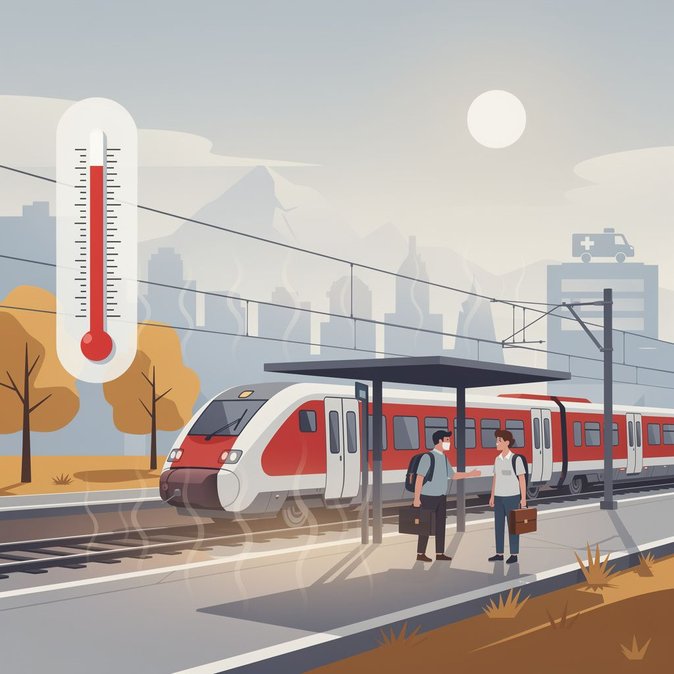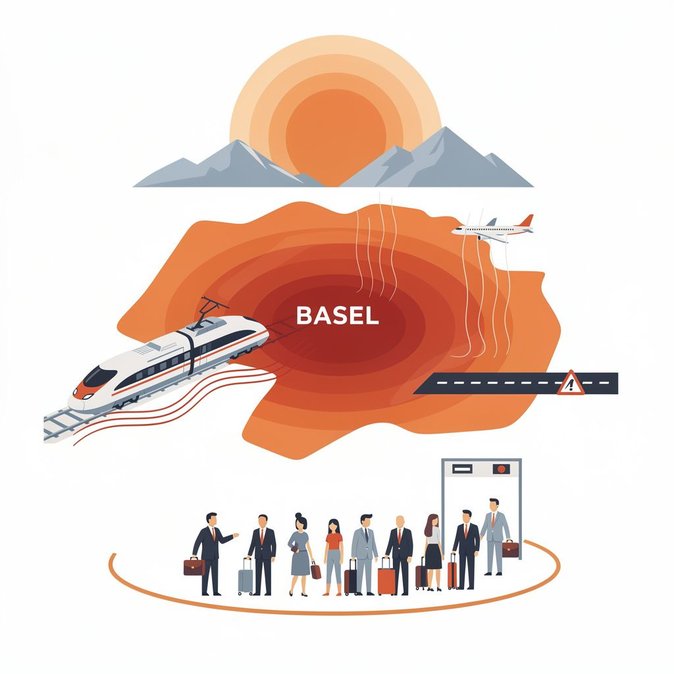
Switzerland’s national weather service MeteoSwiss confirmed that Basel/Binningen hit 38.8 °C at 15:00 on Friday, 26 June, smashing the 1947 June record and eclipsing the 38 °C measured the previous day. On Saturday, 27 June, forecasters warned that 39 °C—and even 40 °C north of the Alps—could not be ruled out.
For travellers who suddenly need to reroute through neighbouring Schengen hubs or obtain emergency travel documents, VisaHQ’s Switzerland service (https://www.visahq.com/switzerland/) streamlines visa checks, courier passport renewals and consular appointments, helping mobility teams react quickly when extreme heat disrupts normal transport links.
Why it matters to global mobility: 1. **Rail slow-downs and rolling stock limits** – SBB and private operators imposed 80 km/h heat restrictions on key trunk lines (Basel–Zurich, Lausanne–Geneva). Thermal expansion of rails triggered sensor alarms, forcing trains to run late or be re-routed. Multinationals moving talent between Swiss offices were advised to switch to early-morning or evening services. 2. **Airport surface operations** – Zurich and Geneva Airports activated “Part B” of their hot-weather contingency manuals: limiting aircraft turnaround to 35 minutes, providing bottled-water stations in immigration halls, and staging mobile shade structures at bus gates. While flight schedules were maintained, inbound passengers faced up to 50-minute waits at passport control as biometric equipment overheated. 3. **Cross-border commuters** – France’s SNCF pre-emptively cancelled regional TER services into Basel SNCF and Genève Cornavin, citing overheated catenary. Employers invoking the “exceptional circumstances” clause of the Franco-Swiss tele-work tax accord allowed thousands of cross-border staff to work remotely. 4. **Health & safety obligations for business travellers** – Duty-of-care providers (International SOS, Falck Global Assistance) upgraded Switzerland to “Level 2 – Elevated Heat Risk” and recommended corporates brief travellers on hydration, sun exposure and revised rail/flight itineraries. Looking ahead, SBB has accelerated its CHF 45 million programme to paint vulnerable rail sections with reflective coatings and install 300 smart expansion sensors before the next peak season. Swissport told airlines it will trial mist-cooling tents for ramp crews at Zurich in July.
For travellers who suddenly need to reroute through neighbouring Schengen hubs or obtain emergency travel documents, VisaHQ’s Switzerland service (https://www.visahq.com/switzerland/) streamlines visa checks, courier passport renewals and consular appointments, helping mobility teams react quickly when extreme heat disrupts normal transport links.
Why it matters to global mobility: 1. **Rail slow-downs and rolling stock limits** – SBB and private operators imposed 80 km/h heat restrictions on key trunk lines (Basel–Zurich, Lausanne–Geneva). Thermal expansion of rails triggered sensor alarms, forcing trains to run late or be re-routed. Multinationals moving talent between Swiss offices were advised to switch to early-morning or evening services. 2. **Airport surface operations** – Zurich and Geneva Airports activated “Part B” of their hot-weather contingency manuals: limiting aircraft turnaround to 35 minutes, providing bottled-water stations in immigration halls, and staging mobile shade structures at bus gates. While flight schedules were maintained, inbound passengers faced up to 50-minute waits at passport control as biometric equipment overheated. 3. **Cross-border commuters** – France’s SNCF pre-emptively cancelled regional TER services into Basel SNCF and Genève Cornavin, citing overheated catenary. Employers invoking the “exceptional circumstances” clause of the Franco-Swiss tele-work tax accord allowed thousands of cross-border staff to work remotely. 4. **Health & safety obligations for business travellers** – Duty-of-care providers (International SOS, Falck Global Assistance) upgraded Switzerland to “Level 2 – Elevated Heat Risk” and recommended corporates brief travellers on hydration, sun exposure and revised rail/flight itineraries. Looking ahead, SBB has accelerated its CHF 45 million programme to paint vulnerable rail sections with reflective coatings and install 300 smart expansion sensors before the next peak season. Swissport told airlines it will trial mist-cooling tents for ramp crews at Zurich in July.