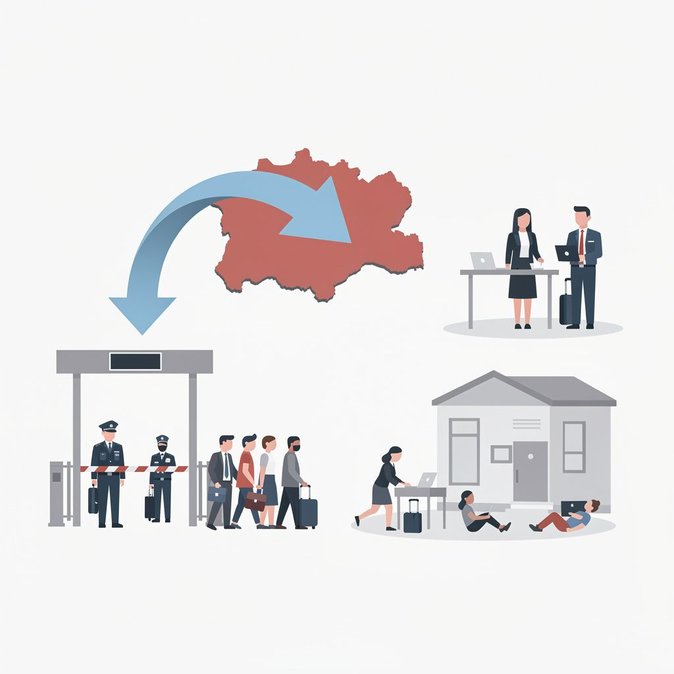
Austria’s Interior Ministry has reported that the number of people seeking asylum in the country is falling at one of the fastest rates in a decade. In Sunday’s main lunchtime newscast (ZIB 13:00), the ORF revealed provisional figures showing a fall of “well over 40 percent” in first-time asylum claims for the first half of 2026 compared with the same period last year. According to officials, just under 14,000 applications were lodged between January and mid-June, down from almost 24,000 in the first half of 2025. Interior Minister Gerhard Karner (ÖVP) credited three factors: the step-by-step implementation of the EU Pact on Migration and Asylum that entered into force on 12 June, tighter land-border checks with Slovakia, Slovenia, Czechia and Hungary, and a sustained increase in chartered “return flights” for rejected applicants. Karner stressed that “credible humanitarian protection requires credible return,” noting that removals have out-paced new claims for the first time since 2015. NGO lawyers contacted by ORF warn that the headline decline masks procedural bottlenecks. Because the Pact’s new border-procedure rules require many applicants to remain in dedicated transit facilities, cases that proceed are moving more slowly, and reception centres around Vienna and in Lower Austria remain close to capacity. Employers’ groups, meanwhile, are urging the government to make sure skilled-labour channels such as the Red-White-Red Card are not delayed by the refocusing of resources on border screening. For global mobility managers this matters on several levels. Companies relocating non-EU talent to Austrian sites may face longer police-clearance times at the airport and additional document checks on posted workers transiting the land borders. On the upside, fewer spontaneous arrivals could free up housing in Vienna and Graz that had been block-booked for emergency accommodation. HR teams are advised to monitor guidance from the new multilingual portal AsyluminAustria.at, which will become the single point of truth for all asylum-related procedures from July. The Interior Ministry plans to publish its detailed half-year report in early July; if the downward trend continues, the government is expected to let the current “temporary” border controls expire in mid-June 2027, bringing Austria closer to a fully passport-free Schengen regime.
Source: ORF (ZIB 13:00)
How VisaHQ can help
VisaHQ simplifies the visa application process for individuals and businesses. Check current travel requirements, prepare the required documents and manage your application online through the VisaHQ Austria portal.More From Austria
View all
40 °C Heatwave Triggers Travel Warnings and Contingency Plans Across Austria

Orange Thunderstorm Alert Issued for Western Tyrol: Officials Warn of Potential Rail, Road and Flight Disruptions