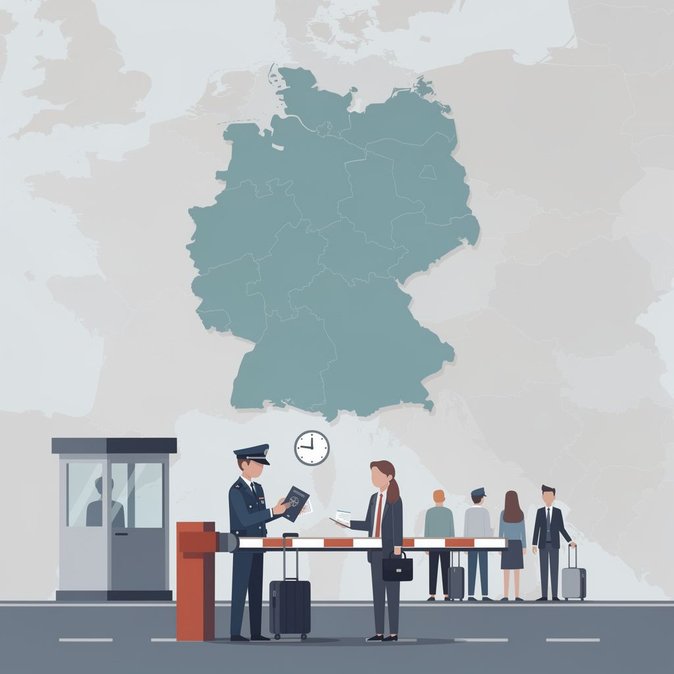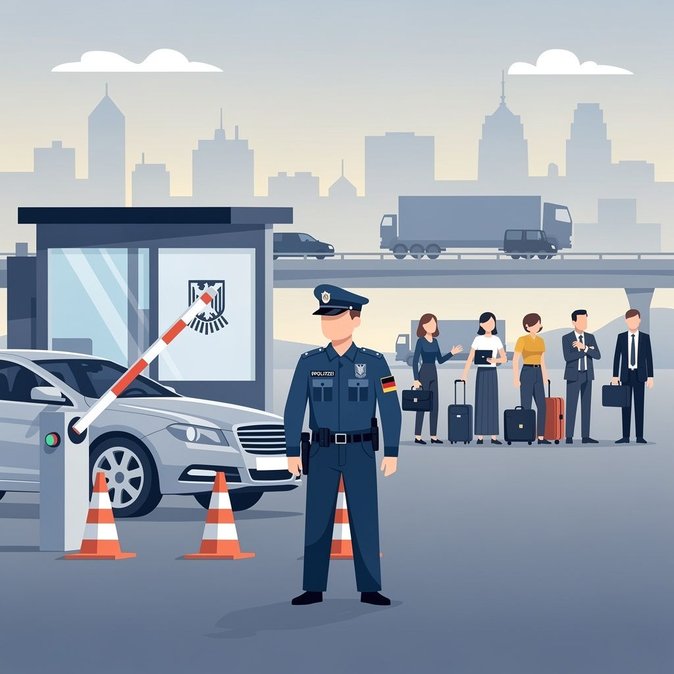
The German Federal Police (Bundespolizei) carried out coordinated searches at several addresses in the state of North Rhine-Westphalia (NRW) on Saturday, 28 June. According to a spokesperson, the operation targeted an organised group believed to have arranged illegal entry for migrants from non-EU countries via Germany’s western land borders. One suspect was taken into custody; additional arrests are expected once digital evidence is evaluated.
Businesses and individual travellers who need to ensure their paperwork is in order before crossing German borders can streamline the process through VisaHQ. The platform offers step-by-step guidance on German visas, residence permits and supporting documents, reducing the risk of costly delays at checkpoints; more information is available at https://www.visahq.com/germany/
The investigation, led by the Hagen public prosecutor’s office, follows months of surveillance involving phone taps and cross-border intelligence supplied by Dutch and Belgian counterparts. Prosecutors allege the network charged up to €7 000 per person for transport and forged documents, funnelling travellers through small road crossings to avoid stationary checkpoints. Officers seized mobile phones, encrypted messaging devices, cash bundles in multiple currencies, and several fake EU residence permits during Saturday’s search. Germany has retained temporary controls at all land borders until at least mid-September 2026. While the measure is officially aimed at curbing irregular migration and combating smuggling, logistics firms and cross-border commuters complain of rising delays. Saturday’s raid underscores the scale of the challenge: the Bundespolizei recorded more than 50 000 unauthorised entries since May 2025, despite intensified controls. For global mobility and relocation managers, the case is a reminder that employee travel via land borders can still be disrupted by ad-hoc law-enforcement actions. Companies moving talent through the Benelux-Germany corridor should continue to budget extra transit time, ensure staff carry original passports and residence cards, and monitor Bundespolizei announcements for pop-up checks and traffic diversions. Analysts expect additional police actions over the summer as Berlin seeks to demonstrate progress ahead of the first evaluation of the new EU migration pact in October. Employers should therefore brief travellers on their rights during identity checks and keep legal counsel on standby in case of document verification issues.
Businesses and individual travellers who need to ensure their paperwork is in order before crossing German borders can streamline the process through VisaHQ. The platform offers step-by-step guidance on German visas, residence permits and supporting documents, reducing the risk of costly delays at checkpoints; more information is available at https://www.visahq.com/germany/
The investigation, led by the Hagen public prosecutor’s office, follows months of surveillance involving phone taps and cross-border intelligence supplied by Dutch and Belgian counterparts. Prosecutors allege the network charged up to €7 000 per person for transport and forged documents, funnelling travellers through small road crossings to avoid stationary checkpoints. Officers seized mobile phones, encrypted messaging devices, cash bundles in multiple currencies, and several fake EU residence permits during Saturday’s search. Germany has retained temporary controls at all land borders until at least mid-September 2026. While the measure is officially aimed at curbing irregular migration and combating smuggling, logistics firms and cross-border commuters complain of rising delays. Saturday’s raid underscores the scale of the challenge: the Bundespolizei recorded more than 50 000 unauthorised entries since May 2025, despite intensified controls. For global mobility and relocation managers, the case is a reminder that employee travel via land borders can still be disrupted by ad-hoc law-enforcement actions. Companies moving talent through the Benelux-Germany corridor should continue to budget extra transit time, ensure staff carry original passports and residence cards, and monitor Bundespolizei announcements for pop-up checks and traffic diversions. Analysts expect additional police actions over the summer as Berlin seeks to demonstrate progress ahead of the first evaluation of the new EU migration pact in October. Employers should therefore brief travellers on their rights during identity checks and keep legal counsel on standby in case of document verification issues.