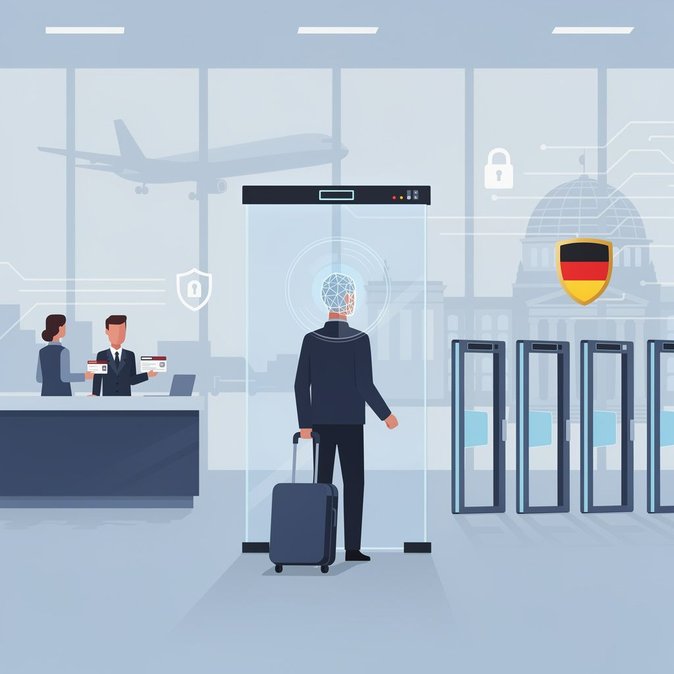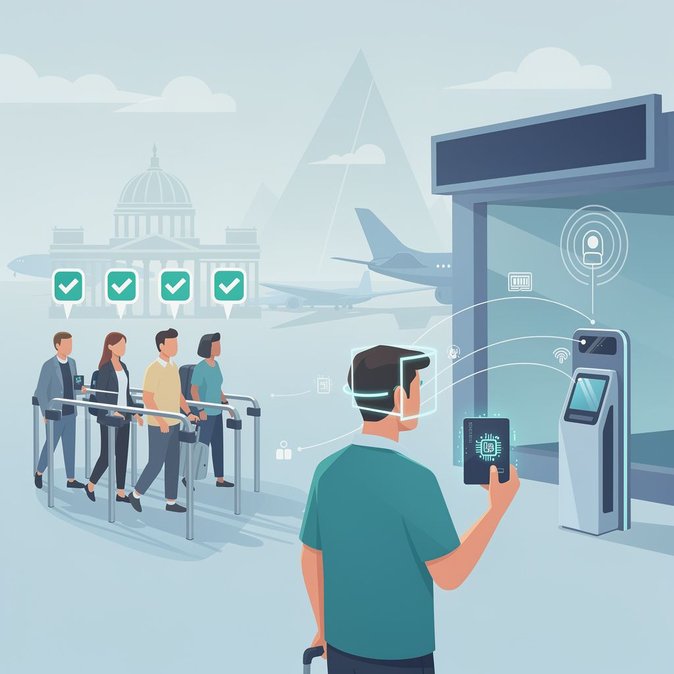
Germany’s lower house adopted the Digital Passenger Processing Act (21/6129) on 26 June after only six weeks of committee scrutiny. The law amends the Aviation Act, the Passport Act, the Identity-Card Act and the Residence Act to allow airlines and airport operators to read the electronic chips of passports and ID cards during mobile or kiosk check-in. Biometric matching—primarily facial recognition—will replace many manual document checks; images must be deleted within three hours.
Travellers who want to be sure their documents are fully compatible with Germany’s new biometric procedures can tap VisaHQ’s tailored services. Through the platform’s Germany page (https://www.visahq.com/germany/), individuals and corporate travel teams can verify passport validity, obtain visas or residence cards, and receive expert guidance so that e-chips and facial data meet the standards airports will now enforce.
Participation is voluntary and traditional counters remain available. The government argues that fully digital workflows could cut average processing times per traveller by up to 40 percent, freeing police resources for risk-based spot checks. Lufthansa and Fraport have already piloted the system in Frankfurt’s Terminal 1 and report boarding of a 380-seat A380 in under 20 minutes. Once the Act enters into force this autumn, pilots can be expanded nationwide, including at Berlin-Brandenburg (BER) and Munich. Privacy groups from the Greens and the FDP abstained, citing concerns about “function creep”. To win their tacit support the Interior Ministry inserted strict data-minimisation clauses and a sunset review in 2031. For cross-border commuters, the Act also tweaks the Free Movement (EU) Law so that digitally issued residence cards of family members can be scanned without additional hardware. Business-travel managers welcome the change. Companies that enrol staff in the system will be able to push real-time boarding-pass credentials to mobile wallets, reducing the risk that high-value travellers miss connections during Frankfurt’s peak early-morning wave. Travel-risk providers say fewer desk checks could also shrink queues that have become flashpoints for passenger frustration and security incidents. The Bundesrat is expected to wave the bill through on 12 July as aviation regulation is a federal competence. Airports must certify their platforms with the Federal Office for Information Security (BSI); operators that roll out compliant lanes by March 2027 can claim up to 50 percent of installation costs under a €120 million modernisation fund.
Travellers who want to be sure their documents are fully compatible with Germany’s new biometric procedures can tap VisaHQ’s tailored services. Through the platform’s Germany page (https://www.visahq.com/germany/), individuals and corporate travel teams can verify passport validity, obtain visas or residence cards, and receive expert guidance so that e-chips and facial data meet the standards airports will now enforce.
Participation is voluntary and traditional counters remain available. The government argues that fully digital workflows could cut average processing times per traveller by up to 40 percent, freeing police resources for risk-based spot checks. Lufthansa and Fraport have already piloted the system in Frankfurt’s Terminal 1 and report boarding of a 380-seat A380 in under 20 minutes. Once the Act enters into force this autumn, pilots can be expanded nationwide, including at Berlin-Brandenburg (BER) and Munich. Privacy groups from the Greens and the FDP abstained, citing concerns about “function creep”. To win their tacit support the Interior Ministry inserted strict data-minimisation clauses and a sunset review in 2031. For cross-border commuters, the Act also tweaks the Free Movement (EU) Law so that digitally issued residence cards of family members can be scanned without additional hardware. Business-travel managers welcome the change. Companies that enrol staff in the system will be able to push real-time boarding-pass credentials to mobile wallets, reducing the risk that high-value travellers miss connections during Frankfurt’s peak early-morning wave. Travel-risk providers say fewer desk checks could also shrink queues that have become flashpoints for passenger frustration and security incidents. The Bundesrat is expected to wave the bill through on 12 July as aviation regulation is a federal competence. Airports must certify their platforms with the Federal Office for Information Security (BSI); operators that roll out compliant lanes by March 2027 can claim up to 50 percent of installation costs under a €120 million modernisation fund.