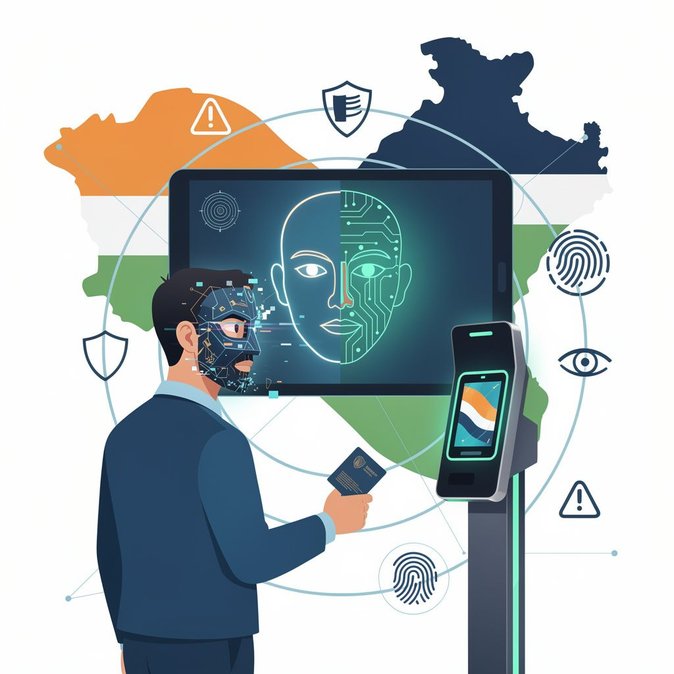
The National Cybercrime Threat Analytics Unit (NCTAU) under India’s Ministry of Home Affairs has sounded an alarm over a new wave of authentication-bypass scams that use AI-driven deep-fake videos and synthetic identities to defeat facial recognition. Why it matters for global mobility – India relies heavily on video-based ‘liveness’ tests for its digital KYC ecosystem (used in online bank onboarding, SIM activation and, increasingly, the e-Visa portal). If fraudsters can convincingly mimic a traveller’s face in real time, they could hijack e-visa approvals, create ghost identities, or alter arrival-and-departure records in immigration systems. The advisory therefore has immediate relevance for foreign nationals applying for Indian e-visas and for Indian corporates that use video KYC to onboard expatriate employees to payroll and banking services. How the scam works – According to the 27-page circular issued late on 28 June, criminals first collect video snippets of a target’s face—often through bogus job interviews or romance fraud calls. They then employ widely available AI tools to generate a lifelike avatar capable of blinking, turning its head and answering security questions with a cloned voice. The resulting deep-fake is fed into liveness-detection software to trick the system into granting access or issuing credentials. Government guidance – The NCTAU recommends that businesses handling sensitive ID verification (including visa outsourcing firms, airlines and travel-management companies) deploy deep-fake-detection algorithms, monitor anomalies in blink rate and light refraction, and require a second-factor check (OTP or digital signature) for high-value transactions. Citizens are urged to lock their Aadhaar biometrics, watch for sudden mobile-network outages that may signal a fraudulent SIM swap, and report incidents quickly via the 1930 cyber-fraud helpline. Larger regulatory backdrop – The advisory follows a surge in synthetic-identity fraud targeting India’s e-commerce and fintech sectors and coincides with the roll-out of a new Automated Facial Recognition System (AFRS) at major airports, slated for nationwide deployment by December 2026. Industry analysts say the warning is a pre-emptive move to safeguard confidence in India’s digital public infrastructure (DPI) as the country pushes to process 15 million e-visas annually by 2028. Next steps – Visa facilitators such as VFS Global and airlines operating biometric boarding will have to demonstrate compliance with the new guidance or face audits. Mobility managers should review employee KYC procedures, ensure staff can recognise social-engineering red flags, and advise travellers to safeguard video-call environments where facial data could be harvested.
Source: Free Press Journal