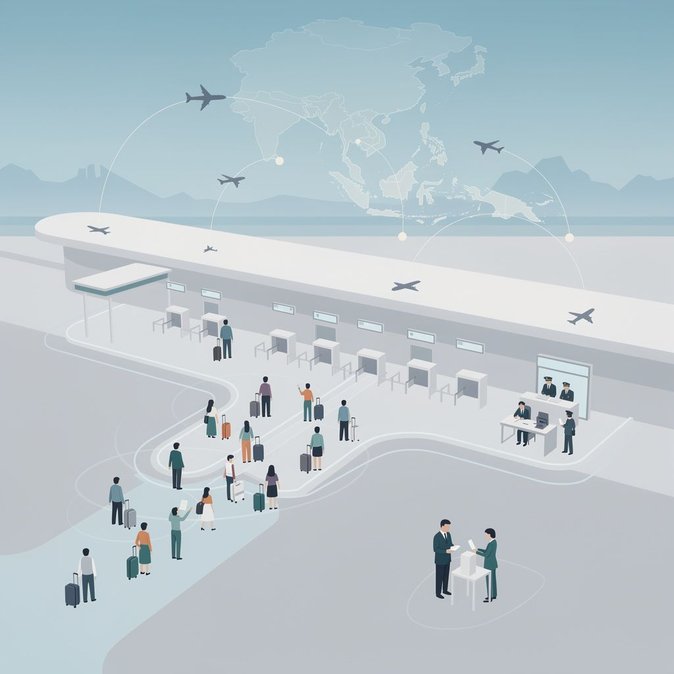
Kunming Changshui International Airport—China’s gateway to South and South-East Asia—has surpassed two million inbound and outbound passenger movements for the calendar year as of 26 June, the Yunnan Border Inspection Station confirmed. The landmark was reached 29 days earlier than in 2025 and represents year-on-year growth of 16.7 percent. More than 68 1 000 of the travellers were foreign nationals, and 245 000 entered China visa-free, up nearly 18 percent. Officials attribute the boom to the 240-hour (10-day) transit-visa-free regime and China’s expanding network of mutual visa-exemption agreements, particularly with Thailand and Malaysia. Changshui now handles an average of 11 000 cross-border passengers and 150 flights per day, cementing its status as a regional hub linking secondary Chinese cities with Bangkok, Chiang Mai, Kuala Lumpur and Hanoi. The airport has rolled out multilingual e-gates and a “split-lane” inspection model, adding Thai, Lao, and Burmese service counters to reduce wait times. Foreign passengers can pre-file arrival cards via the National Immigration Administration (NIA 12367) mini-program and receive an automatic QR code, cutting paperwork at the booth. According to airport management, average clearance times for visa-free entrants have fallen below seven minutes. For multinational firms operating in Yunnan’s burgeoning renewable-energy and agri-tech clusters, the data signals a more predictable travel environment for partner visits, plant commissioning and after-sales support. Logistics companies likewise see upside: a higher frequency of belly-hold capacity on passenger flights boosts same-day cross-border e-commerce shipments. Travel managers should note that visa-free travellers engaging in remunerated activities (installation, training, journalism) must still secure the relevant work visas; Changshui’s immigration officers have stepped-up post-entry audits. Carriers are reminded that visa-free passengers denied entry for ineligible purposes will be fined and repatriation costs charged back to the airline.
Source: Sina News